Get Full Government Meeting Transcripts, Videos, & Alerts Forever!
Get email alerts on the Land Use Subdivision Policy topic
No spam. Unsubscribe anytime.
County hears repeated complaints about 'illegal splits' and denies an exception to re‑subdivide Lot 59 of The Meadows
Summary
Staff described frequent permitting delays caused by historical, noncompliant lot splits; the court discussed creating a grandfathering date or streamlined process in a workshop and denied one exception request (Lot 59) after debate over drainage, septic and precedent (motion failed 3–2).
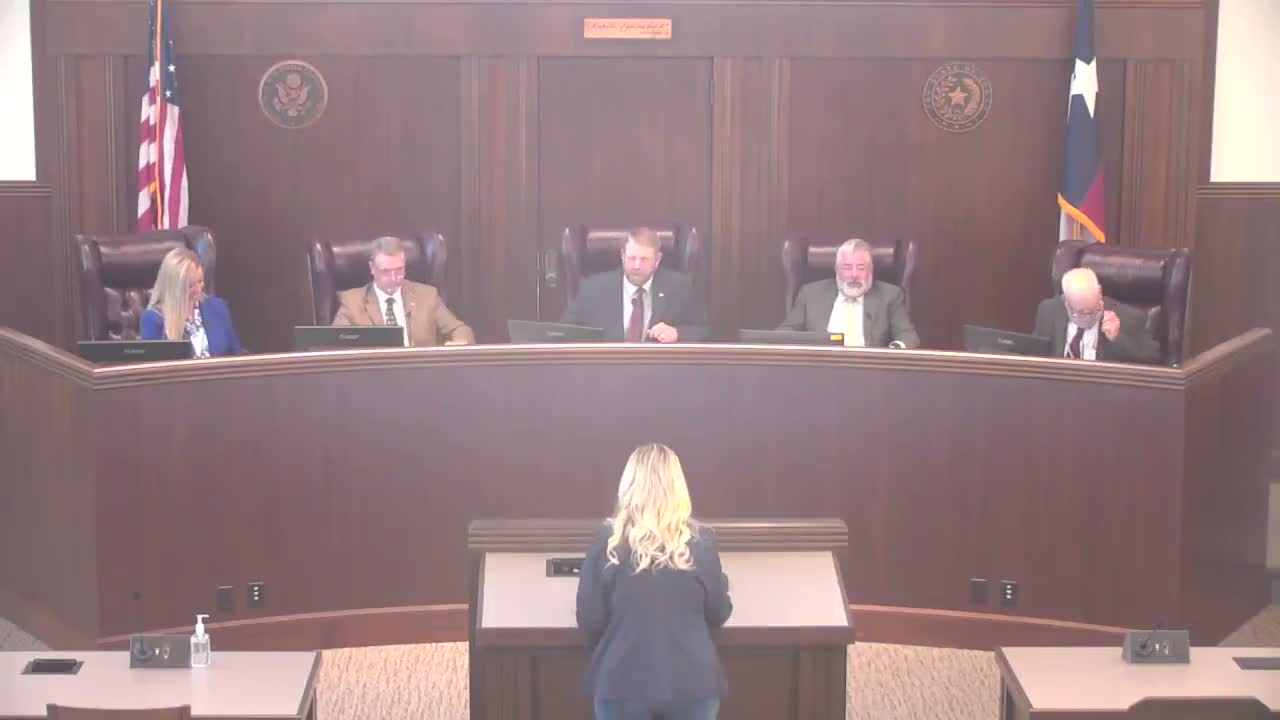
County environmental health staff and property owners told the Commissioners Court on March 25 that a growing number of permit applications are being held because parcels were subdivided in ways that do not meet current subdivision regulations.
Daniela Valdez, Guadalupe County’s Environmental Health Director, said staff encounter multiple cases per week in which a tract originally part of a larger parent parcel was split years or decades ago and has since been sold or transferred. When an owner applies for a new permit, staff must research historical plats to identify the parent tract; in many cases replatting or multiple variances are required. Valdez said some counties use a grandfathering date or limited exceptions to allow older splits to stand so owners can obtain permits without expensive replatting.
Commissioners described the situation as a frequent source of hardship. Commissioner 8 cited examples in Precinct 1 where owners have been held up and the cost of replatting was cited at roughly "$20,000 or more." Commissioner 1 urged the court to take responsibility when county records or practice caused confusion and recommended a workshop to develop a consistent policy.
The court considered a specific request under Texas Local Government Code §232.01 to permit a conveyance by meets‑and‑bounds that would split Lot 59 of The Meadows subdivision into a 0.95‑acre and a 1.0‑acre parcel so a sibling could obtain financing and rebuild a removed mobile home. Staff said the proposed new unit would connect to sewer and the change in impervious cover was negligible. Opponents on the court said drainage and septic standards and precedent required careful review.
The motion to grant the meets‑and‑bounds exception failed (recorded as 3 nays, 2 yeas). Commissioners agreed to schedule a workshop at the earliest practical date to develop consistent county policy on grandfathering and a triage process to expedite clear-cut cases.
Public comment: John Medrano (a property owner whose permit was held) described personal hardship from delayed permit approvals while needing to modify his home for accessibility. Commissioners asked staff to include triage materials and bring options for a consistent grandfathering date or a narrow path for family‑use exceptions.
Next steps: Staff will coordinate a workshop (tentatively the following Tuesday at 9 a.m. pending availability) with legal, planning and environmental health to draft options for a consistent grandfathering rule, a minor‑plat process and triage materials that the court can consider.