
LESC staff warn enrollment decline will reshape K‑12 budget; 80/20 health plan would add roughly $73 million
Get AI-powered insights, summaries, and transcripts
Subscribe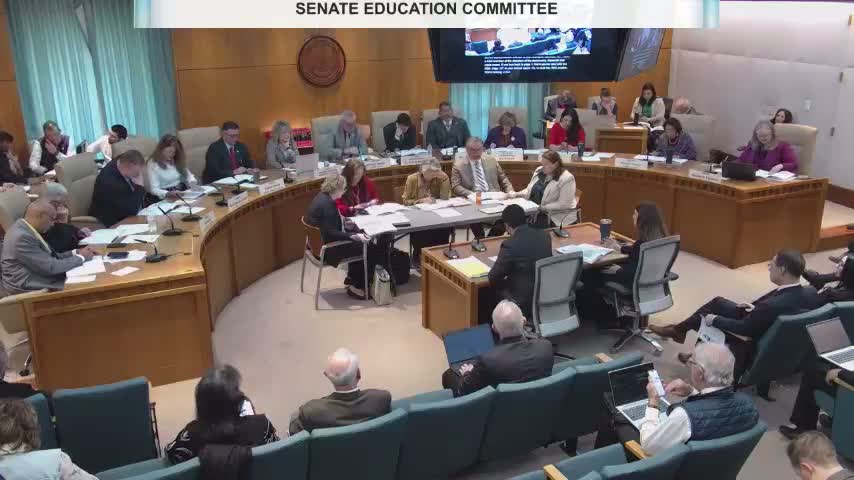
Summary
LASC staff told the Legislative Education Study Committee that state K‑12 enrollment has fallen about 10% since FY18 and that the Legislative Finance Committee recommends a $44.9 million reduction to the State Equalization Guarantee. Staff also described proposals to increase employer health‑insurance cost share to 80/20 with an estimated $73.2 million price tag.
LASC school‑finance staff told the Legislative Education Study Committee that New Mexico has lost about 10% of its K‑12 students since fiscal year 2018 and that declining enrollment is a primary driver of proposed budget adjustments.
"We've lost about 10% of our students since FY18," Daniel, LASC school finance staff, said during the committee briefing, warning the committee that the Legislative Finance Committee (LFC) recommends accounting for that decline in the State Equalization Guarantee (SEG) base. The LFC proposal would reduce the SEG by $44.9 million for FY27 to reflect lower membership, Daniel said.
Why it matters: the SEG is the main state funding stream for districts and charter schools. LESC staff argued the committee should weigh whether to maintain current spending to protect program quality or accept a reduced base to avoid structural deficits.
The presentation also flagged two major cost pressures: compensation and health insurance. Daniel said the executive and LFC recommended a 1% average compensation increase for school personnel while LESC recommended 3%. On health insurance, staff described two related proposals: a bill to replicate an 80/20 employer/employee cost‑share for public school employees and separate estimates for across‑the‑board premium increases.
"The cost of doing an eighty/twenty health insurance cost on public school employees is $73,200,000," Daniel said, noting that language for the 80/20 approach has been prefiled as House Bill 47. Separately, LESC staff estimated a roughly $47.7 million cost to cover a 10% increase in premiums.
Supporters of maintaining spending warned that across‑the‑board reductions risk shrinking services for students who remain. "Even as we lose students throughout the state, [declining enrollment] is not uniform across districts," Daniel said, urging the committee to consider geographic differences when weighing reductions.
Other budget details from the briefing: recurring appropriations in House Bill 2 were reported at roughly $4.8 billion, representing about 44% of recurring appropriations; fixed costs (utilities and similar) were estimated at $4.9 million; and transportation adequacy and special education initiatives remain points of divergence among recommendations.
Next steps: committee members signaled further questions and follow‑up. The chair said the committee will prioritize LESC‑endorsed education bills this short session and scheduled upcoming hearings for math and reading bills.
(Reporting draws from the LASC annual report presentation and Q&A at the LESC briefing.)