
Medicaid inspector general flags suspected fraud, system failures and millions in potential savings
Get AI-powered insights, summaries, and transcripts
Subscribe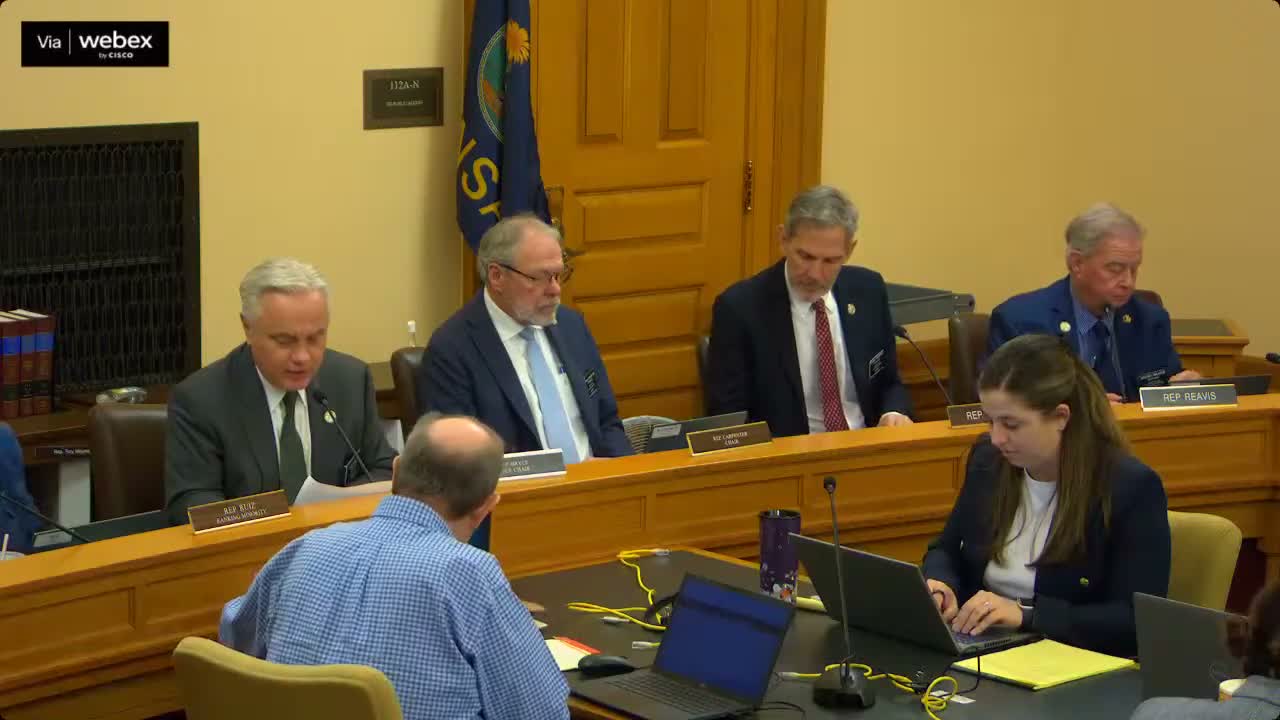
Summary
The Office of the Medicaid Inspector General told the House Health and Human Services Committee it has identified 62 likely fraudulent cases in the pregnant‑woman Medicaid program and broader system gaps — including missed HCBS functional assessments and duplicate payments — that could affect millions of dollars in state spending.
The Office of the Medicaid Inspector General told the Committee on House Health and Human Services on Tuesday that audits and investigations have uncovered suspected fraud in the pregnant‑woman Medicaid program, widespread process failures in home‑and‑community‑based services (HCBS) and examples of duplicate payments to managed‑care organizations.
Inspector Steve Anderson, presenting the office’s work, said an audit of the pregnant‑woman program flagged 62 people aged 45 and older who had no pregnancy claims and “appear to be fraudulently on the Medicaid or on the pregnant woman program.” He said capitation payments tied to those cases total nearly $800,000 and that the office intends to open criminal investigations into the most serious instances as staffing and prosecutorial resources permit.
The finding followed broader data reviews the office is conducting of DCF and KDHE eligibility information, Anderson said. He told lawmakers the audit team has seen cases in which applicants reported different employment or pregnancy status to separate programs — facts that, when inconsistent across SNAP, childcare subsidies and Medicaid, can create eligibility conflicts.
Why it matters: Anderson said the pregnant‑woman coverage carries benefits beyond prenatal care — including one year of postpartum Medicaid and easier access to SNAP or WIC — so improper enrollment can multiply program costs. Committee members expressed concern about program integrity but also cautioned against deterrence: Representative Weichel noted the 62 cases represent about 0.0062 percent of the roughly 10,000 births Medicaid covers annually and said enforcement must not discourage women from seeking prenatal care.
Anderson described investigative methods used to classify cases as likely fraudulent: review of claims data showing zero pregnancy‑related claims, requests for medical records, contacting providers (no visits documented) and instances of forged doctor letters. “We found 62 people so far that that appear to be fraudulently on the Medicaid,” he told the committee.
The inspector general also highlighted other audits with substantial fiscal implications. A school‑reimbursement review identified roughly $83,000,000 in capitation payments collected by MCOs for students while the state paid schools fee‑for‑service for the same services, an outcome Anderson characterized as dual payment. A follow‑up HCBS audit to a 2022 report found large numbers of beneficiaries who lacked timely functional assessments; Anderson estimated the state could save about $36,000,000 annually if ineligible waiver recipients were moved to regular Medicaid, while stressing the recommendation is not to remove beneficiaries from care without proper review.
Anderson pointed to systemic problems that help explain these gaps: staffing shortfalls (the office was authorized nine FTEs under House Bill 22 17 but had not yet filled those positions because funding lagged), contractor turnover for assessments, flawed tracking systems such as the Cayman/CANUS systems that drop reminders and interagency barriers that prevent timely processing of removal requests from MCOs.
The office’s voter‑registration issue brief was another example of avoidable cost, Anderson said: KDHE forms and guidance omitted federally required language, which contributed to an estimated $450,000 in mailing costs for voter‑registration packets sent to people who did not request them. Anderson urged the agency to return forms to federal compliance and said an interim report will be provided to KDHE.
Committee reaction and next steps: Lawmakers thanked Anderson for the overview and asked for concrete fixes: retraining eligibility workers, applying the CMS proviso that allows follow‑up when there is contrary information to self‑attestation, improving interagency database access, and considering a budget proviso to fund corrective work. Anderson said several investigations have been referred for prosecution; he cited a case in which a defendant obtained more than $200,000 in capitation payments and faces roughly $453,000 in restitution across federal and state counts.
Anderson said his office will continue the HCBS follow‑up, finish the ongoing audits of data sharing and pharmacy dispensing fees, and provide interim reports to affected agencies. The committee did not take formal action on the audits during the hearing.
The inspector general’s materials and the office’s audit reports were referenced repeatedly; Anderson said completed audits and issue briefs are available on the office website and that the office will issue an interim report to KDHE on the pregnant‑woman findings.