
Committee debates bill that would require .gov or state-certified sites for online voter registration
Get AI-powered insights, summaries, and transcripts
Subscribe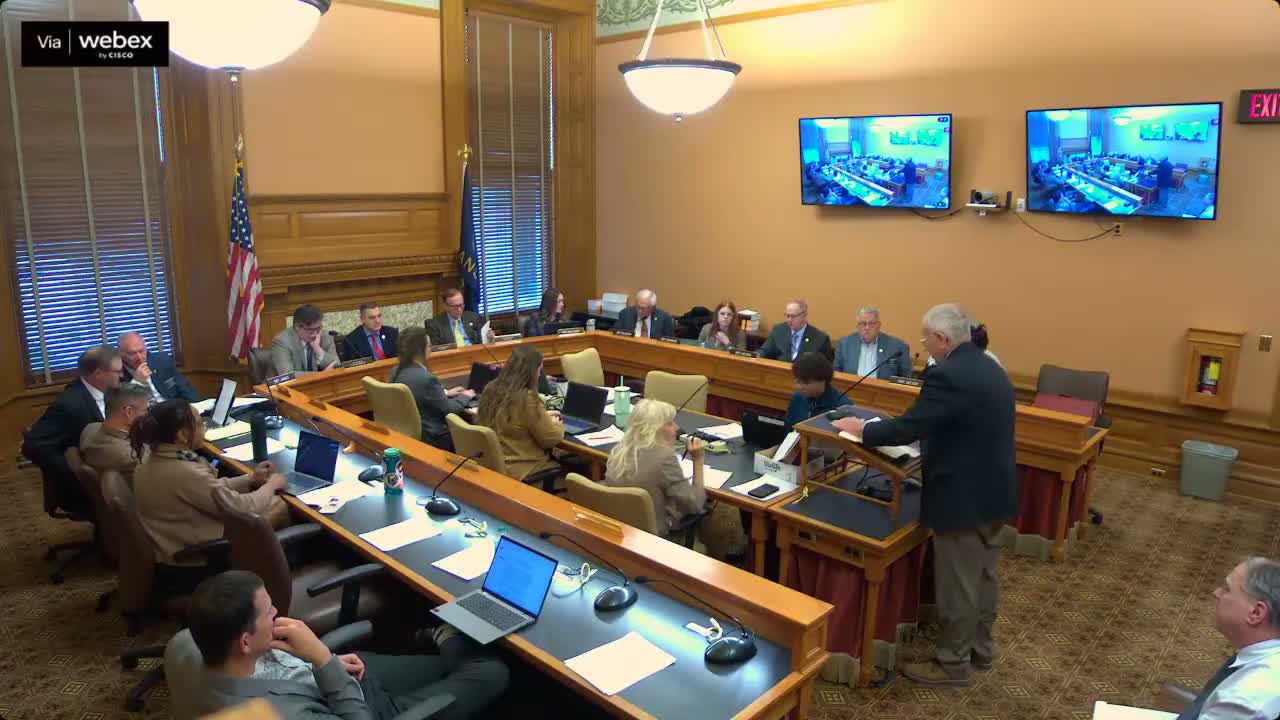
Summary
H.B. 2438 would require online voter-registration websites to use a .gov domain or be approved by the Secretary of State under forthcoming cybersecurity, connectivity and privacy rules; supporters say the standards would protect voters’ personal data and reduce registration errors, while opponents warn the measure could curtail third-party registration options and disenfranchise students and others without Kansas IDs until regulations take effect.
The Committee on Elections opened and closed an often-contentious hearing on H.B. 2438, a bill that would limit accepted online voter-registration websites to those using a .gov domain or those approved by the Secretary of State under regulation.
Revisor briefing: The Revisor described Section 1 of H.B. 2438 as requiring that any person registering to vote online in Kansas must use a website with a .gov domain or a site that the Secretary of State has approved as meeting specified criteria. The Secretary must adopt rules by Jan. 1, 2027, to implement standards for security, direct connectivity to county election systems, and privacy protections.
Secretary of State testimony: Clay Barker said the goal is to set minimum uniform standards so that data transmissions are encrypted, routed directly to county election officials, and not shared with third parties. He said problems have occurred where voters believe they used a government site but used a third-party site instead, and where third-party sites have transmitted registrations insecurely (for example, by unencrypted email attachments) or delayed transmission so the county never received the application in time. Barker said certified sites would meet cybersecurity and connectivity criteria and could be labeled as such for voters’ benefit.
Opposition testimony: Opponents — including civic groups and registration organizers — said the bill as written would effectively cut off many third-party registration pathways until rules are adopted, potentially suppressing online registration during an entire election cycle. Witnesses argued the state’s online portal is not universally accessible (it typically requires a Kansas driver’s-license number) and that students, military personnel and others without Kansas IDs rely on third-party portals. Davis Hammitt and others also argued the bill’s language could direct county clerks to ignore otherwise valid federal registration forms submitted electronically, raising potential NVRA (National Voter Registration Act) compliance questions.
Committee concerns and follow-ups: Members asked for data about how many registrants use third-party sites and how often problems occur; Secretary staff said the office receives more than 100 complaints per election cycle about third-party-site problems but does not track exact breakdowns. Opponents cited a 2017 incident in which the state’s online portal reportedly failed and some registrations were not processed; they asked for quantified evidence before proceeding with a measure that could narrow voter-registration options. Several members suggested possible middle-ground approaches such as a voluntary certification or a verified badge and asked staff to provide counts and operational details before any vote.
Ending: The hearing closed with the committee urging follow-up on numbers, technical standards and federal-law questions; no vote was taken and members said amendments could be drafted after additional information.