
Kansas education committee hears bill to require parental consent for school-based mental-health services
Get AI-powered insights, summaries, and transcripts
Sign Up Free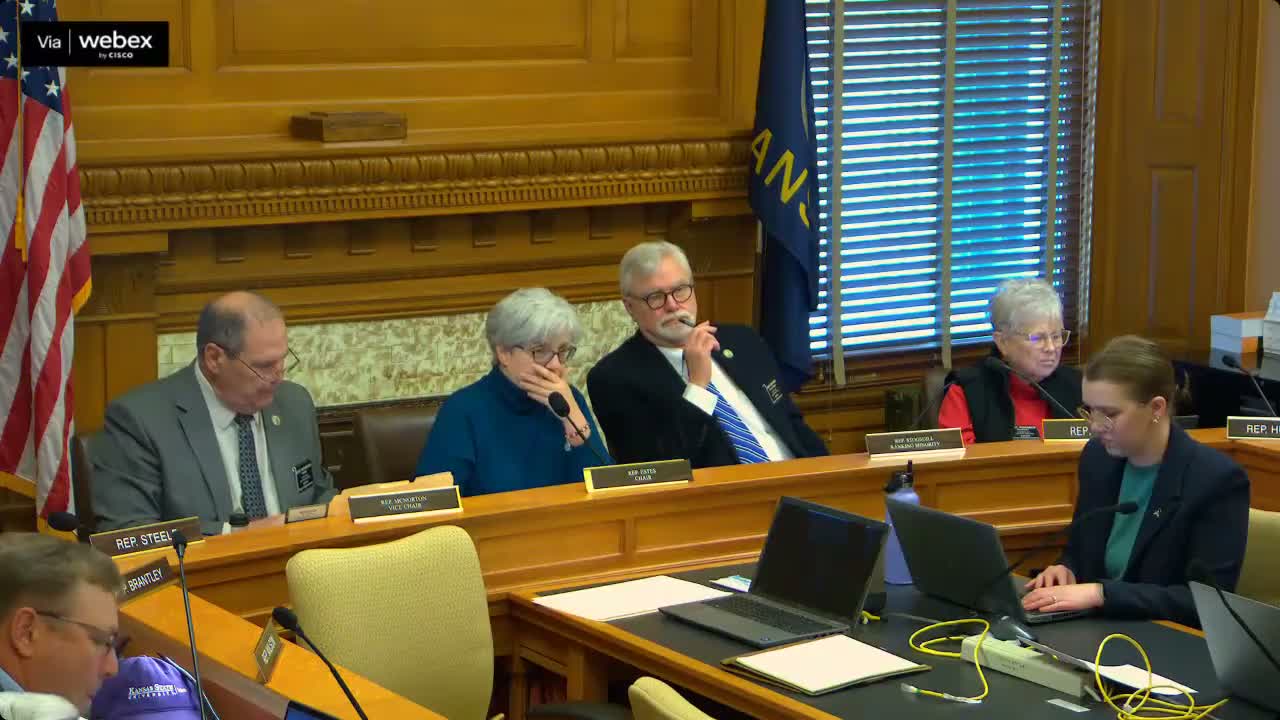
Summary
Members heard House Bill 24-20, which would require parental notice and written consent before schools provide mental-health services under MTSS tiers 2 and 3; supporters said it restores parental authority, while educators, nurses and mental-health providers warned the bill’s broad wording and a $5,000 civil penalty could delay care and chill routine classroom supports.
The Committee on Education heard testimony on House Bill 24-20, which would require schools to provide verbal and written notice and obtain written parental consent before delivering school‑based mental‑health services beyond universal (tier 1) supports.
Jason Long of the Revisor’s Office told the committee the bill defines school‑based mental health on page 2 and excludes tier 1 of the Multi‑Tiered System of Supports. "Before mental health services can be provided, verbal and written notice must be communicated to the parent of the student," he said, and the parent "must provide written consent" before services begin. Long also said the bill allows suicide‑risk assessments to proceed when there is a credible report of risk, and it would authorize a $5,000 civil fine against a district for violations, collectible by the attorney general or local prosecutor; the provisions would take effect July 1 if enacted.
Proponents framed the bill as restoring parental rights and accountability. Representative Steele, a school nurse who testified in support, said parents "have the primary responsibility and authority over decisions that affect their child's education, health, and well‑being." Steele described cases brought by constituents who found students repeatedly pulled from class for counseling without parental notice and said the bill preserves teachers’ ability to make ordinary check‑ins while ensuring written permission for ongoing services.
Several parents detailed personal experiences the committee said motivated the proposal. Denise Roberts described her family’s experience in Shawnee Mission Schools: she said a practicum social‑work student met with her daughter without her knowledge, district records were inconsistent and she only obtained full records after filing a records request. "We were flying blind and we were scared for her," Roberts said. She urged legal guardrails to create a record and accountability when families say their boundaries were crossed.
Neutral and opposing testimony raised legal and practical concerns. Kathy Mosier of ASTRA Mental Health and Recovery said existing Kansas law allows some minors aged 14 and older to consent to outpatient mental‑health services without parental permission and warned the bill as written could conflict with that authority. "Minors 14 and older may consent to outpatient mental‑health services without parental consent," she said, and she flagged the bill’s lack of a clear crisis exemption beyond suicide screening.
School nurses and educators warned the bill’s language was overly broad and could hinder timely responses. Kimberly Martin, legislative chair of the Kansas School Nurses Organization, urged rejection, saying the bill "creates dangerous barriers to care" and recounting a case where staff stabilized a violently dysregulated student while parents were unreachable. Mary Sinclair of the Volunteer Kansas PTA and representatives of school administrators and the Kansas National Education Association said the bill’s definition could sweep ordinary classroom supports into the prior‑consent requirement and that the $5,000 penalty per encounter could chill educators from acting.
Committee members pressed for drafting clarity: the Revisor confirmed the bill does not define the statutory term "ongoing," a point members and witnesses said leaves ambiguity between classroom management, short‑term interventions and clinical treatment. Witnesses and lawmakers urged clearer definitions of the services covered, stronger crisis exceptions, and coordination with existing statutes and professional practice rules.
The hearing concluded without a committee vote. Members asked the Revisor to follow up on cross‑statutory questions and indicated a willingness among some to work on narrower language; opponents urged more stakeholder conversations to avoid unintended consequences for student safety and classroom functioning.