
Midwest Higher Education Compact tells Kansas panel it delivers savings, grants and data tools
Get AI-powered insights, summaries, and transcripts
Sign Up Free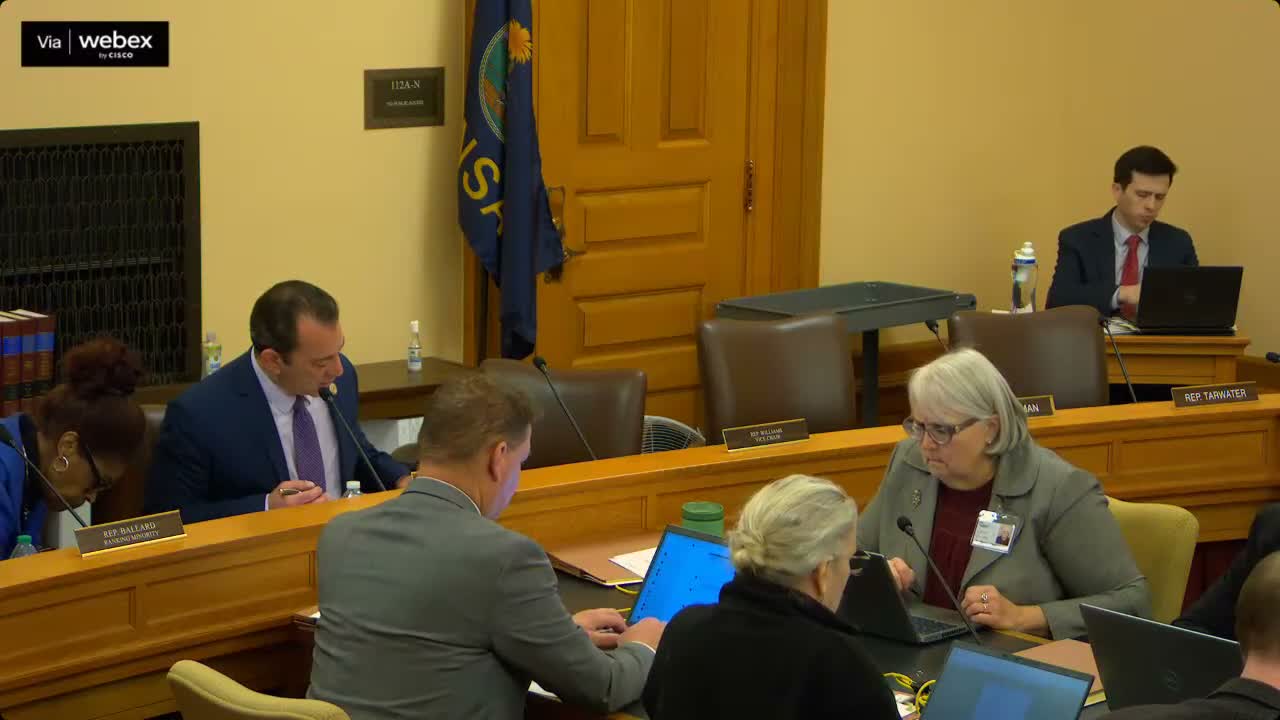
Summary
Susan Heegard, president of the Midwest Higher Education Compact, told the Committee on Appropriations that MCA programs save member institutions and states money, offer shared contracts and grants, and produce data and convenings to guide workforce and enrollment strategy in Kansas.
Susan Heegard, president of the Midwest Higher Education Compact, told the Committee on Appropriations that the compact’s work produces measurable cost savings and policy research for Midwestern states.
“He said” is incorrect attribution for this speaker in the transcript; the official speaker said: “We save you and other states a lot of money,” and Heegard later described a roughly 55‑fold return on Kansas’s $115,000 annual commitment to the compact. She said the compact’s programs include the Midwestern State Authorization Reciprocity Agreement (MSERRA) to simplify distance‑education registration, technology and procurement contracts with vendors such as Dell and Oracle, and grant opportunities for member states.
Why it matters: Heegard framed MEC’s work around two functions: tangible cost savings for institutions and states, and policy and research work that helps states set priorities (for example, on textbooks, dual enrollment, and data systems). Kansas officials were given specific program details they can pursue — from a $10,000 grant for open educational resources already awarded to Kansas, to eligibility for grants of up to $250,000 tied to MEC’s strategic plan.
Key details: Heegard said MSERRA reduces administrative burdens for institutions that offer programs across state lines, which the compact estimated saves institutions about $4.6 million; she cited technology savings of about $1.4 million tied to shared contracts. She described a legacy exchange program that allowed students to attend other Midwestern state colleges at an adjusted in‑region rate; that program has become less central as many states move to flat tuition. Heegard also noted convenings, a research arm led by John (John Birzyk Dreier, mentioned in the briefing), and pilot work on a captive insurance program.
Questions and next steps: Committee members did not press Heegard for substantive follow up during the session; Heegard offered to provide additional data through the compact’s staff and flagged that more detailed data slides and links are available in the packet provided to the committee.
The committee moved on afterward to an ARPA spending update and budget reportouts.