Get Full Government Meeting Transcripts, Videos, & Alerts Forever!
Get email alerts on the Zoning topic
No spam. Unsubscribe anytime.
Residents press Nye County to fix 'zombie' lots and explain big assessment jumps for mobile homes
Summary
Dozens of residents used public comment to press the county on unbuildable 'zombie' lots and surprise increases in manufactured/mobile‑home assessments. The county assessor explained a multiplier change led to higher taxable values but said tax liability on primary residences is capped at 3% annually.
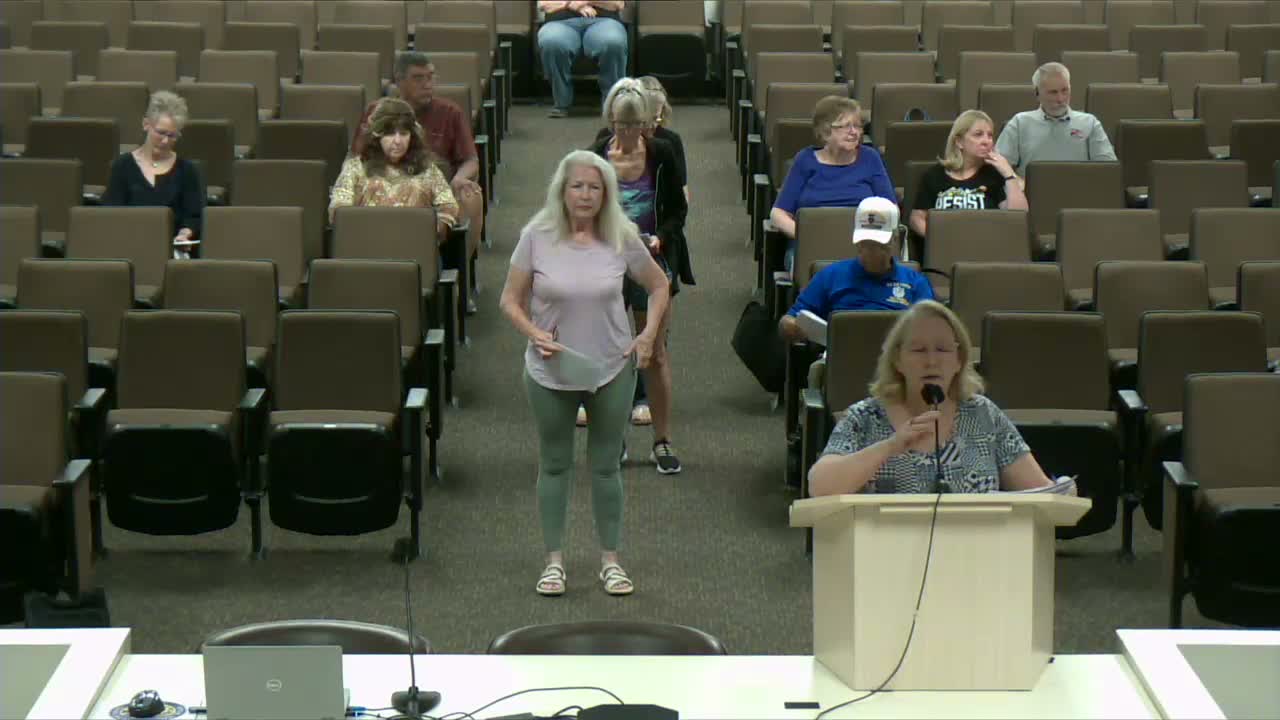
A steady stream of public commenters on Aug. 5 told the Nye County Board of Commissioners that many owners of VR‑zoned and tax‑sale lots remain unable to build or use their property, and that the county should enact zoning fixes or permit alternatives for lots that lack infrastructure.
Several speakers described receiving tax bills after learning their lots were 'unbuildable' or that the assessor’s office had applied a different valuation multiplier. “Why did my house go up $11,000?” asked Beth Borysiewicz, a Pahrump resident, whose comment set off a string of similar complaints from mobile‑home and 'zombie lot' owners who said they learned of value changes only after receiving bills.
Assessor Sherry Stringer read a written explanation from Chief Deputy Justin Zimmerman: the office adjusted from a site‑built housing multiplier to the manufactured‑housing multiplier after the state ratio study identified the prior multiplier was incorrect. She emphasized that assessed (taxable) value can rise while primary‑residence tax liability is capped at 3% per year under state limits; she gave example figures for a manufactured home showing taxable values rising from $97,046 to $106,119 and explained the difference in multiplier application.
Many callers urged the board to pursue zone changes or a permit review process that would allow alternative utilities and responsible occupancy of lots where infrastructure will never arrive. Some suggested pilot programs or a simple permit review like that used in other counties. Board members said they heard the concerns and pledged to seek solutions and offer contacts for follow‑up; several asked for legal and planning staff to present options for zoning or administrative fixes.
Next steps: commissioners agreed to follow up with the assessor and planning staff and to bring options back to the board; residents were encouraged to provide detailed alternative‑utility proposals and supporting documentation to county staff.