
Oklahoma Tax Commission cites service gains, urges lawmakers to consider using $50M cash balance
Get AI-powered insights, summaries, and transcripts
Subscribe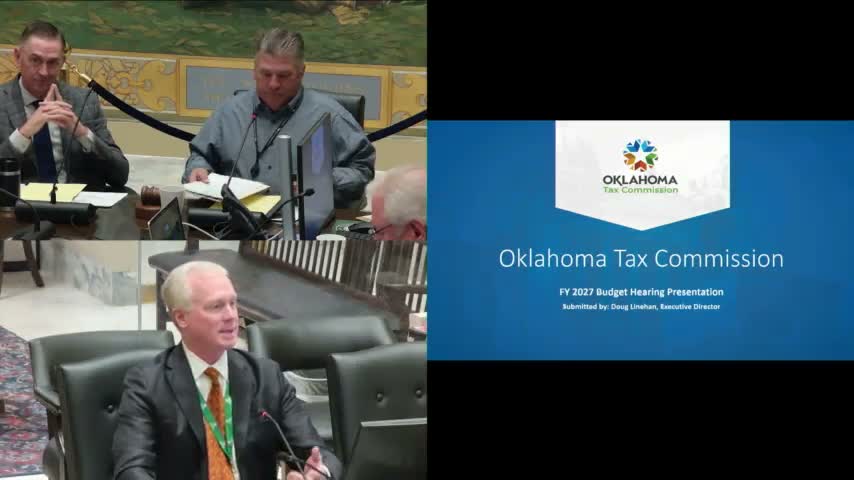
Summary
The Oklahoma Tax Commission told a House committee it has reduced customer wait times, cut backlogs and improved collections while trimming its 2026 budget request; Director Doug Lenehan asked lawmakers to consider redeploying about $50 million in agency cash rather than leaving it idle.
Doug Lenehan, director of the Oklahoma Tax Commission, told a House committee Tuesday the agency has tightened operations and improved taxpayer service while shrinking its 2026 budget request.
Lenehan said the agency’s operating budget is roughly $100,000,000 and described a multi‑year effort to rebuild people, processes and technology. “Our operating budget is a $100,000,000,” he said, adding the commission has prioritized being “a good steward” of those funds.
The presentation highlighted several measurable changes. Lenehan said the parental choice tax credit application — now in its third cycle — was moved in‑house after a first‑year crash; he said the program has used nearly a $250,000,000 cap and approved a little over 30,000 taxpayers. A contact‑center overhaul, he said, expanded staffing from roughly 28 budgeted positions to 72 and reduced estimated abandoned call rates from about 60% to 10%, bringing average wait times to roughly 10 minutes.
The director also described a new collections system that cost about $1,000,000 and produced roughly $25,000,000 in additional “no‑touch” collections, enabling the agency to retain more work in‑house and reduce amounts farmed out to private collectors.
Lenehan presented concrete backlog improvements: a business tax credits/refunds backlog that was about 17,000 three years ago has fallen to under 3,900, and he said waiver processing that previously took roughly 30 months now averages about 30–45 days because of automation and improved summaries to commissioners.
On the budget, the commission’s appropriated request for FY2026 was shown as $31.2 million, down $3.0 million (9%) from the prior year request of $34.2 million, and down materially since FY2022. Lenehan said the agency also holds cash balances and asked lawmakers to consider allocating roughly $50,000,000 that is “not benefiting the taxpayer” by sitting idle.
Members questioned the source of that cash. Lenehan explained the agency’s revenue mix includes appropriated dollars, statutory retention of 0.5% of certain city and county tax collections, and growing audit revenue (which he said has increased about 35% over the last three years). He noted statutory transfers can require sending amounts to OMES and urged legislators to work with the commission if they consider reducing fee structures.
Committee members raised constituent concerns about mailed notices and electronic responses. Lenehan acknowledged an antiquated letters system that produced an embarrassing batch of old notices and said the agency is prioritizing contact‑center improvements first and will later upgrade letter generation. Adanji Shankar, the commission’s finance official, told the committee an FY2026 appropriated figure on one slide did not include carryover funds and offered to follow up with clarified slide figures.
There were no votes. The committee indicated it would continue discussion as the legislative session convenes.
The director said he would provide further details offline and that staff would follow up with members about specific constituent cases and slide clarifications.