Get Full Government Meeting Transcripts, Videos, & Alerts Forever!
Get email alerts on the Federal Conformity topic
No spam. Unsubscribe anytime.
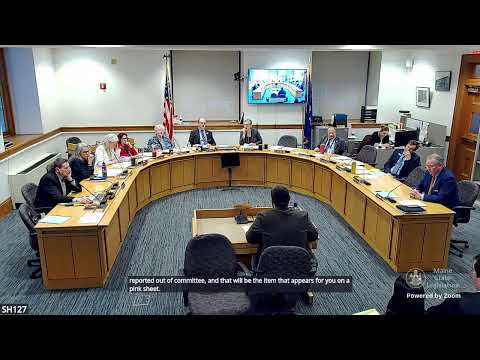
Maine Revenue Services briefs taxation committee on federal tax conformity and timing
Summary
Maine Revenue Services said the state currently conforms to the Internal Revenue Code as of Dec. 31, 2024, and recommended the committee consider changing the date to Dec. 31, 2025; the agency previewed a consolidated report and said the governor’s conformity proposal will appear in the supplemental budget, prompting committee debate about whether to hold a standalone public hearing or use the budget process.
Michael Allen, associate commissioner for tax policy at Maine Revenue Services, told the Joint Standing Committee on Taxation that Maine currently conforms to the Internal Revenue Code as of Dec. 31, 2024, and that the committee will need to consider changing that date to Dec. 31, 2025 to mirror recent federal changes.
"At the moment, under current law, we conform to the Internal Revenue Code as of 12/31/2024," Allen said, and he described a packet of materials the department provided on Oct. 17 that outlines provisions in the federal OB3 legislation that create conformity questions for the state. He said some provisions were retroactive to Jan. 1, 2025 and others have an implementation date of Jan. 1, 2026.
Allen summarized enacted procedures under chapter 336 (the bill enacted last session) that allow the governor, under specified guardrails, to direct the state tax assessor to temporarily conform to certain federal provisions that affect the upcoming filing season. The administration used that procedure when federal changes would affect the imminent tax‑filing process, Allen said.
He told members the administration is drafting a consolidated report that will gather the retroactive provisions and the 2026 items into a single package, update fiscal notes relative to the December 1 revenue forecast, and provide information to the committee before deliberations on the governor’s proposal. He also said the governor’s conformity proposal will be part of the supplemental budget to be released soon.
Committee members pressed for timing and process clarity. Some members favored a stand‑alone public hearing on LD2010 (the standard conformity bill) so the public can respond directly to the conformity question; others said the supplemental budget process includes opportunities for public hearings and worried about redundant hearings that could overburden affected community members. Allen said MRS plans to have materials ready in advance of committee deliberations so members can assess fiscal impacts and filing consequences.
The briefing clarified fiscal‑note procedures: the Office of Tax Policy provides revenue estimates to the Office of Fiscal and Program Review (OFPR), which decides how to use them in official fiscal notes. Allen emphasized continuing uncertainty about how some federal provisions will affect federal adjusted gross income or fall "below the line," which affects whether they are direct conformity issues.