Get Full Government Meeting Transcripts, Videos, & Alerts Forever!
Get email alerts on the LD1993 Setf Cap topic
No spam. Unsubscribe anytime.
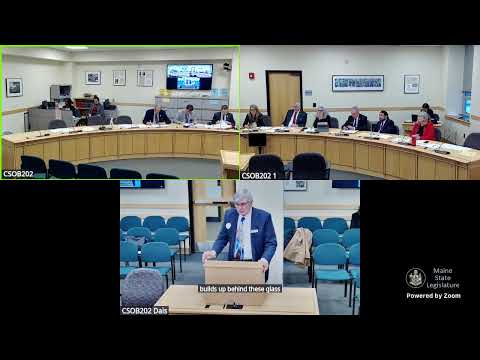
Lawmakers hear competing views on doubling cap for workplace safety training fund
Summary
The committee heard LD 1993 to raise the cap on the Safety Education and Training Fund assessment from 1% to 2%; the Department of Labor cited program successes and training impacts, while insurers and trade groups warned a doubling would be unwarranted and urged more data.
Representative Amy Rader presented LD 1993, which would amend the statutory cap on the assessment that funds the Safety Education and Training Fund (SETF) from 1% to 2% of paid workers' compensation benefits (excluding medical payments). Rader and Department of Labor witnesses said the cap increase would provide flexibility to maintain training programs as the assessed "pot" of workers' compensation payouts declines.
Kate Burkhart, director of the Bureau of Labor Standards, testified the SETF supports no-cost training and assistance programs such as on-site consultation, SHAPE and SHARP recognition, and Safety Works classes. She recounted an example in which a worker survived a fall because of training that taught proper harness and lanyard use: "This accident could have been fatal...the worker used the knowledge he learned in the Safety Works class," Burkhart said, to illustrate program impact.
Industry witnesses testified in opposition. Peter Gore (Main Street Solutions) representing Maine Council of Self Insurance, the Workers' Compensation Coordinating Council, and MEMIC, said doubling the cap "is unwarranted" and raised concerns that employers already pay for overlapping training and that changes should follow a program review. Gore estimated MEMIC's assessment would rise from about $877,000 to roughly $1.7 million under a full doubling scenario and asked the committee to evaluate federal funding and program priorities before increasing statutory authority.
Amanda Johnson of the Maine State Chamber also opposed the measure, urging more analysis of fund balances, historical assessment data and program demand. Bruce Cary, representing insurer and dealer trade groups, urged caution and said many self-insured groups run robust, tailored safety programs that reduce claims.
Committee members probed the assessment mechanics, asked about charts in written testimony showing paid claims and assessment trends since 2011, and questioned pandemic impacts on claims. Burkhart said the department will provide additional information for the work session and reiterated that LD 1993 changes the cap (it does not automatically set the assessment at 2%). The public hearing was closed with work-session follow up expected.
Next steps: department and analysts will supply additional data for a committee work session; no committee vote was taken during today's hearing.