Get Full Government Meeting Transcripts, Videos, & Alerts Forever!
Get email alerts on the Right To Repair topic
No spam. Unsubscribe anytime.
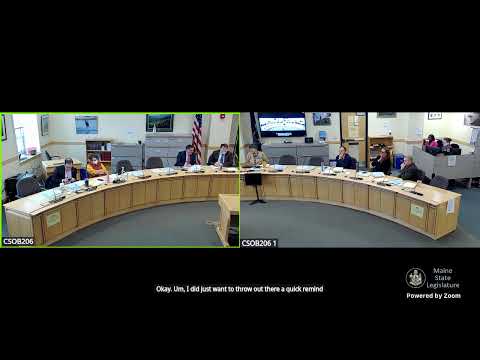
Maine hearing on LD 1908 pits independent repair shops and environmental groups against industry over access to parts and diagnostics
Summary
Supporters told the Housing and Economic Development Committee LD 1908 would lower costs, cut e-waste and boost rural repair shops; industry groups warned it risks security, trade secrets and a patchwork of state rules. The committee heard detailed technical questions and proposed clarifications.
Senator Mike Tipping introduced LD 19 08 as a bipartisan measure to require manufacturers doing business in Maine to make repair parts, tools and diagnostic information available to device owners and independent repair providers on fair and reasonable terms. “This bill is about important rights of ownership and independence,” Tipping said, framing the measure as both a consumer-rights and a pocketbook proposal for Mainers who live far from manufacturer service centers.
Supporters said the law would reduce e-waste, help small repair businesses and save households money. Henry Welch of the US Public Interest Research Group said restricted access to repair materials forces consumers to buy new devices instead of fixing broken ones; he pointed to an analysis — which he offered to document for the committee — estimating statewide household savings if repair were more widely available. Devin Milanafi, a Portland repair-cafe volunteer, described “black box” devices that lack troubleshooting documentation that independent fixers can use, arguing the bill would let community repair efforts handle newer electronics.
Industry and trade groups cautioned the committee about security, privacy and the scope of coverage. Matt Marks, representing CTIA, said industry programs like WISE offer certified repair options and argued the marketplace is already expanding consumer repair choices. Cisco’s Joseph Lee asked the committee to exempt enterprise and business-to-government equipment, warning that disclosure of firmware, encryption keys or other sensitive technical information for critical infrastructure could increase cyber risk. Several witnesses representing manufacturers and industry coalitions echoed concerns about parts pairing, aftermarket safety (notably batteries), and the potential for increased litigation if enforcement includes private rights of action.
Proponents countered that the bill need not require disclosure of source code and that many of the stated cybersecurity objections have been addressed elsewhere. Kyle Wiens, CEO of iFixit, said the legislation does not mandate release of source code and argued that access to security updates and diagnostic tooling can improve overall security by enabling timely patching and maintenance by local providers. Gaye Gordon Byrne of repair.org urged the committee to consider the broader international and state-level trend toward repair access and said the bill’s exclusions mirrored language adopted in other states.
Committee members pressed for technical clarifications. Senators and representatives asked about effective dates and whether the statute should use alternate motor-vehicle definitions to capture or exempt motorcycles and similar vehicles; Senator Tipping agreed to submit amendment language for the record. Lawmakers also asked proponents and opponents to supply comparative state law examples and data backing key claims (for instance, the calculation of projected household savings and the safety performance of aftermarket parts).
The hearing closed after a full slate of in-person and virtual testimony. No formal committee vote occurred that day; members indicated they expect additional drafting and detailed amendment language before the bill advances to work session.