Get Full Government Meeting Transcripts, Videos, & Alerts Forever!
Get email alerts on the State Police Budget topic
No spam. Unsubscribe anytime.
Virginia State Police tell senators overtime, equipment and IT are driving a steep budget squeeze
Summary
Lieutenant Colonel Keenan Hook told the Senate Public Safety Subcommittee that ammunition costs, software maintenance, vehicle and aviation repairs and overtime have raised operational costs and that the department faces several hundred sworn vacancies even as hiring improves.
Lieutenant Colonel Keenan Hook, deputy superintendent of the Virginia State Police, told the Senate Public Safety Subcommittee that the department is facing a combination of rising equipment and technology costs, persistent overtime and staffing pressures that together are squeezing its operating budget. Hook said major cost drivers include software maintenance (up 88% year‑over‑year in one area), VITA transformation costs, telecommunications and in‑car equipment, and aviation maintenance for the department's helicopter and airplane fleet.
Hook said ammunition costs have substantially increased since FY21 — "we're paying about 2.2 [million]" versus roughly $1.1 million previously — and that overtime is a perennial pressure: "We're appropriated $7,100,000 for overtime. This year, we're projected to spend a little over 17,000,000." He said vehicle maintenance and repair services rose about 170% year‑over‑year and that the department is purchasing fewer vehicles, which creates operational challenges as hiring increases.
On staffing, Hook said the agency has about 3,100 employees (roughly 2,200 sworn and a little over 900 civilian staff), with about 1,843 filled sworn positions and 358 sworn vacancies at the time of the briefing. Hook described recent hiring improvement — classes that produced large cohorts, lateral hires and an increase in applicants — but cautioned projected attrition (he estimated ~86 additional separations later in the fiscal year) could keep vacancies high unless sustained hiring continues. To prioritize sworn hiring, Hook said the department placed a civilian hiring pause in October.
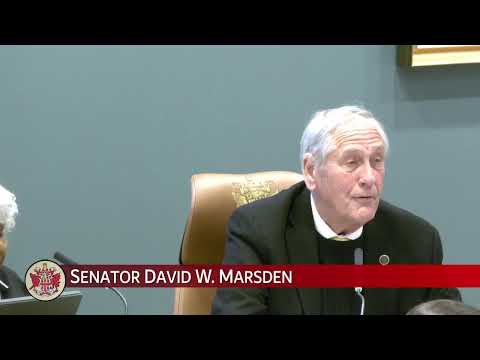
Senators questioned several operational choices. Senator Sarvel and others asked why the department sometimes provides protection for federal elected officials and whether the federal government reimburses those costs. Hook said reimbursements occur but are limited, citing one period in which the Commonwealth received about $125,000 on a $985,000 request. Members also pressed Hook on the absence of a statewide body‑worn camera program. Hook said prior requests for a full statewide roll‑out had been large (at one point an estimated $40,000,000), that body camera programs require a 10‑year funding commitment and recurring staffing for redaction and FOIA review (he estimated more than two dozen redaction specialists would be needed), and that current recurring funding and staffing capacity are insufficient for a statewide program.
Hook reviewed the administration's budget priorities: personnel and equipment to sustain basic schools and manage overtime pressures (he estimated $29,000,000 to run a 100‑person basic school), technology transformation (the governor included $9,300,000 for modernization), and two offender compliance officer positions to help manage a growing supervised population. When asked about authority to tap non‑general fund balances for operations, Hook's chief financial officer David Morrison said the department could plan to use about $14,900,000 in unappropriated non‑general fund cash balances if the legislature authorized it.
The subcommittee asked for additional detail on spending trajectories, the composition of the hiring pipeline and the department's requests for recurring funds to sustain training and a possible body camera program. No formal vote was taken at the meeting.