Get Full Government Meeting Transcripts, Videos, & Alerts Forever!
Get email alerts on the Foia topic
No spam. Unsubscribe anytime.
Planning commissioners briefed on FOIA duties, records and communication rules
Summary
Prince William County's Planning Commission received a training from the County Attorney's Office covering Virginia FOIA: meetings vs. informal gatherings, public-records scope including drafts, five-working-day response deadlines, exemptions, and best practices for emails and staff routing to avoid inadvertent meetings.
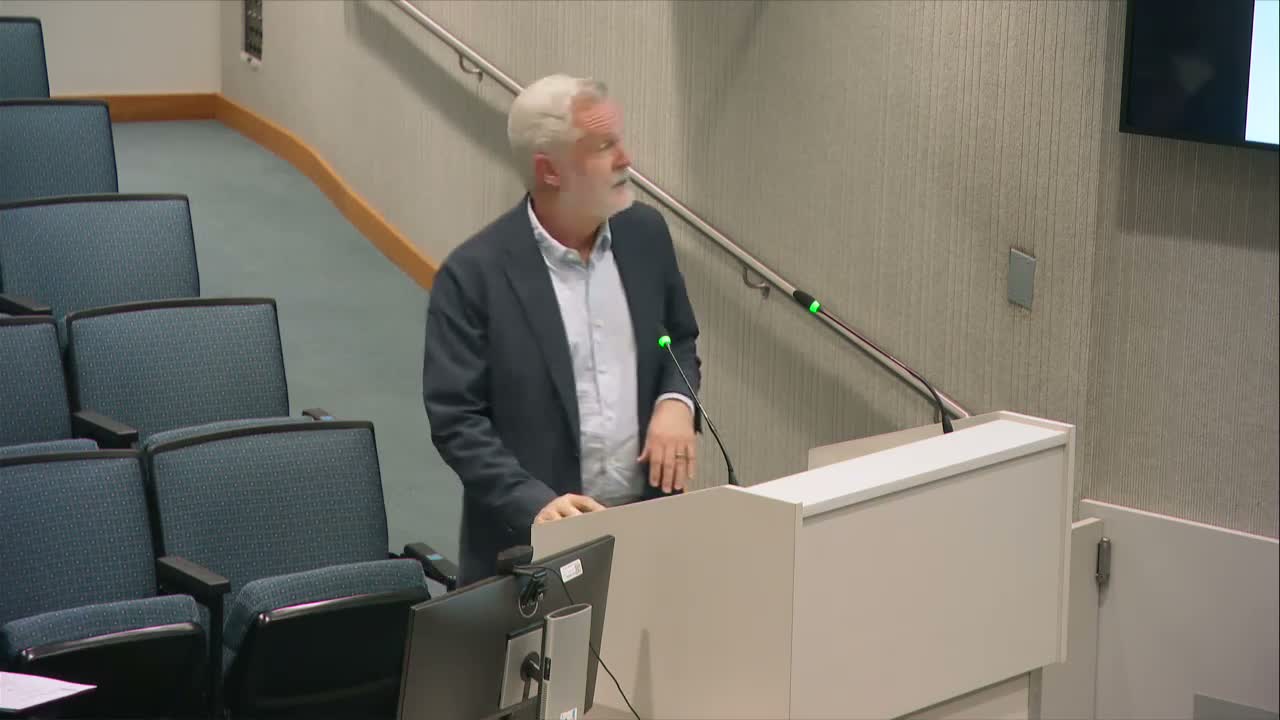
At an annual working session, the Prince William County Planning Commission received instruction from deputy county attorney Rob Scoff on the Virginia Freedom of Information Act, including how routine communications and records can trigger public access requirements.
Scoff told commissioners that "meetings and records are presumed open," and that a gathering of three or more members that transacts or discusses public business qualifies as a meeting under FOIA. He warned that ‘‘relatively simultaneous" email or text exchanges among members can create an inadvertent meeting subject to FOIA requirements.
The training emphasized records rules: "any writing or recording that has to do with the transaction of public business" can be a public record, Scoff said, adding that drafts and emails are often subject to disclosure. Commissioners were advised to use county-provided email accounts and to route materials through a single staff member or FOIA liaison to avoid reply-all chains that could constitute a meeting.
Scoff reviewed FOIA response mechanics: requesters need not put requests in writing or invoke FOIA; the locality has five working days to respond and may seek an additional seven working days when justified. He described permitted responses (produce records, request more time, redirect the requester if the records are held by another body, or assert exemptions such as attorney-client privilege) and noted that redactions must cite the legal basis.
On costs, Scoff said the county waives charges under $50 but may provide a cost estimate and pause the response clock for larger requests; the law allows charging the requester when reasonable costs exceed statutory thresholds. He also warned of possible monetary penalties for knowing FOIA violations and noted that unpaid FOIA fees may limit future requests from the same requester.
The session closed with commissioners asking practical questions about BCC vs. direct emails, remote participation standards, minutes and recording requirements, and site visits. Chair Sherry McPhail reiterated the commission's practice of funneling communications through the clerk to minimize FOIA risk.
The commission then moved on to Conflict of Interest Act training and later authorized a closed session for legal briefings.