Get Full Government Meeting Transcripts, Videos, & Alerts Forever!
Get email alerts on the Needs Assessment topic
No spam. Unsubscribe anytime.
Committee outlines 2025 needs assessment: four work streams, steering committee and yearlong timeline
Summary
Radhika presented a yearlong Our City Our Home needs-assessment plan required by ordinance, organized into four work streams—population analysis, resources inventory, system performance, and lived-experience integration—with previews slated for June, August and October and a final report due in December 2025.
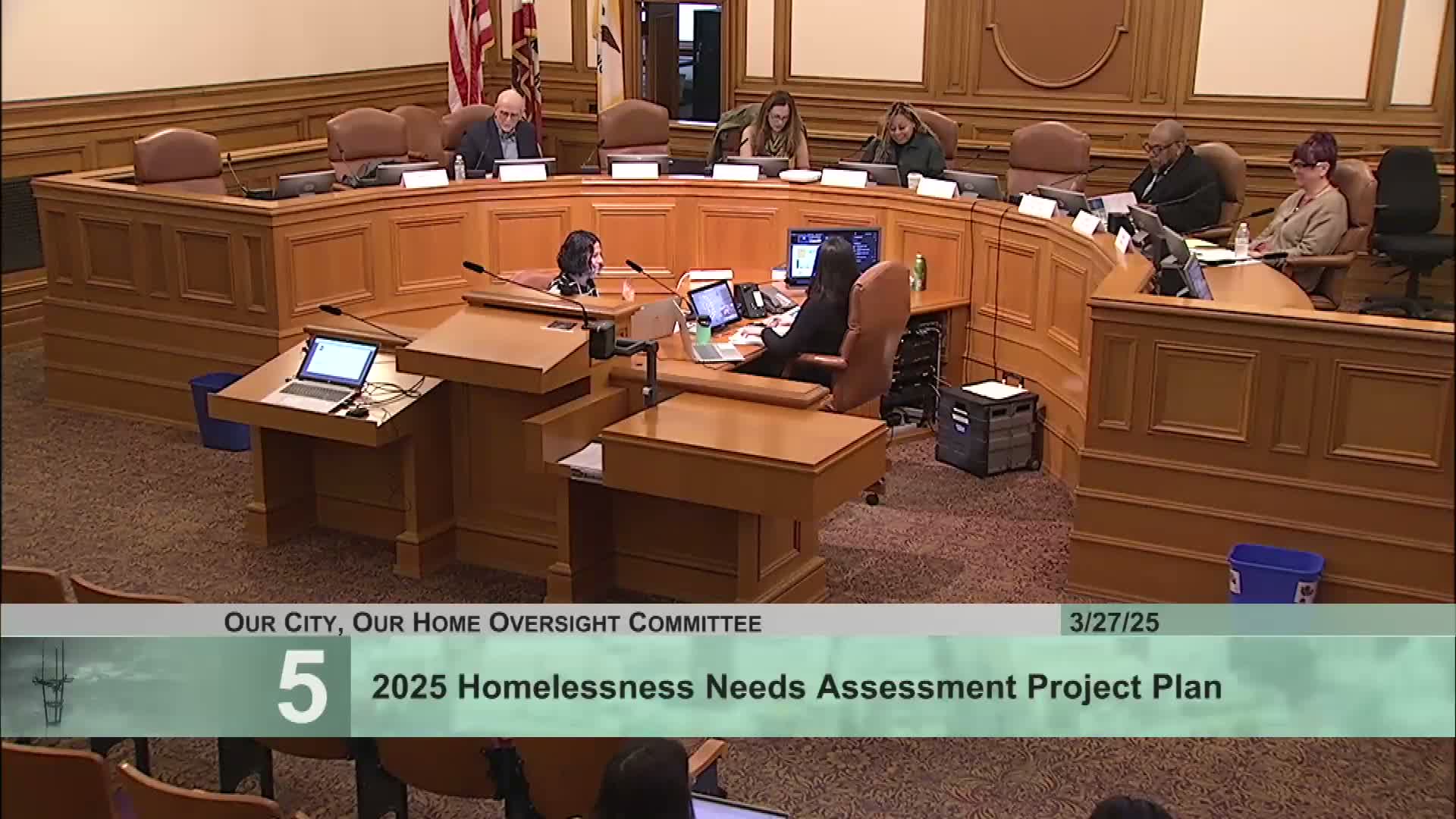
The Our City Our Home Oversight Committee heard a detailed plan on March 27 for the 2025 homeless needs assessment, a statutorily mandated system-level analysis the committee must complete every three years.
Radhika described four work streams that will shape the assessment: population analysis (who is homeless and at risk), resources analysis (inventory of programs across outreach, prevention, shelter and housing), system performance (exits, recidivism, utilization and equity metrics), and integration of lived experience and provider expertise. “We’ve kind of organized this content today in sort of the four work streams that we expect, to sort of all then kind of work themselves in aggregate to the final needs assessment,” she said.
Planned milestones include a population preview in June, a resources update in August, system-performance findings in October and a final published assessment in December. Radhika said the assessment will primarily use existing quantitative city sources (2024 PIT count data, HSH administrative data, HUD housing-inventory counts and departmental program data) and will add qualitative focus groups and lived-experience engagement led by a steering committee composed of departmental partners and committee liaisons.
Committee members emphasized several priorities for the assessment: incorporating behavioral-health data, addressing known data quality and racial-bias issues in PIT and coordinated-entry sources, identifying gaps between estimated need and capacity, clarifying cross-departmental data discrepancies, and ensuring community voices and people in neighborhoods affected by service siting are heard in qualitative work. Several members offered to help design and recruit for lived-experience focus groups.
Public comment pushed the committee to start the analysis by addressing documented racial bias in PIT counts and coordinated entry: a Local Homeless Coordinating Board co-chair urged the committee to use provider and school-district data rather than relying on visual PIT counts alone.
Next steps: the controller’s office will convene a steering committee, begin the first work stream toward a June preview, and report progress at the committee’s regular meetings through the year leading to a December 2025 final report.