Get Full Government Meeting Transcripts, Videos, & Alerts Forever!
Get email alerts on the Meeting Actions topic
No spam. Unsubscribe anytime.
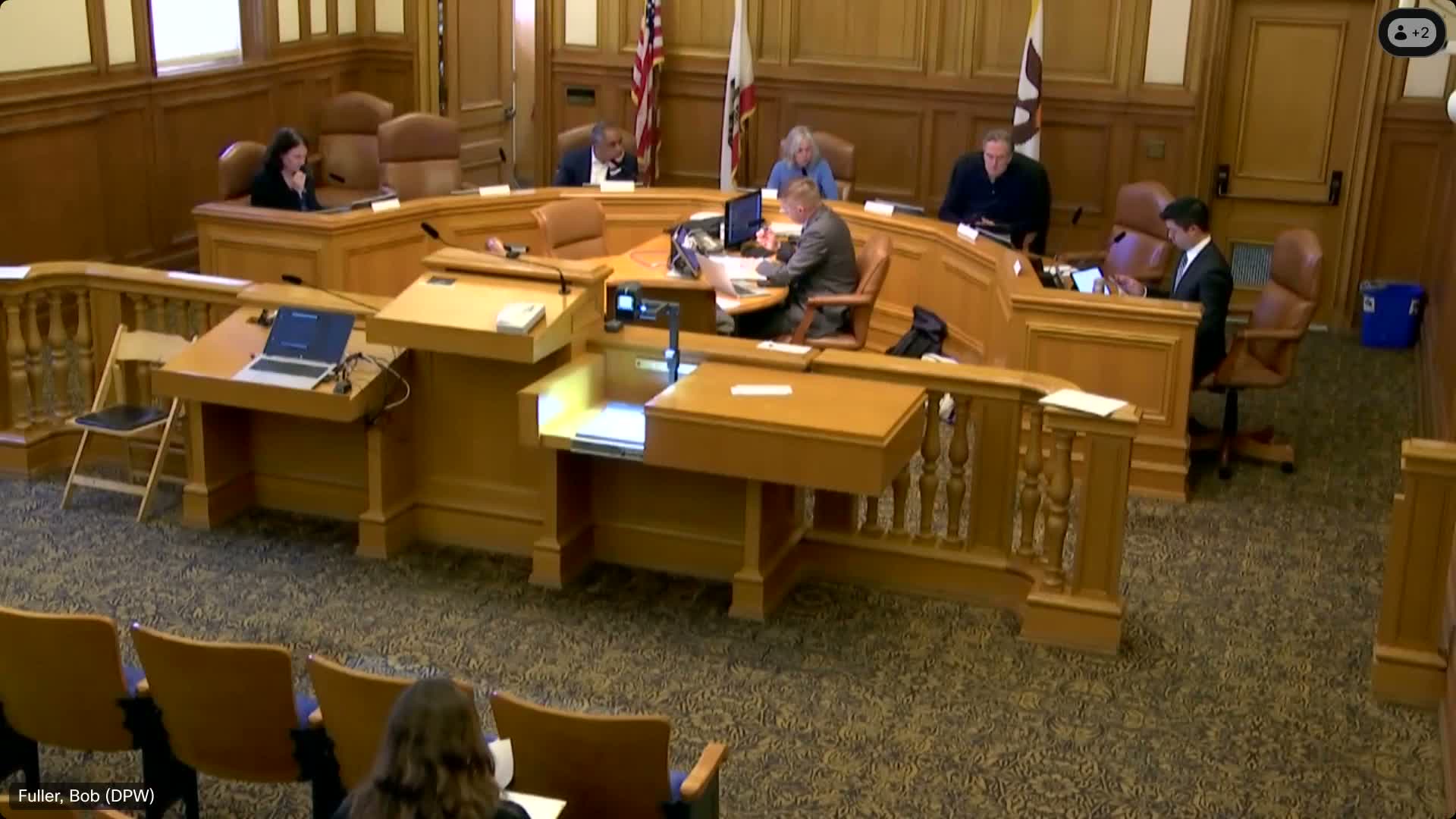
Public Works approves consent calendar, enters closed session and recommends settlement to Board of Supervisors
Summary
The San Francisco Public Works Commission unanimously adopted the consent calendar, moved into closed session to discuss existing litigation, and upon return announced it would recommend that the Board of Supervisors approve a proposed settlement; the commission then voted not to disclose the closed-session discussion under San Francisco Administrative Code §67.12(A).
At its March 13 meeting, the San Francisco Public Works Commission voted unanimously to adopt the consent calendar and later convened a closed session to consider existing litigation and a proposed settlement.
Chair Warren Post moved to adopt the consent calendar, which included the Feb. 27 draft minutes, six contract awards and one contract modification. The motion passed unanimously.
Later in the meeting the commission moved into closed session to confer with legal counsel on existing litigation and a proposed settlement, invoking attorney-client privilege for the discussion. In closed session a deputy city attorney summarized the office memo explaining the settlement recommendation: the matter involves an incident in which Arthur Fraser fell in a location where the city had provided notice; the office reported attempts to recover costs from PacBell but said PacBell had not cooperated and the memo recommended settlement to avoid greater trial exposure.
After returning to open session, Chair Post announced the commission would recommend that the Board of Supervisors approve the proposed settlement. The commission then voted not to disclose the closed-session discussion pursuant to San Francisco Administrative Code section 67.12(A); the motion not to disclose carried.
No monetary settlement amount or detailed terms were disclosed in open session. The commission asked affected staff to leave for the closed session and preserved a privileged record of the discussion per meeting procedure.