Get Full Government Meeting Transcripts, Videos, & Alerts Forever!
Get email alerts on the Environment topic
No spam. Unsubscribe anytime.
Planning commission rejects Holy Square CPA and rezoning after watershed, traffic and school worries
Summary
After lengthy public hearings and heated testimony about the Occoquan Reservoir Protection Area (ORPA), the commission voted to recommend denial of both the CPA to change ORPA designation and the rezoning for the Holy Square development, citing environmental sensitivity, unresolved buffers and school/traffic impact concerns.
The Planning Commission on Nov. 19 recommended denial of both the comprehensive-plan amendment (CPA2024‑00003) and the rezoning (REZ2024‑00023) commonly called Holy Square, after a combined presentation from the applicant and county staff and many hours of public testimony.
Project and staff summary: The applicant proposed to convert roughly 57.7 acres north of Hoadley Road from ORPA and RN‑2 to MU‑3 and rezone the parcels to PMR to build up to 279 residential units, plus limited commercial land bays and a network of parks and trails. The applicant proffered that 64% of the ORPA area would be open space and that 65% of that ORPA area would remain undisturbed; it also pledged not to purchase off‑site nutrient credits and to reduce phosphorus loads by 60% (above Fairfax County’s 50% benchmark). Staff recommended approval conditioned on proffers but flagged that portions of stream buffers and steep slopes raised environmental concerns.
Public opposition and civic input: Dozens of residents and civic groups — including the Mid County Civic Association, Prince William Conservation Alliance and local homeowners associations — urged denial, warning that removing ORPA acreage would create precedent and erode protections for the county’s drinking-water watershed. "If a precedent is set, other developers will want to come in and say you did it for this developer; why not do it for me?" said Delta Nichols of Hunters Ridge HOA. Speakers also described well‑level declines and urged a pause while a regional groundwater study completes.
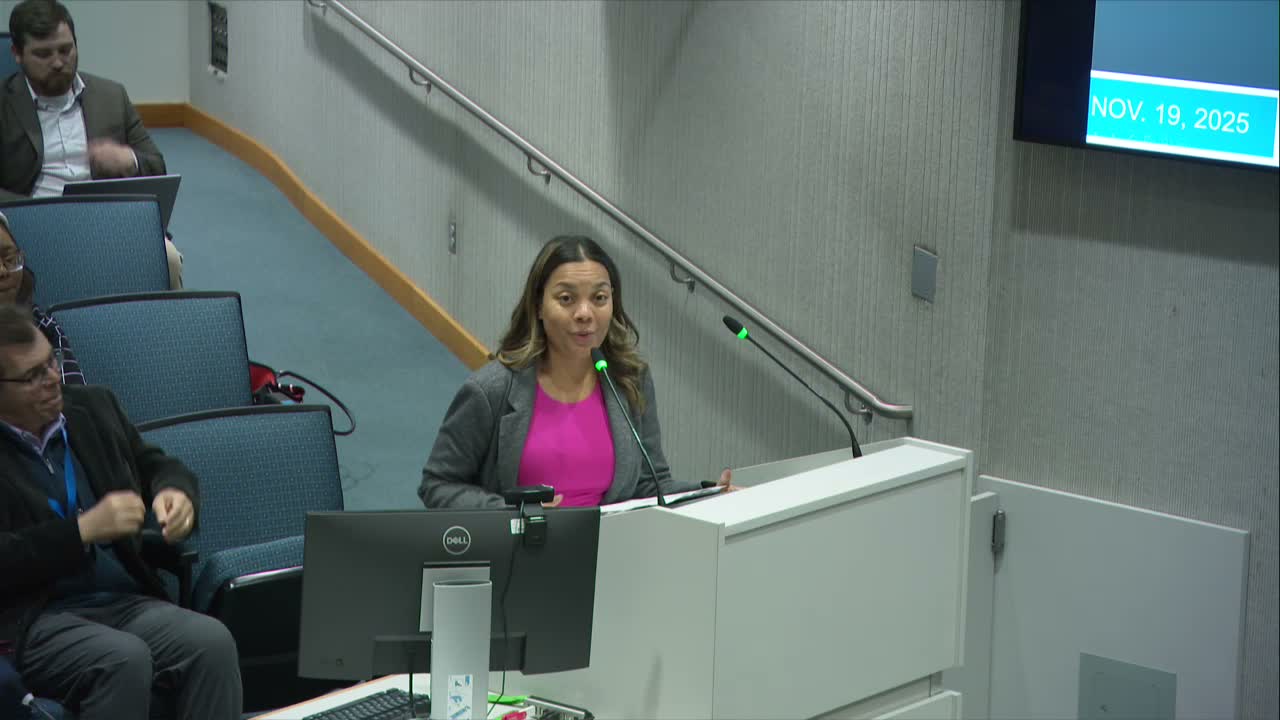
Applicant commitments and staff response: The developer said the revised plan reduced unit counts substantially from earlier submissions, exceeded the comprehensive-plan open-space targets in the ORPA area, and included enhanced sediment controls and a permanent sediment basin installed early during construction. Jonelle Cameron, the applicant’s attorney, said the project would provide new home types, parks, and mobility connectivity and that the applicant would proffer a larger monetary contribution toward interim traffic improvements at Hoadley Road/Prince William Parkway in coordination with the county’s STARS study.
Commission action: Commissioners weighed competing priorities — housing and infill near an activity node versus strict watershed protections and existing school capacity problems. After an initial motion to approve the CPA failed, the commission moved and carried a recommendation to deny the CPA; a later motion recommending denial of the rezoning also passed. Commissioners cited remaining concerns about non‑RPA stream buffers, development on steep and erodible slopes, school capacity and unresolved questions about cumulative watershed impacts.
Quote: "ORPA was created to protect the Occoquan Reservoir and groundwater recharge. Two and a half years after it was mapped, this is the first application to request removing land from ORPA; that sets a dangerous signal," said Ashley Studholm of the Prince William Conservation Alliance.
Next steps: The planning commission’s denials are advisory. The applicant may still revise and return or appeal; the Board of County Supervisors will consider the applications in its public hearing docket.