Get Full Government Meeting Transcripts, Videos, & Alerts Forever!
Get email alerts on the Transportation topic
No spam. Unsubscribe anytime.
Planning commission backs Route 28 mobility-plan changes, removes bypass and adds Flat Branch Trail
Summary
The commission recommended approval for a mobility‑chapter comprehensive-plan amendment to remove the long‑planned Route 28 Bypass, widen Route 28 from four to six lanes and add the Flat Branch recreational trail, citing model runs showing widening restores acceptable levels of service.
The Prince William County Planning Commission on Nov. 19 recommended approval of a comprehensive-plan change that removes the Route 28 Bypass from the county mobility chapter, widens Route 28 from four to six lanes and adds a recreational Flat Branch Trail.
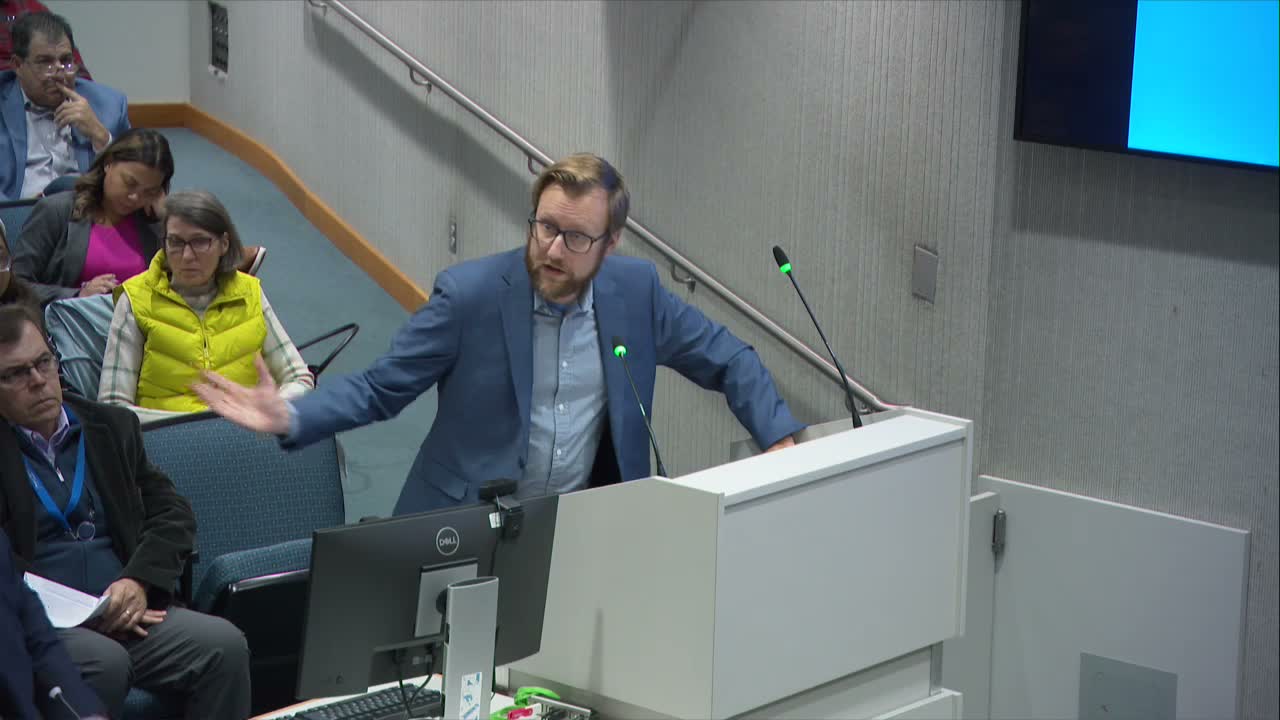
Kevin Weirock, the county’s transportation planning manager, told commissioners the amendment responds to the board of supervisors’ directive and model runs based on the Metropolitan Washington Council of Governments demand model. “This is a comprehensive plan amendment to make changes to the mobility chapter,” Weirock said, explaining staff used consultant model runs to test traffic outcomes. He said removing the bypass without widening Route 28 degrades level‑of‑service countywide, while widening most segments back to acceptable LOS D.
Why it matters: staff said widening Route 28 maintains acceptable travel conditions across the corridor between the Fairfax County and Manassas Park city lines and avoids the commute delays projected if the bypass were simply dropped. The transportation team emphasized the design will remain context‑sensitive and that some sections will be finalized through the Yorkshire small-area plan.
What the amendment would do: it deletes references to the canceled Route 28 Bypass and its associated shared‑use paths, adds a Flat Branch recreational trail under the parks department’s classification, and adds the Route 28 widening (4→6 lanes) between the Manassas City line and the Fairfax County line. Weirock said the Route 28 Bypass was canceled by the board after the county and Fairfax County failed to reach agreement on right‑of‑way and alignment.
Modeling and tradeoffs: Weirock presented model outputs showing baseline conditions and scenarios for (1) removal of the bypass without widening and (2) removal with widening. “Without the bypass but with the widening, the stretch of Route 28 through Yorkshire improves to LOS D,” he said, while acknowledging a short segment south of Manassas Park would remain at LOS E but within comprehensive-plan standards. Commissioners asked whether drivers would filter onto local streets; Weirock said the regional model does not resolve local cut‑throughs but that traffic‑calming measures and the Yorkshire small-area plan would address neighborhood impacts.
Timing and funding: staff noted the 2019 mobility bond set aside funds that could support either a bypass or widening; about $200 million remains available for Route 28 improvements and must be acted upon before the bond term constraints (discussed in the meeting). Staff said VDOT will lead corridor studies and the county is coordinating with Manassas, Manassas Park and Fairfax County on design and timing.
Next steps: the planning commission’s favorable recommendation will go to the Board of County Supervisors for final action. If approved, the county and VDOT would proceed with corridor design and coordination with small-area planning for context‑sensitive design.
Quote: “With Route 28 being widened, we did not include a rightof‑way standard … because of the Yorkshire small area plan that’s taking place along that corridor,” Weirock told the commission, urging that detailed design be completed through that planning work.
The commission’s recommendation signals support for a route‑wide strategy that preserves mobility while adding the county‑managed Flat Branch recreational trail.