Get Full Government Meeting Transcripts, Videos, & Alerts Forever!
Get email alerts on the Governance topic
No spam. Unsubscribe anytime.
Commission suspends bylaw rule, adopts 2026 schedule and schedules bylaws vote for Feb. 25
Summary
On Jan. 14, the Prince William County Planning Commission suspended bylaws paragraph 7-1 to permit schedule changes, adopted its 2026 meeting schedule, and voted to place the proposed 2025 bylaws revisions on the Feb. 25, 2026 agenda. Commissioners debated who should draft a new "status of planning" section of the annual report; a motion to have up to two commissioners lead that effort failed.
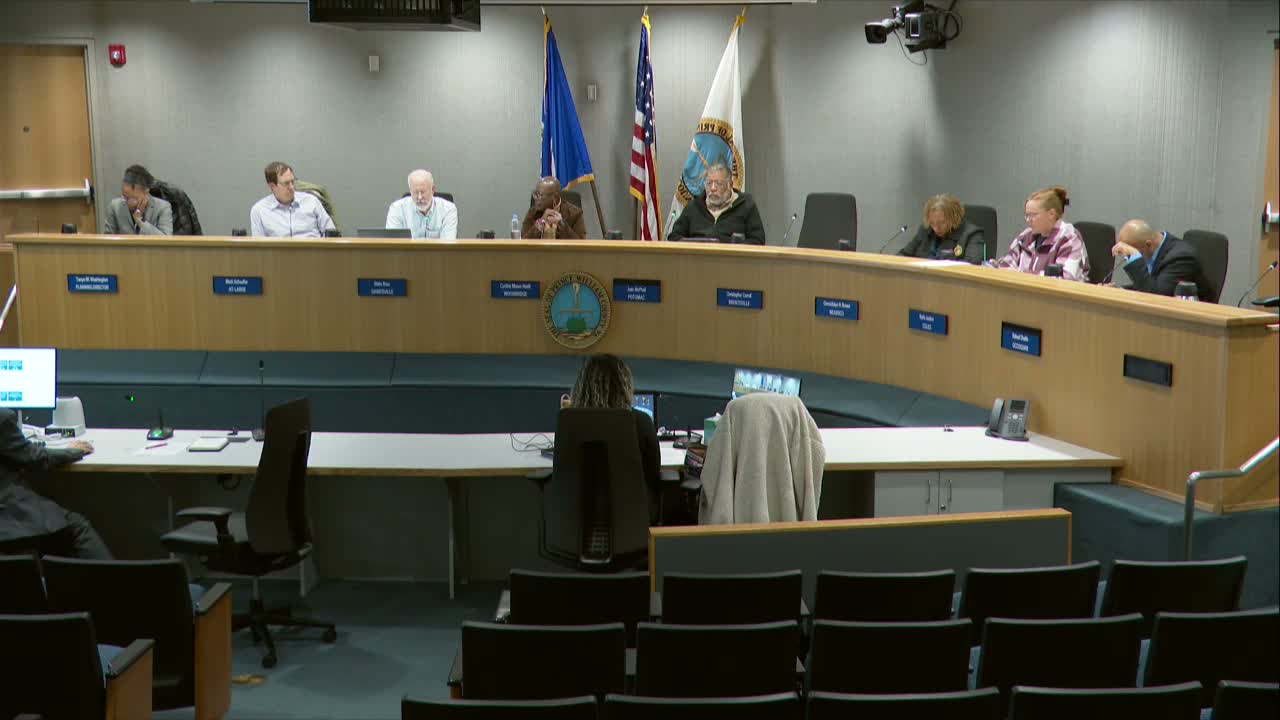
The Prince William County Planning Commission on Jan. 14 approved several governance actions affecting its 2026 calendar and internal rules.
Commissioner Ross moved to suspend paragraph 7-1 of the Planning Commission bylaws (rules governing meeting schedules) for the period through Dec. 31, 2026, to allow flexibility in adopting a staggered meeting schedule; the motion, seconded by Commissioner Justice, passed on a roll-call vote. Following that suspension, the commission voted to adopt a 2026 meeting schedule distributed to members earlier. The adopted schedule is intended to stagger Planning Commission meetings relative to Board of County Supervisors meetings to reduce staffing conflicts.
Separately, Commissioner Ross moved to include a vote on whether to implement the proposed 2025 bylaws revisions on the commissionagenda for Feb. 25, 2026. After discussion about work sessions, county attorney review, and allowing amendments during interim work sessions, the commission passed a version of the motion that schedules the February 25 vote and allows for commission work sessions in advance. Director Washington confirmed the planning office and county attorney will provide legal feedback by Jan. 28 to inform commission consideration.
Commissioners also debated the annual report required by Virginia code. Commissioner Ross argued the report should explicitly include the "status of planning within its jurisdiction" (citing "Section 15 dot 2 dash 22 21"). Other commissioners and staff said current practice has the planning office prepare the annual report and recommended staff draft a proposed section for commission review; a motion to have up to two commissioners collaborate with the clerk to write that section failed. Commissioners discussed the process for review and whether commissioners should see the report before it is transmitted to the Board of County Supervisors.
No further formal governance decisions were recorded at the meeting; the commission closed membertime and adjourned.