
Finance Authority details Opportunity Enterprise Fund awards and lending terms
Get AI-powered insights, summaries, and transcripts
Sign Up Free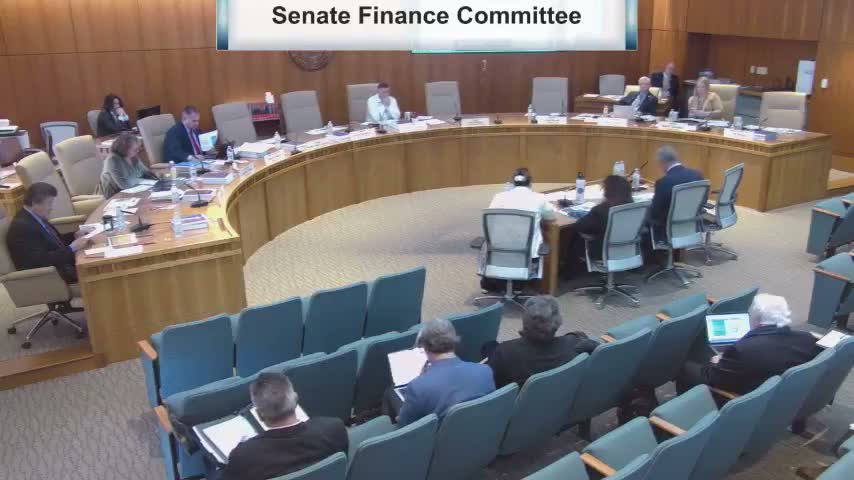
Summary
The Finance Authority told the committee it has awarded $79 million of a $125 million Opportunity Enterprise Fund, received 46 applications (34 eligible), and set terms designed to fill project gap financing for workforce housing across urban and rural communities.
Marquita (Finance Authority representative) told the Senate Finance Committee the housing development revolving fund within the Opportunity Enterprise Fund was capitalized at $125 million in 2024 and that $79 million has been awarded to date. She said the authority has applications outstanding that total roughly $73 million as part of the fourth round.
Marquita said the Opportunity Enterprise Board's policy is to use the fund to close financing gaps on projects rather than duplicate other funding sources. She described workforce housing as targeted below-market housing for middle-income workers near employment centers and said program rules set workforce housing ceilings at 300% of area median household income as determined by HUD while leaving the local affordable-housing program as the floor.
Program mechanics: the authority received 46 applications, judged 34 eligible, recommended 20 to the Finance Authority Board and approved 12 to date; seven awards were for workforce housing with about one-third in rural communities. The speaker said the fund currently aims to limit concentration (no more than 50% of funds to a single county) and targets at least 30% to rural communities (current awards at ~29% rural share).
Terms and underwriting: maximum loan amount is $15 million, rates fixed at 60% of Wall Street Journal Prime with a 3% floor, loans run 15–30 years, and collateral and minimum loan-to-value of 85% were described. Marquita said the board has prioritized gap financing with lower-than-standard equity requirements while still requiring guarantees from project proponents.
Committee members asked for more detail on eligibility failures and housing studies used to demonstrate market demand. Marquita said many ineligible applications lacked housing studies that substantiated demand and market-rate assumptions; the authority uses those studies to judge whether an applicant meets the program's market and affordability definitions.
Next steps: the committee requested paper and digital timelines showing how awards move from application to underwriting to disbursement, and asked the authority to supply a list of pending awards and the documentation developers must produce to qualify.