
Prince William reports $11.5M FY25 revenue surplus; unassigned fund balance meets 7.5% requirement
Get AI-powered insights, summaries, and transcripts
Subscribe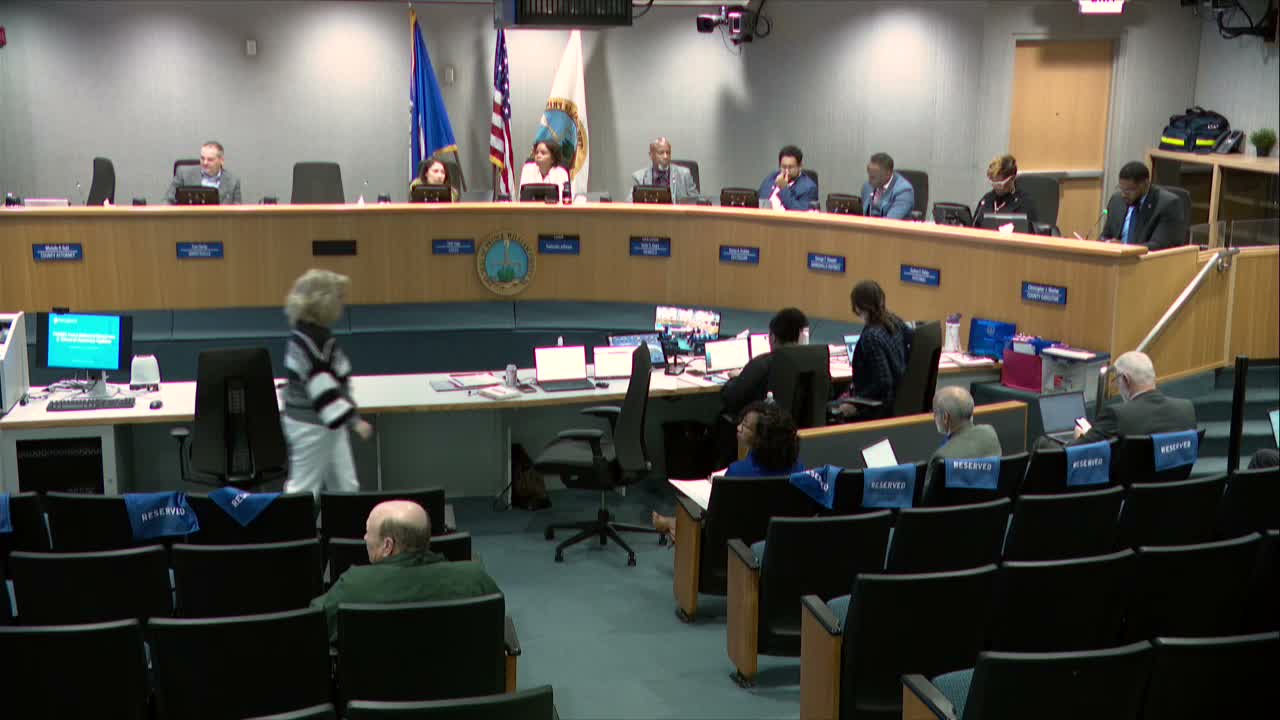
Summary
County finance staff told supervisors a roughly $11.5 million favorable variance closed FY25, leaving an unassigned general fund balance of about $134.7 million that meets the 7.5% policy; data‑center reserve calculations exceeded available funds and staff will return with options.
County finance staff presented the final fiscal‑year 2025 revenue results and an FY26 outlook to the Board of County Supervisors on Jan. 20.
Leslie (finance presenter) said the county adopted roughly $1.6 billion in revenues for FY25 and finished the year about $11.5 million favorable to budget. Real estate tax and property tax remain the largest revenue sources; investment income and supplemental bills tied to data‑center assessments helped offset some shortfalls in property and personal property collections.
Deputy Director Tim LeClaire explained how the FY25 surplus flows through the county’s reserve waterfall. After the board’s 7.5% unassigned general fund requirement and the required split of surplus with schools under the revenue‑sharing agreement, available resources were limited. LeClaire reported the unassigned fund balance stands at about $134.7 million, which meets the 7.5% policy, and the revenue stabilization reserve now totals about $35.9 million (2% requirement met).
The presentation noted the county’s data‑center revenue stabilization reserve is a straight calculation of 10% of the prior audited year’s data‑center computer‑equipment and peripherals revenue. For FY25 the calculated amount exceeded available funds by a few hundred thousand dollars; staff used agency savings and other available resources to partially fund the waterfall and said they will report back with suggestions to strengthen principles and replenishment approaches.
The capital reserve balance was presented with planned FY26 uses (judicial center renovation, a GRAMA real‑estate appraisal project and voting equipment), leaving a projected year‑end balance consistent with the adopted budget. Staff stressed the county’s revenue structure remains concentrated in property‑based taxes (about 84% combined real estate and personal property) and identified monitoring areas — tax relief, vehicle collections, and consumer‑sensitive taxes such as sales and food & beverage.
Supervisors asked for clearer breakdowns of data‑center revenue contributions and suggested future presentations to disaggregate personal property by computer equipment and by vehicles to help explain how data‑center taxes are used. Finance agreed to provide more granular presentations in future briefings.