Get Full Government Meeting Transcripts, Videos, & Alerts Forever!
Get email alerts on the Rezoning Kettle Run topic
No spam. Unsubscribe anytime.
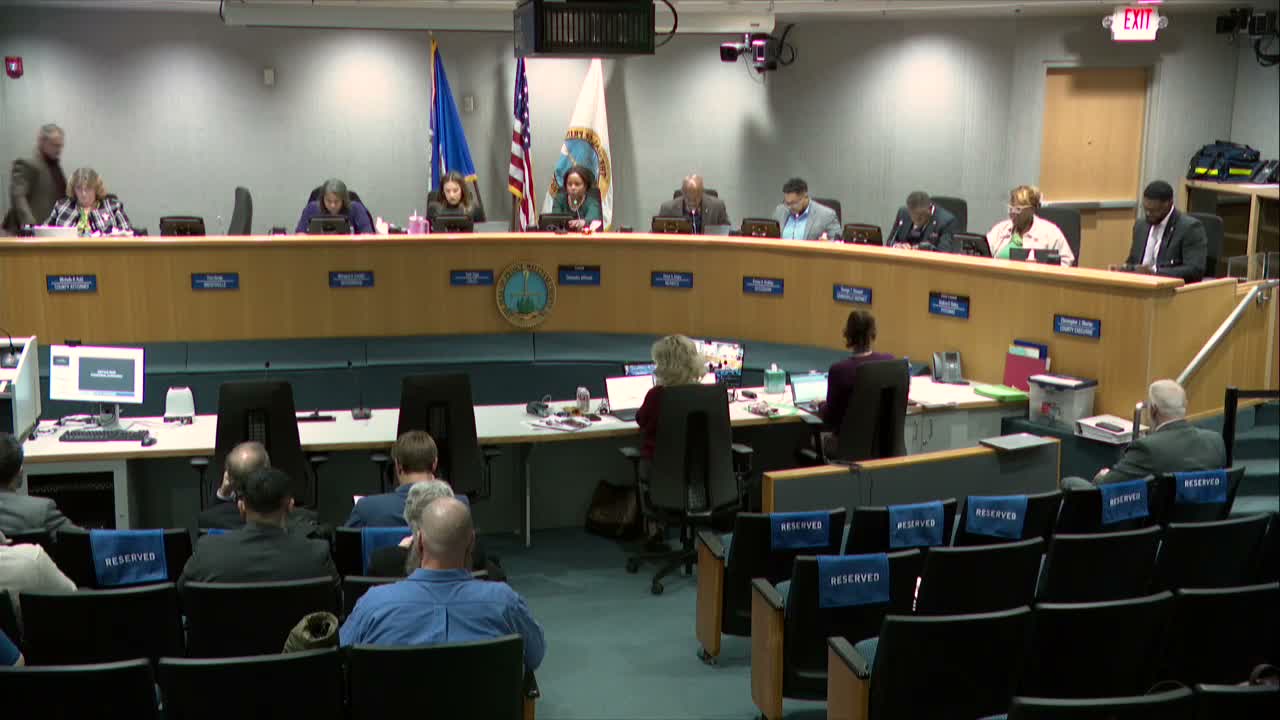
Board approves Kettle Run rezonings for roughly 1,058 homes after lengthy public hearing; residents and two supervisors dissent
Summary
The Prince William County Board of Supervisors voted 6–2 on Dec. 9 to rezone three large parcels along the Vint Hill/Bent Hill corridor for roughly 1,058 homes, approving proffers that include conservation easements, park land, a school and fire site dedication, and a $17,000 per‑unit transportation contribution; opponents warned of traffic, school capacity and environmental risks.
Prince William County supervisors approved three interconnected rezonings for Hawthorne, Alderwood and Longleaf at Kettle Run on Dec. 9 after more than five hours of presentations and public testimony. The 6–2 vote (Supervisors Stewart and Vega opposed) authorizes about 1,058 dwelling units across roughly 1,123 acres, with the developers proffering open‑space conservation areas, dedications of park acreage, a potential public school site and a future fire station site, plus trail and sidewalk networks and a $17,000 per‑unit monetary contribution toward long‑term improvements to Vint Hill (Bent Hill) Road.
Supporters, including Supervisor Gordy and members of the applicant team, told the board the plan balances new housing supply with large tracts of preserved land, agritourism space and design guidelines to preserve local character. Jonelle Cameron, attorney for Stanley Martin Homes, said each parcel’s layout keeps most mature canopy and dedicates roughly 93 acres countywide for parks and recreation. Developer Truett Young said two of the three projects will include on‑site affordable units (Hawthorne: 24 units; Longleaf: 43 units) and that the applications were designed with public water and sewer to avoid private well impacts for new homes.
Opponents, including numerous Nokesville and Brentsville District residents and environmental groups, urged supervisors to defer or deny the rezonings. Public commenters raised several recurring concerns: cumulative traffic effects on Vint Hill/Bent Hill Road and nearby corridors; school capacity reports and the adequacy of the proffered school site(s); protection of mature forest and the hydrologic impacts of added impervious area; potential loss of aquifer or well impacts for existing nearby households; and limits in proffer language that, critics said, could allow disturbance of areas labeled as "conservation." Elena Schlossberg of the Coalition to Protect Prince William said: "We are about to do a Charlie Brown — we're going to kick the football and miss the goal of protecting large open‑space areas." Several commenters also questioned whether a six‑month marketing window for designated affordable units is long enough to guarantee sales to eligible buyers and whether county housing staff have the processes in place to match qualified buyers to proffered units.
County planning staff and reviewers told the board they evaluated the three applications both individually and collectively, and that technical reviews (including a traffic impact analysis accepted by VDOT and county transportation staff) modeled individual projects and a corridor‑wide scenario that assumes multiple nearby developments. Planning staff recommended approval for all three cases while noting ongoing coordination with schools on anticipated enrollment and redistricting if projects are approved. Alex Venegas, planning staff, said Prince William County Schools is monitoring cumulative capacity and that the schools project areas where additional classrooms or site solutions will be needed if multiple rezonings proceed.
Proffers and commitments adopted with the rezonings include: conserved forest and agricultural areas (deed restrictions or conservation easements); public access easements over multi‑use trails; county park land dedications (a combined total of roughly 93 acres across the three projects); a potential school site (Alderwood proffered a 45‑acre school parcel, conditioned on county acceptance); a 10‑acre future fire/rescue parcel; and traffic mitigation that ranges from frontage and turn‑lane work to a corridor‑level joint development agreement where developers deposit $17,000 per unit into an escrow/joint‑development account to fund progressive improvements to Bent Hill (Vint Hill) Road when the combined development threshold is met. The board also accepted amendments during the hearing cycle clarifying example calculations for affordable units and adding phasing provisions for frontage and corridor work.
Following the vote, Chair Jefferson acknowledged residents’ concerns and urged continued community engagement as implementation proceeds. The board instructed staff and applicants to continue technical coordination on school capacity, hydrology/ watershed questions and phasing of transportation improvements. The developer teams said they will proceed with site plans and environmental studies required for final approvals and permit issuance.
What’s next: technical site‑plan reviews, hydrology/ stormwater designs, and a running unit count tied to the joint development agreement will determine when corridor‑level road construction is triggered. The school site dedication will be conveyed to the county subject to the school system’s acceptance; if the school board does not accept the site within a proffered timeframe the county may determine another public use for the parcel as the proffers allow. The county’s planning office and the applicants will continue outreach with affected neighborhoods and agencies as design details are finalized.