Get Full Government Meeting Transcripts, Videos, & Alerts Forever!
Get email alerts on the Land Use topic
No spam. Unsubscribe anytime.
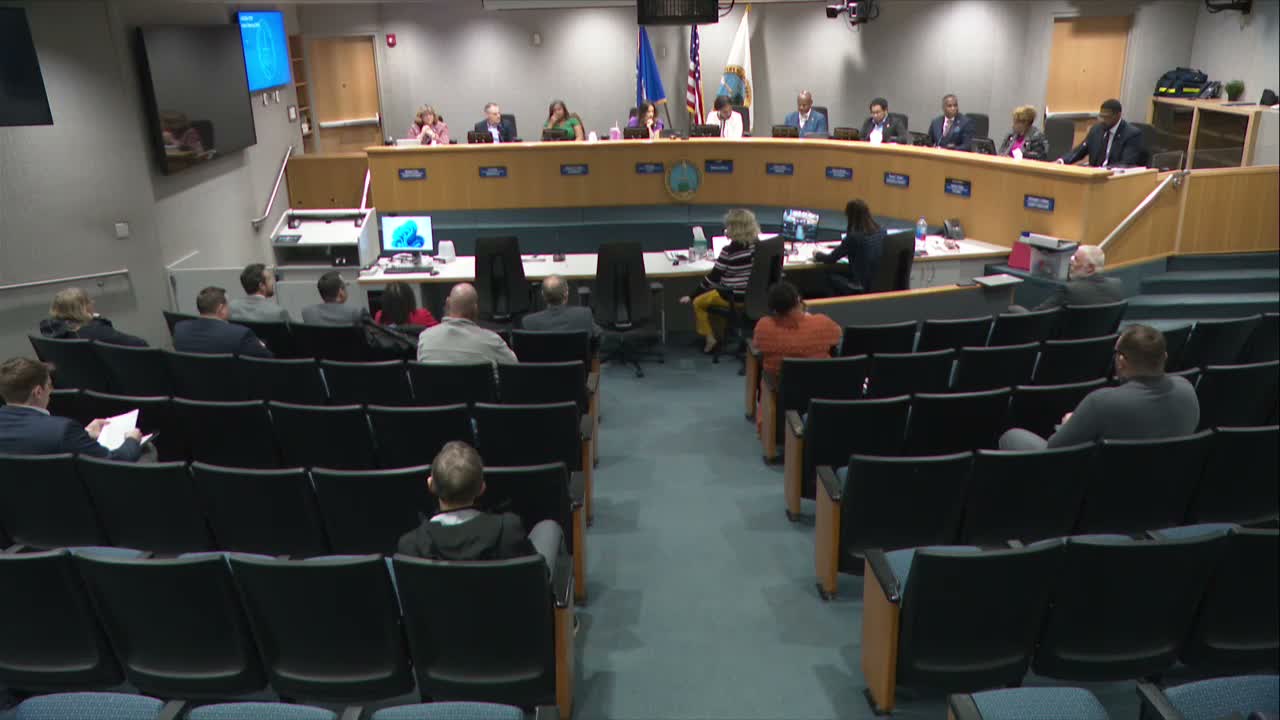
Board approves Strathmore rezoning for Vint Hill despite traffic and school concerns
Summary
The Prince William County Board of Supervisors voted 6–2 to approve the Strathmore rezoning (168 homes) as part of a coordinated plan for the Vint Hill corridor. Supporters cited housing supply and planned road upgrades; opponents warned of bottlenecks on Vin Hill Road, school capacity strain and environmental impacts.
Prince William County’s Board of Supervisors voted to approve the Strathmore rezoning (filed as 13a) for a 55‑acre site on the north side of Vin Hill Road, authorizing 168 dwelling units — 151 market‑rate and 17 affordable/workforce units — and a suite of proffers to fund parks, schools and road improvements. The motion passed 6–2, with Supervisors Vega and Stewart opposed.
The applicant, represented by Sherman Patrick of Compton & Dooling, described a master plan that includes varied housing types, 46 percent open space, three 10‑foot shared‑use paths and financial contributions for school and infrastructure mitigation. Patrick said the project proposes a $5,000 per market‑rate unit contribution for schools and additional funds for parkland and fire/rescue; the plan also proffers a $17,000 per‑unit contribution for Vin Hill/Broad Run corridor improvements.
Supporters, including District Supervisor Kenny Gordy, argued the rezoning is part of a larger, coordinated approach for the Vint Hill quarter. “I asked them to come up with a unified approach to roads, parks and schools,” Gordy said, urging a holistic review of the seven nearby proposals to avoid piecemeal outcomes.
Residents and community groups, however, warned that Vin Hill Road already experiences safety problems and morning congestion and that the corridor’s pattern of alternating two‑ and four‑lane sections could create bottlenecks if traffic growth proceeds before full roadway upgrades. Multiple speakers described near‑misses and crashes on the corridor and disputed whether developer proffers adequately address long‑term needs. One speaker raised the prospect that right‑of‑way acquisition for widening could involve eminent‑domain requests by applicants if negotiated easements are not secured.
Planning staff recommended approval, noting the project’s density (about 3.0 dwelling units per acre) aligns with the comprehensive plan’s 1–4 du/acre guidance, and that the project protects wetlands and a large portion of open space. Staff also described an agreed corridor concept — a 120‑foot right‑of‑way that would include a 16‑foot median and 10‑foot shared‑use paths both sides — to be advanced through a joint development agreement among the corridor applicants.
The school system provided a development impact statement but the Board heard competing analyses about future school capacity and the extent to which redistricting or capital projects would be required. The applicant and proponents said several nearby schools are under‑enrolled and that a coordinated assignment approach could absorb growth without displacing existing students; opponents urged further vetting by the school division and fuller community review through the new Vint Hill small‑area plan process.
The Board’s approval instructs staff and applicants to pursue design and implementation of corridor improvements and to continue coordination across the multiple Vint Hill applications. The small‑area plan that began earlier this month will continue in parallel to provide a broader policy framework for future applications in the quarter.