Get Full Government Meeting Transcripts, Videos, & Alerts Forever!
Get email alerts on the Budget topic
No spam. Unsubscribe anytime.
Frisco opens first public hearing on proposed FY2026 budget as utility and stormwater rates rise
Summary
Frisco City Council held the first public hearing on the proposed FY2026 budget, which keeps the tax rate steady, adds 48 staff positions, anticipates major capital spending and proposes utility and stormwater increases that would raise the average monthly utility bill by about $17.
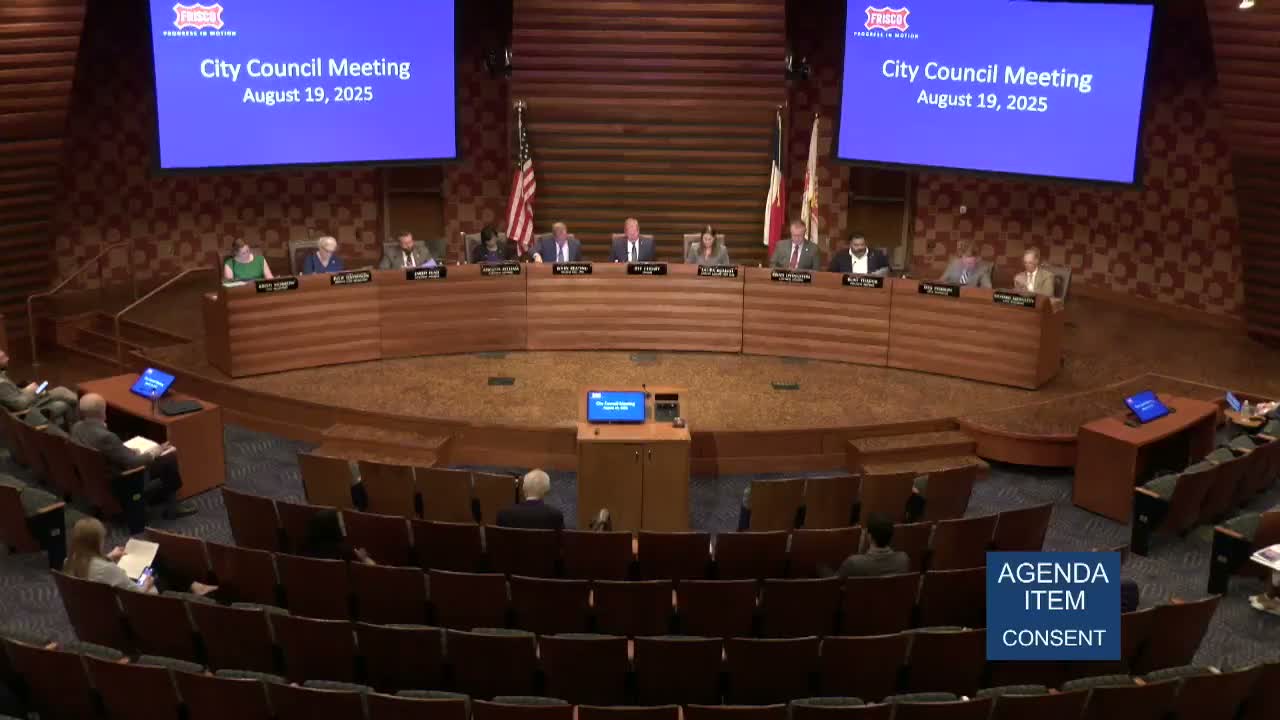
Frisco City Council held a public hearing Aug. 19 on the city’s proposed fiscal year 2026 budget, a plan city staff described as balanced at roughly $304.7 million and designed to keep the tax rate steady while funding staff and capital needs.
Tanya Anderson, the city’s director of budget, outlined key elements of the proposal: maintain the tax rate (slides referenced 0.422517), add 48 full‑time equivalent positions spread across 11 departments, and invest heavily in capital work including more than $300 million in roads and hundreds of millions in facilities and parks. Anderson said the proposal anticipates $75 million in sales tax revenue and noted Frisco will sell about $98.7 million in bonds this year to fund projects such as a logistics center, a parks and nature center, and Fire Station 11.
The presentation listed utility rate increases city staff said are driven by costs imposed by the North Texas Municipal Water District and other infrastructure needs: water proposed to rise about 9% and sewer about 15%. The budget also includes a proposed 20% stormwater rate increase. Anderson summarized the combined effect as roughly a $17 increase in the average monthly utility bill for residents, and she said the median taxable value in Frisco is nearly $513,000, producing an average monthly tax bill of about $182.
City staff emphasized use of fund balance to smooth impacts on residents, a continued focus on core services, and investments in an asset management system intended to better plan future replacements and maintenance. The proposed general fund additions include funding for building maintenance, IT servers and library materials; enterprise funds would fund 10.5 FTEs to address growth and infrastructure in the northwest part of the city.
Council opened and then closed the public hearing by unanimous voice votes; only one resident, Dan Elmer of Lone Star Ranch, spoke and thanked council for a budget that “roughly brings our taxes down to a level that offsets the fee increases” he described as likely uncontrollable. Anderson reminded the public that a second public hearing will be Sept. 2, with adoption of the budget and tax rate scheduled for the Sept. 16 meeting. All budget documents were made available on the city’s website, Anderson said.
No formal action to adopt the budget took place at the Aug. 19 meeting; staff asked council and residents to submit questions before the next hearing.