Get Full Government Meeting Transcripts, Videos, & Alerts Forever!
Get email alerts on the Land Use Annexation topic
No spam. Unsubscribe anytime.
Severance council pauses applicant'led bid to "ratify" Buffalo Creek annexation pending legal review
Summary
Developers asked Severance to ratify a previously approved annexation for the Buffalo Creek project by recording a corrected map; staff found the recorded map omitted Annexation 6 and council sent the matter to executive session for legal advice rather than granting immediate ratification.
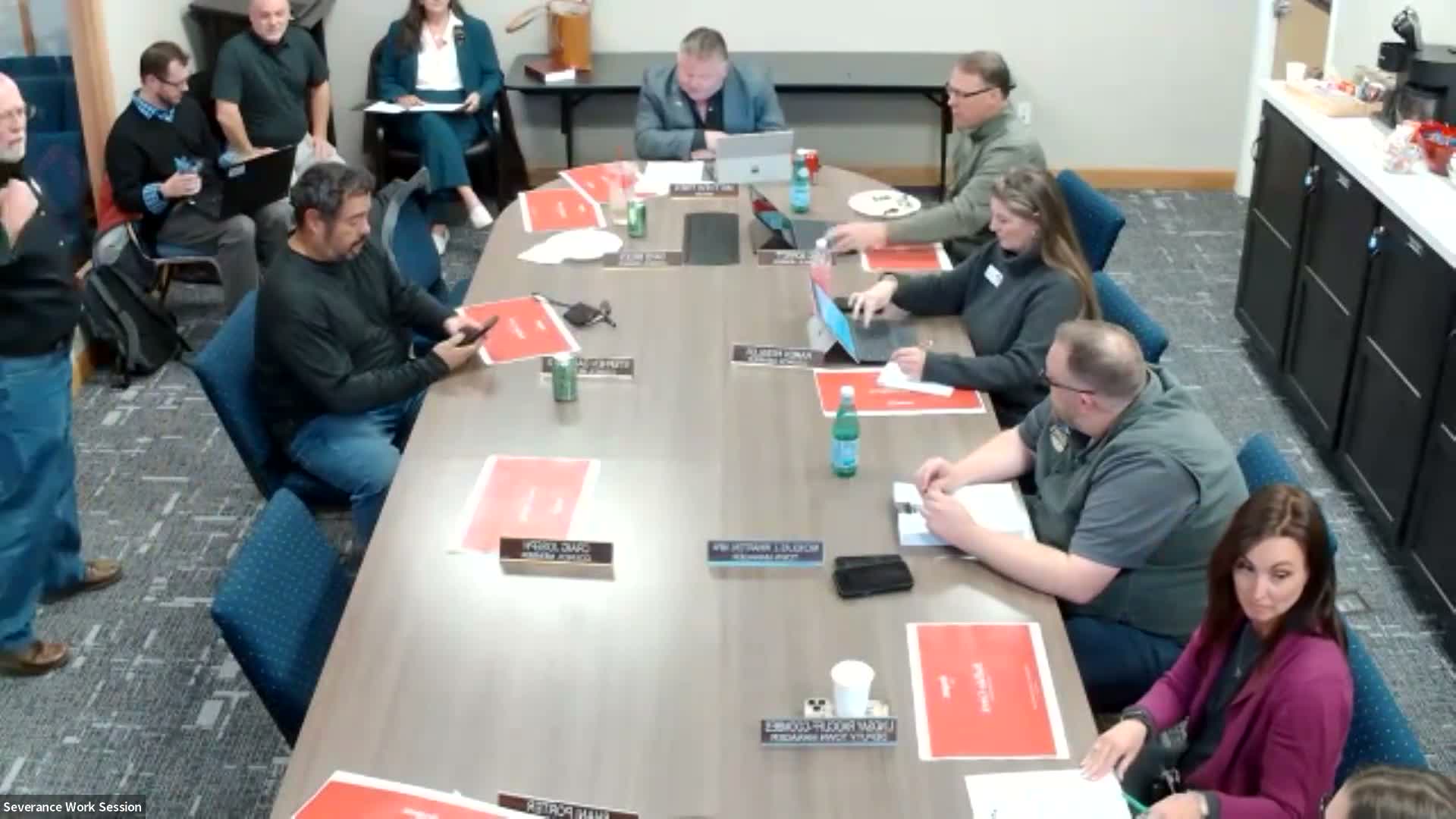
Carolyn White, special counsel for the Buffalo Creek applicant, told the Severance Town Council on Dec. 9 that the developer's records, staff reports and adopted ordinances consistently show intent to annex areas 1 through 6 of the Buffalo Creek property and asked the council to ratify that prior action so the applicant could file a corrected annexation map.
"All of these documents, 1 through 6, except the annexation map, say the same thing," White said during a work-session presentation, arguing that a corrected recorded map would align the assessor's records with the town's prior actions and allow the preliminary plat to advance. The applicant's team said the Buffalo Creek parcel totals roughly 270.055 acres.
Town planning staff and counsel, however, told council members that the recorded 2017 annexation map does not include Annexation 6 (a narrow "finger" of land shown in the earlier application) and that ordinances, maps and legal descriptions do not consistently match in the archival record. Town manager Nick Wharton advised that the legal trigger for an effective annexation is the recorded ordinance and map under state law, and councilors repeatedly sought legal guidance on whether recording a corrected map after a ratification resolution would be a lawful remedy.
Mayor Friess and several council members said they were not questioning intent but emphasized the need to protect the town from future litigation. One council member asked whether the Timnath lawsuit that previously delayed filing had been settled by court order or by agreement; staff replied that a settlement agreement exists but that the precise legal implications should be addressed in executive session.
Rather than vote on a ratification resolution at the meeting, the council directed staff and the town attorney to further review the record and moved into executive session for legal advice and negotiations related to the Buffalo Creek annexation. The applicant requested the item be scheduled on a future action agenda for possible ratification, but no formal ratification motion or vote was taken that night.
What happens next: Council staff will bring legal advice back to the body (in open session where possible) and — if council chooses — place a ratification resolution on a future agenda. If the council ultimately directs ratification, staff and the applicant said they would prepare a corrected annexation map for recordation with the county assessor.
Why it matters: The town's decision affects whether the developer can obtain final plat approvals and begin infrastructure work on a project the applicant says is ready to proceed. A recorded discrepancy between the ordinance/legal description and the recorded map leaves the assessor's records and title evidence out of alignment, which can complicate permitting, financing and subsequent conveyances.
Attribution: Quotes and paraphrases in this article come from Carolyn White (special counsel to the applicant), Dan Mason (applicant representative), Nick Wharton (town manager) and multiple council members as recorded in the Dec. 9 Severance Town Council meeting transcript.