Get Full Government Meeting Transcripts, Videos, & Alerts Forever!
Get email alerts on the Regional Planning topic
No spam. Unsubscribe anytime.
Former trustee urges valley-wide planning council, warns 'Harvest' development could overwhelm resources
Summary
During public comment, Pat Hunter proposed a valley-wide advisory council spanning Aspen to Parachute to plan for cumulative development and water limits, citing a large proposed 'Harvest' development and urging coordination across counties and municipalities.
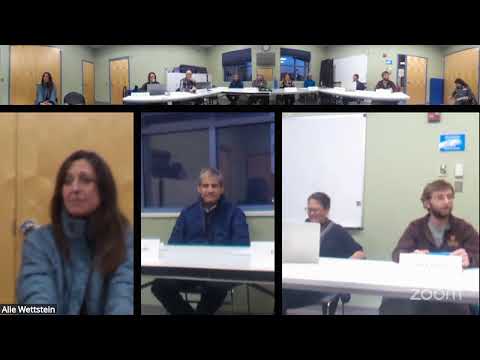
Pat Hunter, a former Carbondale trustee, urged the environmental board during public comment to pursue a valley-wide advisory council to coordinate growth decisions across Aspen to Parachute and to assess cumulative impacts before individual projects advance. Hunter said the current approach — where each municipality and county approves projects under existing local zoning — fails to address how multiple approvals add up, and cited a proposed development called “Harvest,” which he said could add roughly 5,000 residents and materially increase traffic and resource demands.
Hunter described efforts he took while on the board to expand residential solar and to require commercial buildings to be EV-ready, and said the board’s historical work shows local advisory groups can influence policy. "We need to get to a place where we can take all of those factors into account instead of just approving this development or that development," Hunter said, arguing that valley-wide planning would allow officials to ask whether earlier zoning choices remain appropriate in light of growth and water scarcity.
Board members and attendees discussed potential scope and authority for such a council. Several participants noted governance challenges: the valley crosses three counties and dozens of municipalities, making representation and decision authority complicated. One speaker suggested an advisory structure is more feasible than a body with zoning power, while another said existing regional networks — such as council of governments and local foundations — might be partners in a coordination effort.
The public comment closed with board members suggesting they could consider the idea, solicit partners (planning commissions and regional organizations), and potentially bring a refined proposal to future meetings. No formal motion or board action on a valley council was taken at the meeting.