
Senate approves amendment to restore voting rights after incarceration; debate framed as civil‑rights correction
Get AI-powered insights, summaries, and transcripts
Sign Up Free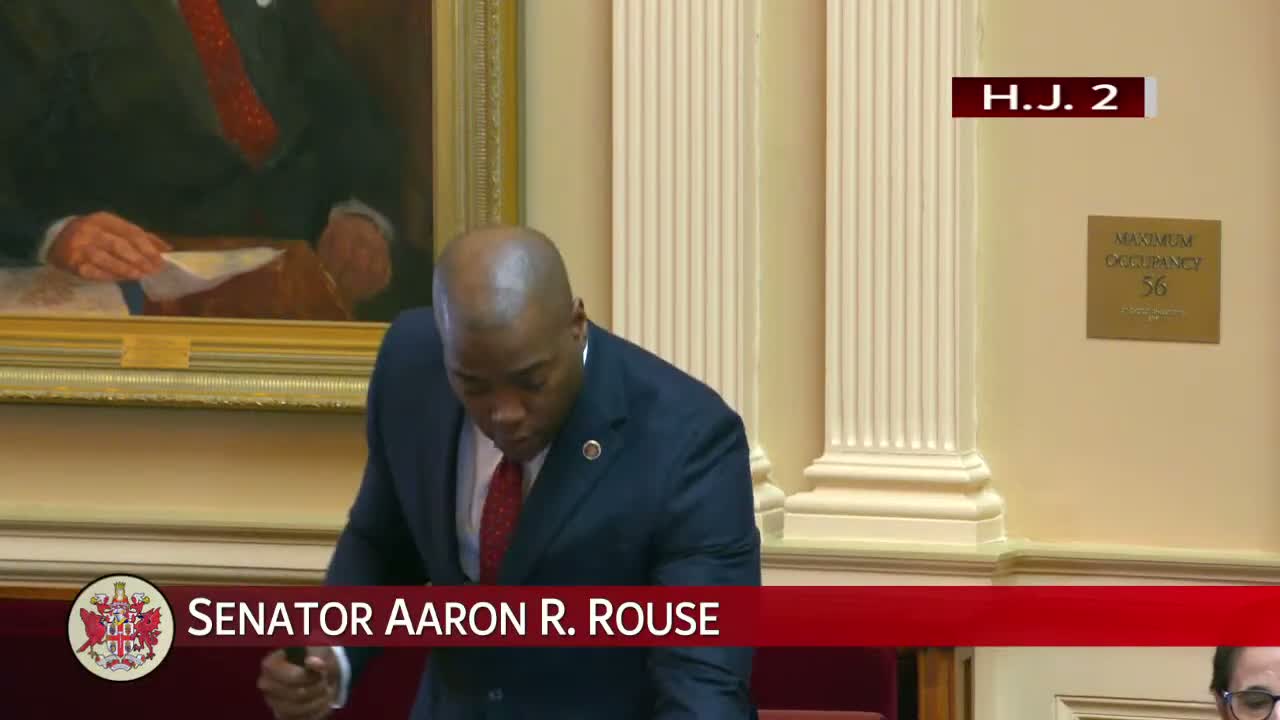
Summary
The Senate voted 21–18 to send a constitutional amendment to voters that would restore political rights, including voting, automatically upon release from incarceration for felony convictions; supporters framed it as correcting historical disenfranchisement while opponents urged caution about scope and consequences.
The Senate agreed to place a constitutional amendment before voters that would guarantee the right to vote for citizens upon release from incarceration for felony convictions, without further action required. The chamber recorded the vote as Ayes 21, Nos 18.
Senator Locke (Hampton) presented House Joint Resolution 2, emphasizing the amendment as a corrective measure to a Jim Crow–era practice that disproportionately affected Black Virginians and permanently stripped political rights. Locke said automatic restoration affirms that voting is fundamental to citizenship and that the change would not negate requirements such as restitution.
Supporters invoked historical context and civil‑rights arguments, noting that previous efforts by advocates and former legislators advanced the cause over many years. Opponents and some members questioned whether the amendment would have unintended consequences, voiced concerns about which political rights (for example, firearm possession) would be restored automatically, and suggested the drafting should clarify limits and procedures.
By approving the resolution, the Senate sends the question to voters in a future referendum; the amendment’s exact implementation details and the timeline for maps and ballots will be determined in follow‑up legislation and administrative steps.