Get Full Government Meeting Transcripts, Videos, & Alerts Forever!
Get email alerts on the Voting Rights topic
No spam. Unsubscribe anytime.
Committee reports amendment to restore voting rights after incarceration; debate centers on restitution and victims
Summary
The committee reported SJ2, a constitutional amendment to guarantee the right to vote to people who meet voter qualifications and automatically restore voting rights upon release from felony incarceration; supporters called it a fairness and racial-justice measure; opponents raised restitution and victim-consideration concerns.
Senator Locke presented SJ2, a proposed constitutional amendment to guarantee the fundamental right to vote to every person who meets voter qualifications and to restore that right automatically upon release from incarceration for a felony conviction. "The right to vote should not be subject to the whims of the government," the presenter said, and emphasized that the amendment would not negate restitution obligations.
Supporters included the League of Women Voters of Virginia, the Right to Vote Coalition and the ACLU of Virginia, who argued thousands of Virginians remain disenfranchised and that automatic restoration would create a consistent, non-discretionary rule. "Only two or three states permanently disenfranchise individuals who have felony convictions," Mary Crutchfield, League of Women Voters of Virginia, told the committee.
Opponents raised concerns about victims’ restitution and whether automatic restoration could proceed before courts or victims’ financial restitution were satisfied. Multiple speakers urged that restitution and parole completion be considered prerequisites to restoration. Committee counsel reiterated that this amendment is distinct from court-ordered restitution and that restitution obligations remain enforceable by courts.
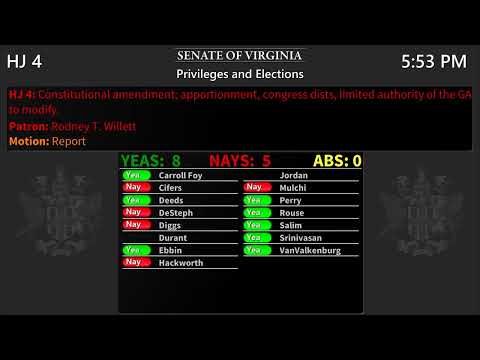
After questions and debate the committee recorded a report vote for SJ2; the roll call recorded 8 yes, 3 no and 3 abstentions.
What happens next: SJ2 has been reported out of committee. If approved by both chambers, the amendment would be placed on a public referendum; committee discussion indicates future attention on interaction with restitution and implementation details.