
Subcommittee advances bill to remove civil statute of limitations for child sexual abuse by persons of authority
Get AI-powered insights, summaries, and transcripts
Subscribe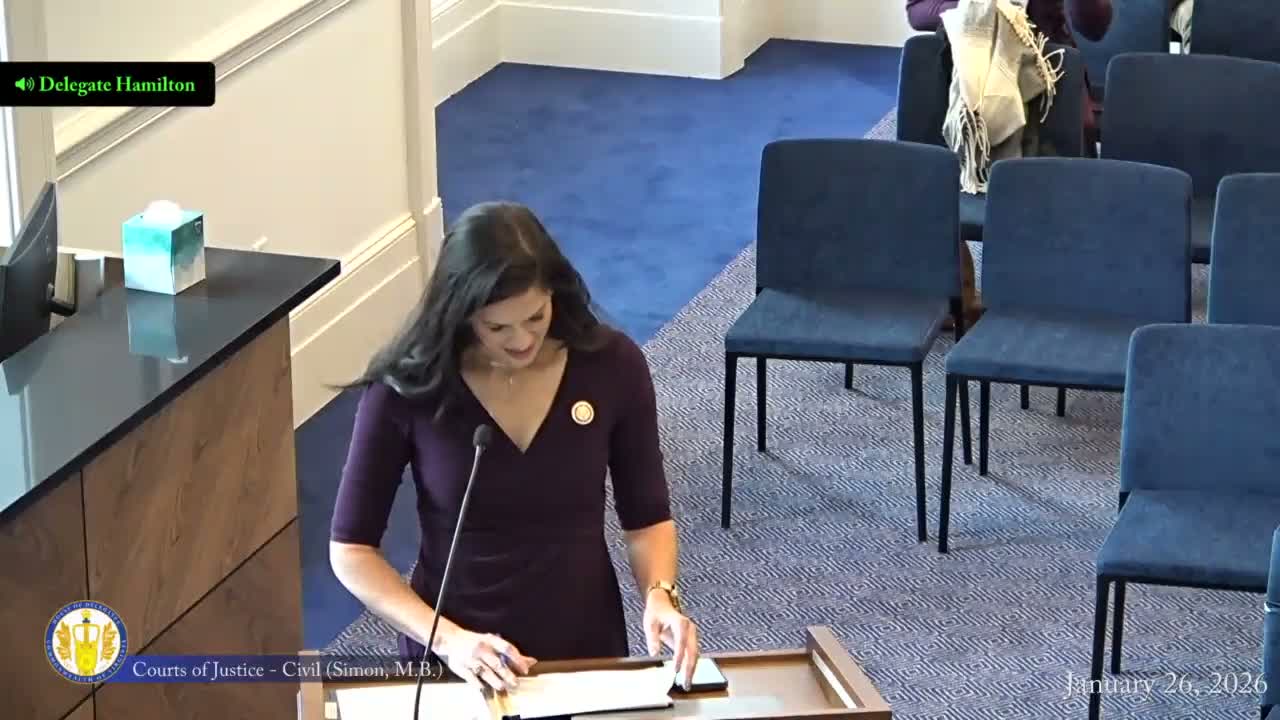
Summary
House Bill 538 would eliminate the civil statute of limitations for child sexual abuse claims against persons of authority; survivors and advocates urged the change while insurers warned of insurance‑market impacts. The subcommittee reported the bill 7–2.
Delegate Hamilton introduced HB 538 as a measure to remove the civil statute of limitations for children who were sexually abused by a person of authority. The patron framed the bill as a question of accountability and prevention, noting research and national changes in other states: "This bill is about accountability and justice... 20 states and the federal government have eliminated the civil statute of limitations for some or all child sexual abuse claims," he said.
Committee counsel described the current accrual rule: for most claims the statutory accrual extends up to 20 years (either 20 years after removal of disability or after a licensed clinician first connects symptoms to the abuse). Counsel confirmed HB 538 would eliminate that civil time bar for claims against persons of authority.
Survivors and advocates, including Deanna Lester (a paramedic and survivor), testified in support, arguing trauma often prevents timely reporting and that eliminating the civil SOL improves prevention and accountability. Insurance representatives cautioned that removing the civil SOL in other states resulted in higher premiums and uncertainty for hospitals and small care providers. Rob Shin representing an insurer said they had "no position on the bill" but warned that blanket removal of the statute could "drive up" rates and create market disruption. The subcommittee voted to report HB 538 (7–2).
The bill will proceed to the full committee for further consideration.