Get Full Government Meeting Transcripts, Videos, & Alerts Forever!
Get email alerts on the Truancy Driving Privilege topic
No spam. Unsubscribe anytime.
Subcommittee backs making truancy‑related 30‑day driving privilege loss discretionary
Summary
The Criminal Law Subcommittee unanimously voted 9–0 to report HB123, which would allow judges to decide whether to suspend a youth's driving privilege for school truancy rather than impose an automatic 30‑day loss for children age 13 and older.
The Criminal Law Subcommittee voted 9–0 to report HB123, a bill that would change current Virginia law so that judges may, rather than must, impose a 30‑day driving‑privilege suspension for school truancy by children age 13 and older.
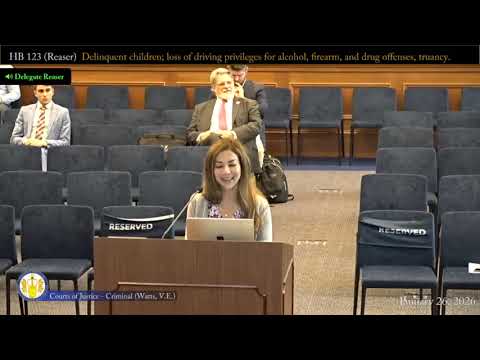
An unidentified presenter for the bill told the committee the measure was recommended by the district courts commission and the Office of the Executive Secretary and said the change would align the penalty with juvenile best‑interest and rehabilitative goals. "Current law requires judges [to impose] a mandatory driving privilege loss of 30 days for children who have a truancy issue," the presenter said. "Our bill would make this a permissive action for the judge to take."
Brandy Singleton of the Office of the Executive Secretary of the Supreme Court spoke in support online and said she was available to answer questions. Supporters noted that automatic suspensions can delay access to learner permits and licenses for teens under 16¾ at a time when training hours and transportation needs often matter for school and work.
There were no speakers recorded in opposition. With no amendments offered, the committee moved and seconded a motion to report HB123 to the full committee; the roll call resulted in a unanimous 9–0 recommendation to report.
The subcommittee’s action advances the bill to the next stage in the legislative process; no effective dates or implementation details were discussed on the record.