Senate committee advances wide package of firearm measures, from safe-storage rules to assault-weapons sales ban
Get AI-powered insights, summaries, and transcripts
SubscribeSummary
A Virginia Senate committee on Tuesday advanced a series of public‑safety bills focused on firearms — including a substitute that would bar future sales and transfers of weapons defined as “assault weapons,” limits on magazine capacity for new sales, a ghost‑gun serialization proposal, and safe‑storage and vehicle‑storage measures — sending most to finance for further work.
Richmond — The Senate committee met Tuesday in Richmond and moved a slate of measures addressing firearms and related public‑safety issues, advancing several proposals that lawmakers, advocates and law‑enforcement officials said are intended to reduce thefts, trafficking and lethal mass‑shooting harm.
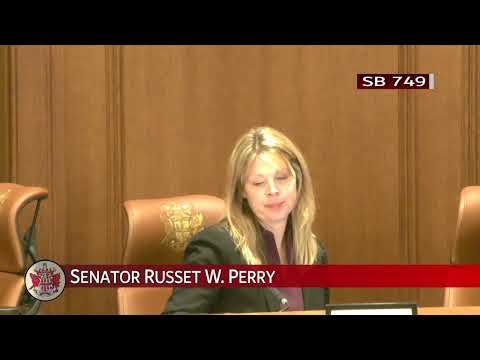
The committee voted to report a substitute assault‑weapons sales and transfer prohibition (SB 749) and to refer it to the Finance Committee after lengthy testimony and debate. Senator Saleem, sponsor of the substitute, said the measure is designed to “gradually take weapons off the street” by banning future sales and transfers while allowing current owners to retain lawfully purchased items and to pass them by immediate family inheritance under limited conditions. "This approach focuses on sales and transfers rather than retroactive criminalization," Saleem said.
Supporters cited recent court decisions upholding similar bans and argued the bill’s magazine limits would reduce lethality in mass shootings. "High‑capacity magazines increase the number of people killed in mass shootings," said Lori Haas of Giffords Law Center, adding that federal and several appellate courts have sustained related restrictions.
Opponents, including witnesses from the Virginia Citizens Defense League and the NRA, said the substitute’s definitions sweep too broadly and could encompass commonly used semiautomatic handguns unless owners modify magazines to 10 rounds or fewer. "This is a violation of our Second Amendment rights," said Carla Poff, one of several speakers who urged the committee to reject the measure in its current form.
The committee also reported SB 323, a substitute targeting so‑called "ghost gun" components by requiring serialization and restricting transfers of unfinished frames and receivers that evade federal regulation. Proponents said serialization and a delayed effective date would allow a practical compliance path while closing a trafficking loophole.
On safe storage and vehicle storage, members amended and advanced bills that would require secure storage when minors or persons prohibited from possessing firearms are present (SB 348) and would criminalize leaving handguns unsecured in unattended vehicles without prescribed storage measures (SB 496 as amended). Senator Marsden described the vehicle proposal as a response to a rise in guns stolen from cars that are later used in violent crimes, and members added a reporting exception so that someone who reports a theft promptly to law enforcement would not face prosecution for unsecured storage.
The committee also considered bills on concealed‑carry reciprocity (requiring the attorney general to determine and publish which out‑of‑state permits are ‘substantially similar’ to Virginia standards), restrictions on openly carried assault‑style weapons in public places, and targeted changes to DUI law to clarify when odor of marijuana can contribute to reasonable suspicion for an impaired driving stop.
Several bills received significant public testimony — both in person and via remote callers — with many witnesses giving 2–3 minute statements. Organizers on both sides included Giffords, Everytown, the Brady Campaign and local hospital and policing representatives in favor of more restrictions or clearer storage laws; opposition came from the Virginia Citizens Defense League, the NRA and a number of individual gun‑owners and small dealer representatives.
What the committee did
- SB 749 (assault‑weapons substitute): reported to finance after substitute was accepted. Committee members signaled additional drafting changes will be considered in finance to clarify definition scope and magazine language.
- SB 323 (ghost‑gun substitute): reported to finance with an included serialization process and delayed effective date to allow compliance.
- SB 348 (safe‑storage): amended and reported to finance; the measure includes exemptions for lawful carriage on person and references a tax credit discussed in prior sessions.
- SB 496 (unattended‑vehicle storage): amended to require locked storage for unattended vehicles (with exemptions and a reporting safe‑harbor); motion to report carried and the bill was referred for further review.
- Several other firearms bills (reciprocity changes, limits on open carry of particular firearms, campus/hospital rules) were debated and either reported or scheduled for finance/continued work.
What comes next
Most of the bills advanced to the Finance Committee for additional drafting work and fiscal review. Sponsors and counsel acknowledged several technical edits remain — particularly language about magazine definitions and whether internal (fixed) magazines are captured — and committee staff said they would reconcile those points before floor consideration. The committee chair also encouraged patrons to work with counsel and stakeholders to refine exceptions and enforcement provisions.
The committee’s actions do not immediately change Virginia law; they move bills forward in the legislative process. Several sponsors said they will revisit statutory language in finance and on the floor to address concerns raised during testimony.
Sources and attribution
Direct quotes and positions in this article come from committee testimony and sponsor statements in the Senate Committee A hearing transcript, including Senator Saleem (sponsor of SB 749), Senator Marsden (sponsor of the vehicle‑storage bill), Senator Diggs (sponsor of firearm penalty legislation), Senator Evans (ghost‑gun sponsor), counsel Benjamin and multiple named witnesses and advocates.
Next procedural step: bills reported to finance will be reviewed on fiscal and conforming grounds before potential floor votes.