Get Full Government Meeting Transcripts, Videos, & Alerts Forever!
Get email alerts on the Water Rates topic
No spam. Unsubscribe anytime.
Fulshear council delays water-rate increase, forms committee to study alternatives
Summary
After hours of public comment and a detailed staff presentation, Fulshear City Council postponed a vote on new water and wastewater rates and directed a committee to analyze alternatives, conservation measures and short-term budget gaps before reconsidering the ordinance in January.
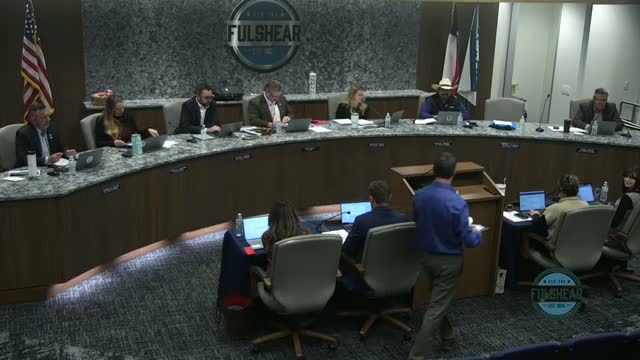
Fulshear City Council on Tuesday delayed a decision on proposed water and wastewater rate changes after a lengthy presentation from utilities staff and extensive public comment about the cost and timing of planned capital projects.
Utilities staff presented background from the 2021 master plan and a rate study showing substantially higher capital needs than earlier estimates. Staff warned that while the utility fund could be kept afloat for the current fiscal year with a modest base-rate change, long-term funding would require clearer choices on capacity projects, reuse, and coordination with the North Fort Bend Water Authority. “We are scraping by to FY27 out of $15,” staff said, stressing limited surplus and a need for further analysis.
Residents pressed the council during public comment. Matthew Bird — who said he used public records to calculate impacts — summarized projected increases for wastewater: “Wastewater base charge will increase by 15% in 2026, another 20% in 2027, and another 25% in 2028,” and warned that volumetric rates could rise even more. Other residents and council members questioned the timing and scale of a $195 million capital program cited in the rate study and pointed to big swings between past CIPs and the new proposals.
Council members debated demand-management alternatives including peak-hour disincentives, smart meters, odd/even watering schedules and greater coordination with wholesale suppliers. Staff showed meter and peak-use data indicating that a relatively small number of accounts drive peak capacity needs; staff said smart meters (now being installed) and time-of-use enforcement could change the infrastructure needed.
Rather than adopt a multi-year increase that night, council members voted to form a technical committee — chaired by Council member Cameron — made up of three council members, utility staff and community representatives to refine the shortfall analysis, test demand-management options, verify capital-cost assumptions and return with recommendations. A motion to postpone action on ordinance 2025-1516 (new water and wastewater rates) and reconsider after the committee’s review passed by voice vote.
Next steps: staff will convene the committee in January and return to the council with updated modeling and clear shortfall numbers; the ordinance vote will be rescheduled after that review. The utility director said any adopted change would require at least 30 days’ notice for residents and 60 days for wholesale customers.