Get Full Government Meeting Transcripts, Videos, & Alerts Forever!
Get email alerts on the Short Term Rentals topic
No spam. Unsubscribe anytime.
McLendon‑Chisholm adopts short‑term rental regulations and companion hotel‑occupancy tax ordinance
Summary
Council approved a short‑term rental ordinance requiring annual permits, a 1‑hour local response time, safety inspections and a reduced owner‑occupied fee, and passed an accompanying hotel‑occupancy tax ordinance to collect transient‑occupancy taxes from STR operators.
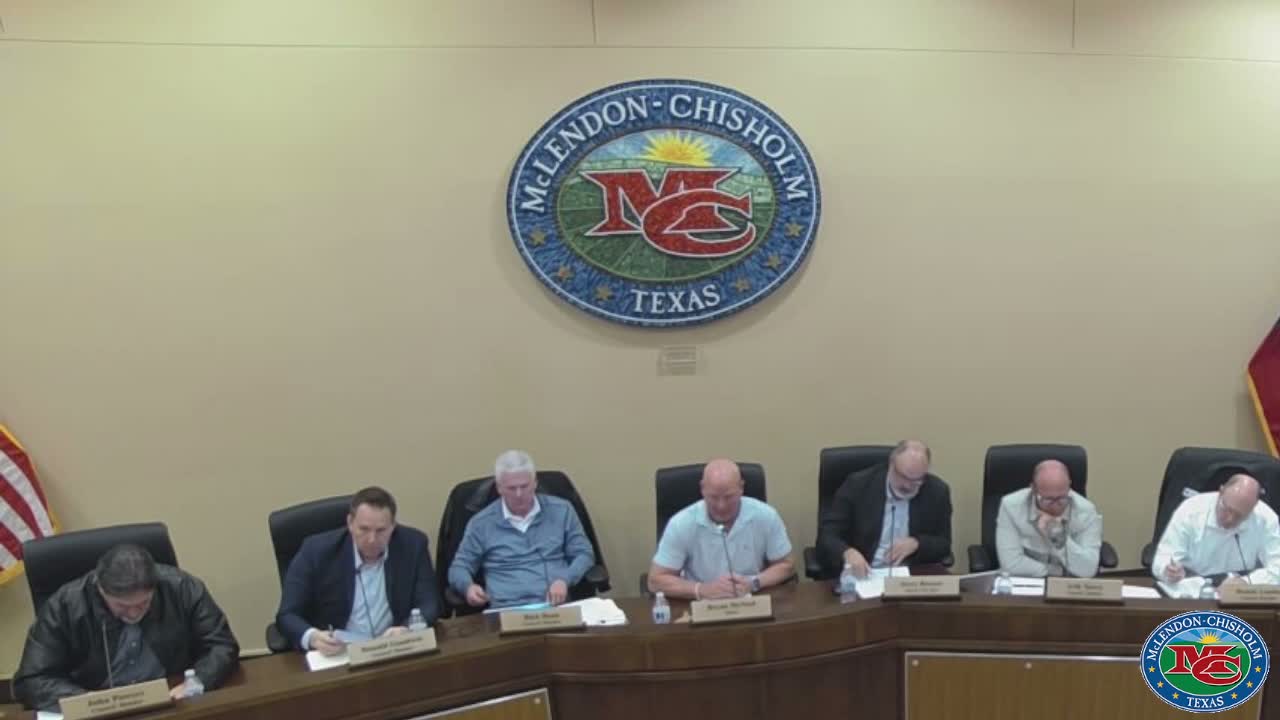
The McLendon‑Chisholm City Council on Jan. 13 adopted an ordinance regulating short‑term rentals and a companion ordinance establishing a hotel‑motel occupancy tax fund.
Staff described the short‑term rental ordinance as a proactive measure to protect residents and provide accountability for property owners. Key elements include mandatory annual permits, proof of ownership, liability insurance, designation of a local responsible party with a 1‑hour response time, required compliance with hotel occupancy tax reporting, operational standards addressing maximum occupancy, on‑site parking, trash removal, noise and fire‑safety requirements, a safety inspection regime and an appeal process. Councilmember Towery summarized the provisions as adding buffers between short‑term rentals, safety inspections and a three‑strike revocation policy.
The council also adopted an ordinance to collect hotel‑motel occupancy tax revenue tied to short‑term rentals. Staff clarified state law restricts eligible uses to tourism‑promotion activities and visitor enhancement; staff noted roughly $14,000 had been collected previously and would be transferred into the newly created fund. Council discussed permissible uses, including visitor signage, events that attract out‑of‑town visitors, and narrow carve‑outs for unique assets.
The ordinances passed by council vote. Staff will implement permit and registration duties, communicate requirements to property owners and update collection procedures for occupancy tax reporting.