State auditor cites surge in pandemic‑era 'question costs,' asks for staffing and analytics funds
Loading...
Summary
State Auditor Byrd told the subcommittee that federal pandemic relief spending produced $93.4 million in 'question cost' in a single year and asked for $500,000 in FY27 to hire forensic staff and buy analytic tools to handle growing investigative workload.
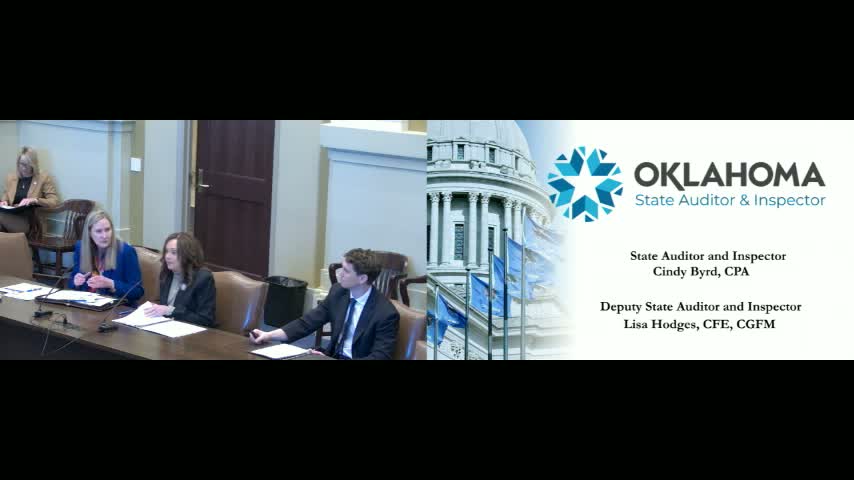
State Auditor Byrd told the General Government Transportation Appropriations Subcommittee that the office continues to face a surge in audit demand stemming from federal pandemic relief spending and related "question cost" — expenditures the federal government may later disallow.
"Last year...question cost totaled $93,400,000," Byrd said, citing FY23 single‑year findings and noting that the pre‑pandemic average had been about $5 million per year. Byrd said the auditor's office uncovered large question costs tied to DHS and OMES and that the state has already been asked by the U.S. Treasury to return $1.6 million related to earlier management fees.
To address increased investigative and forensic work, Byrd requested a net $500,000 increase in appropriations for FY27: $250,000 recurring for forensic‑division salaries and $250,000 recurring for AI/analytic software and training. Byrd also asked the Legislature to raise or remove the office’s revolving fund cap (currently cited at $850,000) to $2 million to ease year‑end accounting burdens.
Members asked about hiring challenges and the auditor said the office has 30 unfilled FTEs. Byrd said turnover has improved but that recruiting qualified auditors is difficult at current state salary levels compared with private sector options. Byrd described the office's work product, notable audits (including EPIC Charter Schools), and recoveries to date: $20 million recovered with a potential additional $30 million from a previous audit.
The subcommittee did not vote on the request during the hearing.