Council on Judicial Complaints asks legislature for operating, training and retention funds as complaint volume rises
Loading...
Summary
Taylor Henderson, executive director, told the committee the Council on Judicial Complaints is the investigatory arm for judicial discipline, reported complaints rose from 293 in October to 340 by year-end, and requested additional operating funds, a nonrecurring judicial college allocation, and salary support to retain staff.
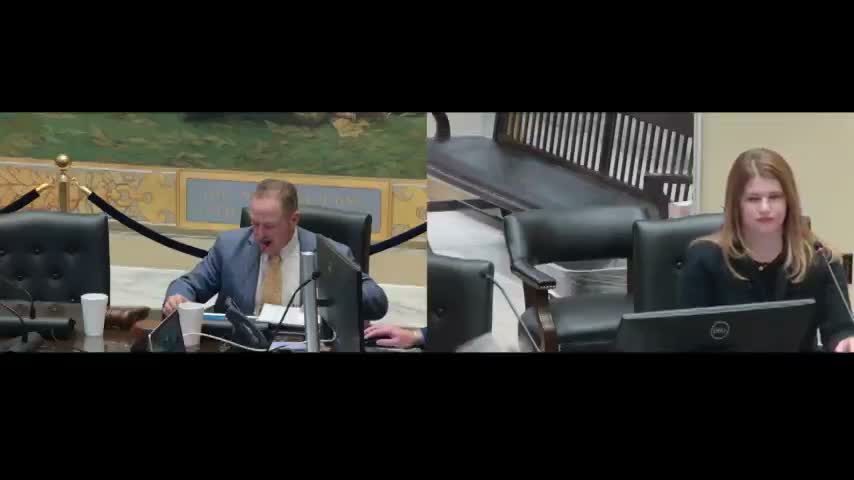
Taylor Henderson, executive director of the Council on Judicial Complaints, told the appropriations committee the agency is the investigatory arm of the judicial-discipline process and does not itself impose discipline. "We are the investigatory arm of the judicial discipline process," Henderson said, explaining the council investigates allegations of misconduct and may recommend action to other bodies.
Henderson reviewed the agency’s history and structure, noting the body dates to a 1974 statutory change and is composed of three members appointed by the House, the Senate and the Oklahoma Bar Association. He said the office receives a steady stream of complaints — often from litigants unhappy with rulings — and that the annual total is rising. When the committee material was compiled in October the office had recorded 293 complaints; Henderson said the office closed the year with 340.
The agency aims to respond to complainants within 90 days but has seen that performance dip as caseloads rise; Henderson told members about a current 72% rate of completion within 90 days and described the administrative burden of coordinated filings in which many individuals submit separate complaints about a single issue.
Henderson summarized the council’s budget history and current requests: through FY25 the council relied primarily on civil court filing fees (about $1.55 per qualifying filing) and received a $300,000 appropriation last year. For FY27 the council requests an additional $25,000 for general operating costs — citing a lease increase from $10,000 to $14,400 — a nonrecurring $60,000 allocation every four years to fund a five-day judicial college for newly elected judges, and salary adjustments aimed at retaining the three-person staff.
Henderson described the judicial college and related mentoring work as prevention-oriented: the five-day program is timed to follow judicial elections and pairs judges into small mentorship groups to reduce errors that can lead to complaints. He also said carryover funds from the FY25 appropriation were used for unanticipated litigation.
Committee members asked for agendas and clarifications about training content and constitutional versus canon issues; Henderson offered to provide prior agendas and reiterated the code of judicial conduct’s first rule: follow and properly apply the law. He closed by offering to provide further details and to continue conversations about possible statutory or procedural changes to address coordinated filings.
The presentation did not include a formal committee motion or vote; members indicated they would review the request in light of available revenue and follow up with additional questions.