Get Full Government Meeting Transcripts, Videos, & Alerts Forever!
Get email alerts on the House Bill 581 topic
No spam. Unsubscribe anytime.
Decatur hears public comment and commissioner debate ahead of Feb. 3 vote on House Bill 581 opt-out
Summary
City commissioners and residents debated whether Decatur should opt out of House Bill 581, which creates a statewide floating homestead exemption that caps annual taxable value growth for owner-occupied homes to inflation; no vote was taken tonight and a resolution will be considered Feb. 3.
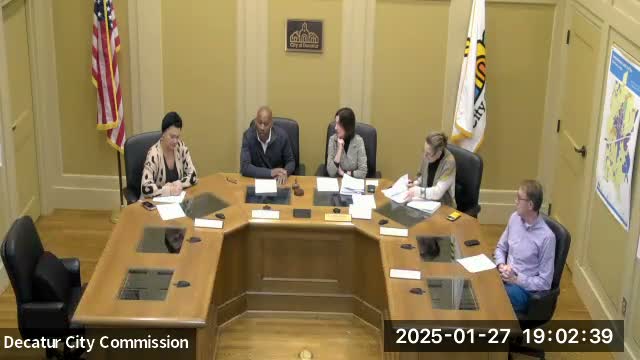
Decatur commissioners held the third of five public hearings on House Bill 581 on the question of whether to opt out of a new statewide floating homestead exemption. City staff explained the law and members of the public and the commission aired competing concerns about housing affordability, tax fairness and long-term fiscal flexibility.
Andrea Armstrong, speaking for city staff, summarized the effect of House Bill 581, saying it "introduces a statewide floating homestead exemption that limits the annual increase in the taxable property value for residential homestead properties to the rate of inflation" as determined by the state revenue commissioner and that cities, counties and school districts have a two-month window to decide to opt out or be automatically opted in.
Several residents urged the commission not to opt out. "I urge the commission to vote against opting out of House Bill 581," resident Casey Boyce told the commission, adding that the measure passed statewide and received 56 percent support in Decatur. Boyce said allowing the exemption to stand would let property-tax revenue grow at least with inflation and could help preserve affordability for long-term residents on fixed incomes.
Other public commenters asked the commission to focus first on accurate valuations. Philip Hodges said the city should "know what your actual fair value is" before changing tax policy, warning that faulty assessments can create serious problems.
Commissioners split on the policyquestion and largely asked for more fiscal analysis before deciding. Commissioner Meyer said she voted for the statewide referendum because it included an opt-out and that she remains open but unconvinced about the exemption's local affordability benefits. "I was also one of the 55% of Decaturites who voted yes to allow this to move forward, but I only did it because it had the opt out," Meyer said, and repeatedly requested spreadsheets and data to show how inflation-based caps would affect the city budget and residents.
City Manager Andrew Arnold told commissioners that Decatur expanded its general homestead exemption in 2024 from $25,000 to $40,000 to help offset rising assessed values. He also noted state law prohibits indexing the basic homestead exemption to inflation, so the city cannot automatically increase that exemption without separate local action.
Commissioners raised concerns about who benefits from the change. Commissioner Dezendyar observed that homestead exemptions "benefit homeowners" and said renters and other non-homeowners will not get the same relief, while Commissioner Walsh warned of long-term fiscal risks, noting reporting from financial analysts that a floating homestead regime can complicate bond-rating and debt flexibility for cities that rely heavily on residential property tax revenue.
Several commissioners and staff highlighted the city's efforts to grow its commercial tax base to spread property-tax burden and noted personnel and benefits are the largest part of the city budget; Arnold estimated recent health-insurance costs rose in the low double digits. Commissioners said a detailed fiscal model is necessary to judge whether the statewide exemption will deliver net affordability gains or will instead constrain the city's ability to provide services.
No formal motion or vote was taken at the hearing. Staff and commissioners said the commission will consider a resolution to opt out of House Bill 581 at a Feb. 3 meeting (two meetings are scheduled that day, at noon and 7:30 p.m.), and the DeKalb County tax assessor is scheduled to meet with the commission at a Feb. 3 work session to review valuation questions. The commission adjourned at 7:40 p.m.
The next step is the Feb. 3 meetings when the commission is scheduled to vote on a resolution to opt out; residents may use the remaining hearing opportunities or archived videos to submit comment prior to that vote.