Get Full Government Meeting Transcripts, Videos, & Alerts Forever!
Get email alerts on the Public Improvement Districts topic
No spam. Unsubscribe anytime.
McLendon-Chisholm hears PID overview as developer details 672‑lot Sonoma Verde project
Summary
City advisers and consultants outlined how public improvement districts (PIDs) work and described a specific development — Sonoma Verde North & East — planned for about 314 acres and 672 lots; council and staff discussed timing, risk, homeowner protections and next steps for a possible bond sale in early 2026.
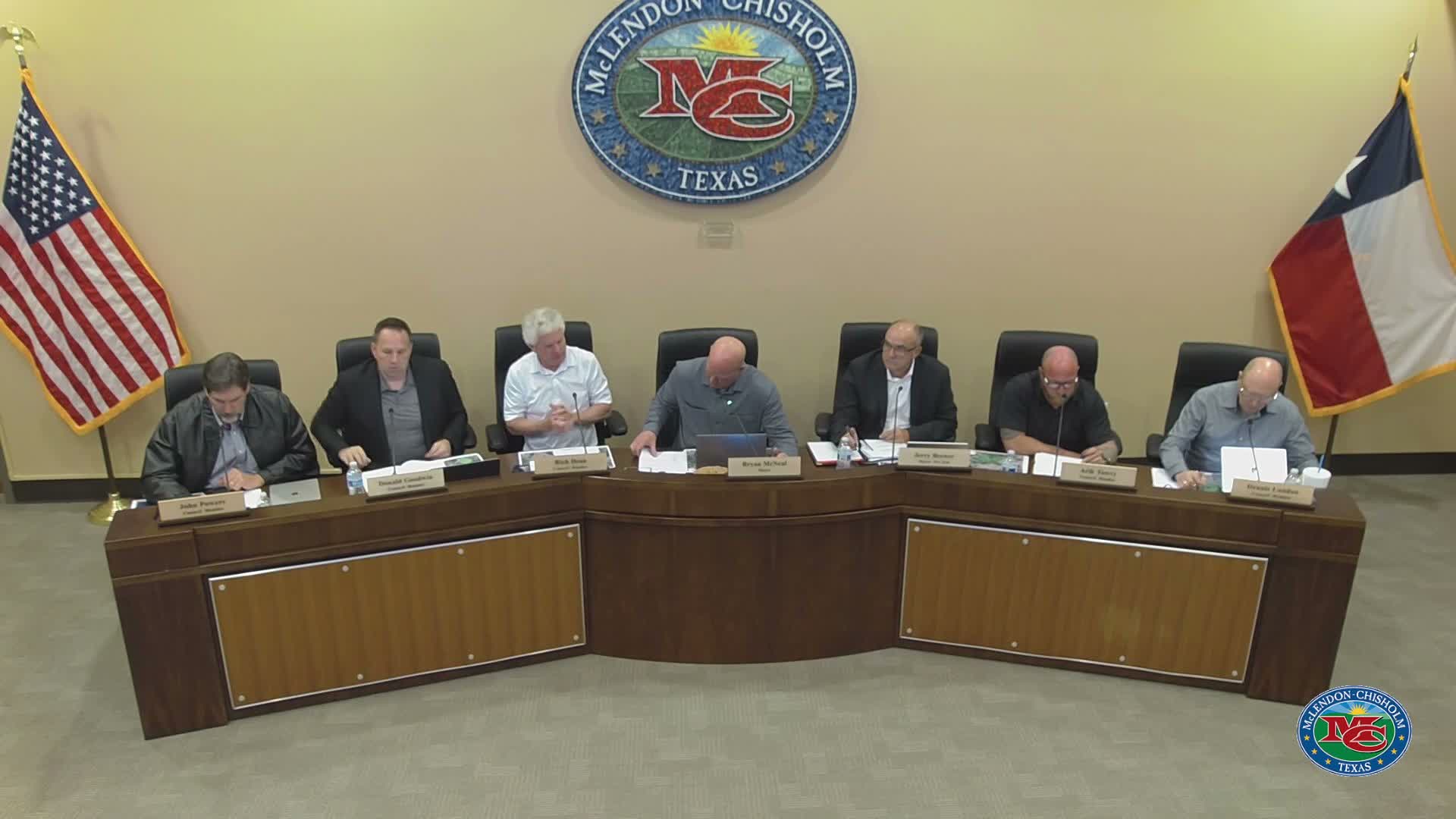
McLendon-Chisholm city officials on Oct. 27 heard a detailed presentation on public improvement districts, or PIDs, from P3 Works LLC and the city’s financial adviser, followed by questions about a proposed development called Sonoma Verde North & East.
Jordan Sawyer, regional director for P3 Works, told the council PIDs are authorized under Texas Local Government Code chapter 372 and allow a city to levy assessments in a defined area to fund public infrastructure so that "growth pays for growth." Jason Hughes of Hilltop Securities described the typical financing options: pay‑as‑you‑go assessments, reimbursement bonds after infrastructure is built, or upfront "bare‑dirt" bonds sold before construction. Both presenters stressed PIDs are generally nonrecourse to the city and secured by assessment revenues limited to the PID's boundary.
The presentation explained key steps before assessments are levied: a property‑owner petition (at least 50% of landowners, best practice is 100%), a council resolution to accept the petition, a resolution to create the PID, preparation and council consideration of a service‑and‑assessment plan, and a public hearing. Sawyer said administrators review developer invoices and file annual disclosure reports; Hughes noted typical protections such as a debt‑service reserve and statutory interest adders to reduce default risk.
Council members pressed presenters on homeowner protections and whether PIDs can be used on existing neighborhoods. The advisers said PIDs can cover existing neighborhoods, but issuing PID bonds on homesteaded property reduces bond security and can increase interest rates; the higher security occurs when assessments are levied prior to homesteading. Sawyer confirmed homeowners may prepay assessments at any time, which extinguishes future assessment obligations for that property.
The consultants then described Sonoma Verde North & East as a current development agreement signed in 2025 covering roughly 314 acres and about 672 lots to be built in phases. Sawyer said phase 1 includes about 337 lots, with an estimated $185 million in projected home buildout value; staff and consultants are completing engineering and a service‑and‑assessment plan now, and early assessment levies or an upfront bond sale could be sought in the first quarter of next year.
Council members voiced differing views about PIDs as a financing tool. One member cited a high‑profile Rowlett case as a caution; advisers said municipalities mitigate risk through upfront legal and financial structuring. The presenters repeatedly emphasized PIDs fund public infrastructure only (roads, water, sewer) and that improvements financed by assessments are typically conveyed to city ownership once accepted.
The council requested follow‑up information on the Sonoma Verde timeline, the preliminary service and assessment plan when ready, and further details on security, interest‑rate implications for homesteaded properties, and homeowner notification practices. The city will receive a preliminary service‑and‑assessment plan from consultants before making a formal levy decision.