Get Full Government Meeting Transcripts, Videos, & Alerts Forever!
Get email alerts on the Liquor License topic
No spam. Unsubscribe anytime.
Florissant council approves full liquor license for Italian‑ice shop across from middle school
Summary
After extended questioning from council members and public concerns about proximity to a middle school, the Florissant City Council voted to approve a full liquor license for an Italian‑ice shop whose owner said alcohol is used only to make premixed 'spritzers' sealed for in‑store consumption.
The Florissant City Council voted to approve a full liquor license for an Italian‑ice shop at 1616 Shackelford Road after a lengthy public discussion and multiple council questions about youth access, product handling and enforcement.
Owner Jared McBride, who identified himself as operating in Saint Louis City and having an existing shop, told council members the alcoholic items on his menu are premixed, frozen spritzers kept sealed for in‑store consumption. “I am not a full bar, and it’s not what I am,” McBride said, adding: “I do need the alcohol to make the product.” He described a sealed package that customers must break before eating and said products are premade and stored — not poured to order.
The hearing drew early public concern. Benjamin Bull said he opposed serving alcohol across the street from a middle school, arguing “This is not the place to be serving liquor,” and attendee Scott Hoyt asked what, if anything, the business would do to prevent long customer lines from blocking fire lanes.
Council members pressed McBride on several regulatory points: whether drinks could be taken from the premises (he said they would not), employee ages and training (he said staff handling alcohol would be 21 and that he and managers would take responsible‑service training), and whether lease or zoning rules would allow him to display bottles on shelves (he said his lease prohibits bottled liquor on shelves). Councilwoman Pagano and others warned that granting a full liquor license to a dessert shop could set a precedent for other small food vendors seeking alcohol service.
City Attorney explained how liquor licensing and zoning interact: “Once you give a liquor license, it’s for liquor,” the attorney said, noting liquor licenses are reviewed annually and the council retains discretion at renewal to reconsider a license if the business model changes. The attorney also said zoning special‑use permits and liquor licenses are separate: a special‑use permit may run with the land, while a liquor license does not automatically run with the land and is subject to renewal and review.
The transcript contains differing statements about the required separation from schools: McBride said the city’s ordinance required 250 feet (door‑to‑door), while presiding staff referenced a 200‑foot standard during the meeting. That discrepancy was discussed but not reconciled on the record.
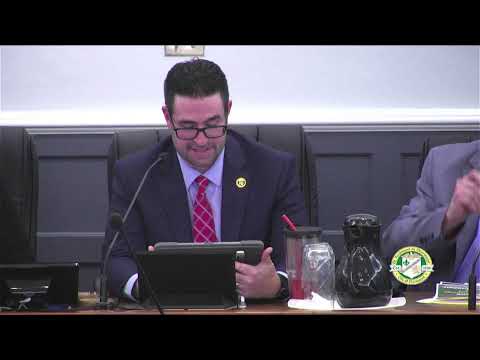
After council questioning and public comment, the council took a roll call; members recorded affirmative votes and the presiding officer announced the motion carried and the liquor license approved. The council did not record a detailed vote tally in the transcript beyond the roll call confirmation.
Next steps: the license will be subject to the city’s annual review process and the petitioner said he will require staff training and management oversight to prevent underage service or outside consumption.