Get Full Government Meeting Transcripts, Videos, & Alerts Forever!
Get email alerts on the Police Contract topic
No spam. Unsubscribe anytime.
Dardenne Prairie approves county police contract to add two 8‑hour officers
Summary
The Board of Aldermen voted unanimously to adopt "Option 6," contracting two additional county officers on staggered 8‑hour shifts after county police presented 2024 call volumes and recommended against a full 24‑hour dedicated patrol. The change raises the estimated annual contract cost from about $380,000 to roughly $650,000.
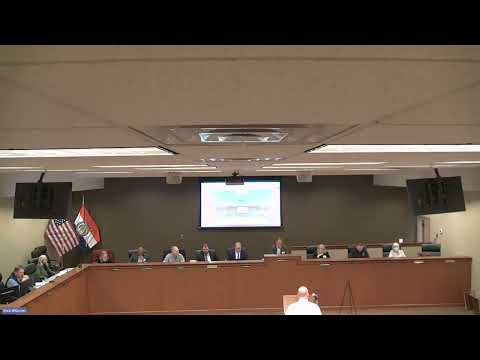
The Dardenne Prairie Board of Aldermen voted to increase contracted county police coverage by adding two additional officers working staggered 8‑hour shifts, a change the board labeled "Option 6." The motion passed in the work session with a recorded motion by Keith and a second by Carla.
City staff told the board funds were budgeted in the 2025 budget to consider expanded police services. The county bureau commander, who described himself as the bureau commander of the patrol division, presented call‑volume statistics and staffing options. He said, “in 2024, we only had 39 calls in Dardenne Prairie from 2 a.m. to 6 a.m.,” and argued those numbers did not support hiring a full‑time officer specifically to cover overnight hours.
The county officer outlined alternative staffing: two additional officers each working eight hours with staggered shifts; one suggested set of hours was 6 a.m.–2 p.m. and 10 a.m.–6 p.m., though the county said hours would be flexible and could be modified later based on incident patterns. The commander said the city currently pays roughly $380,000 for the equivalent of 16 hours of assigned county patrol, and that adding the two 8‑hour officers would put the annual contract near $650,000 when built out, with startup equipment costs occurring in year one and declining afterwards.
Aldermen raised coverage priorities — morning school‑release windows, late‑evening nuisance incidents and weekend demand — and asked whether hours could be tailored for weekends. The bureau commander said schedule flexibility is possible but depends on county staffing and incentives to encourage officers to take city assignments. He also told the board the county is conducting a broader staffing study and offered to assist the city with that analysis.
Board members discussed technology options to bolster overnight coverage. An alderman asked about integrating block cameras (Flock) and license‑plate recognition (LPR) feeds; the commander said the county will interface city or business‑installed cameras into the regional intelligence and dispatch centers. He cautioned that Flock alerts can have a 30–60 second delay compared with LPRs, which provide immediate alerts useful in active pursuits.
The board moved to adopt Option 6 as described during the meeting; the motion passed with no recorded opposition. The county recommended a multiyear arrangement with a review at year two to assess benefits, and the board did not set an immediate amendment to the timeline.
Next steps: the city and county will finalize contract details and scheduling, incorporate equipment/start‑up costs into the first‑year budget, and monitor the contract’s effectiveness over the proposed term.