Get Full Government Meeting Transcripts, Videos, & Alerts Forever!
Get email alerts on the Ethics Disclosure topic
No spam. Unsubscribe anytime.
Dardenne Prairie adopts conflict-disclosure ordinance
Summary
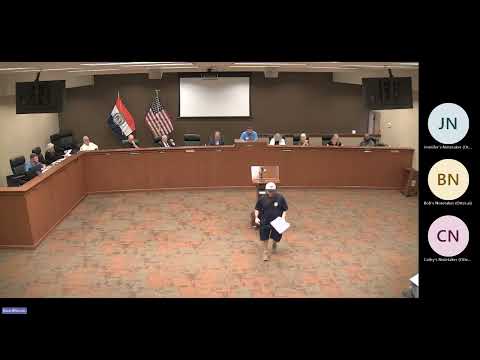
The Dardenne Prairie Board of Aldermen voted Aug. 6 to adopt Ordinance 2,372 (Bill 2,535), establishing a procedure for municipal officials to disclose potential conflicts of interest.
The Dardenne Prairie Board of Aldermen on Aug. 6 approved Ordinance 2,372 (Bill 2,535), a city ordinance establishing procedures for certain municipal officials to disclose potential conflicts of interest. The measure was read twice and adopted following a roll-call vote.
The ordinance — introduced by city staff and read by the city attorney — creates a formal disclosure process the board said will supplement state statute minimums. Alderman Johnson moved for the roll-call vote; Alderman Wilson seconded. The mayor announced the ordinance number after the clerk completed the roll call.
Supporters on the dais said the measure brings clear expectations for municipal officials. During the consent-agenda discussion earlier in the meeting, aldermen also debated whether to postpone a Planning & Zoning appointment while the head of that board was on vacation; they proceeded with the appointment and approved the consent agenda before taking up the ordinance.
The ordinance was recorded as Ordinance 2,372 at passage. The city clerk confirmed the roll-call and the mayor declared the bill adopted. The board did not attach additional amendments or implementation deadlines in the meeting record.
Next steps: the ordinance is on the city’s records as Ordinance 2,372; any administrative rules or forms to implement the disclosure procedure would be developed by staff after adoption, per typical local practice.