Get Full Government Meeting Transcripts, Videos, & Alerts Forever!
Get email alerts on the Vision Zero topic
No spam. Unsubscribe anytime.
SFCTA presents Vision Zero freeway ramp study, plans town halls and quick-build designs
Summary
Deputy director Rachel Hyatt told the board the Vision Zero freeway ramp study will analyze 11 ramp locations on San Francisco's high-injury network, is funded by a USDOT Safe Streets for All grant matched by Prop L, and will pursue quick-build safety improvements with outreach and draft designs later this year.
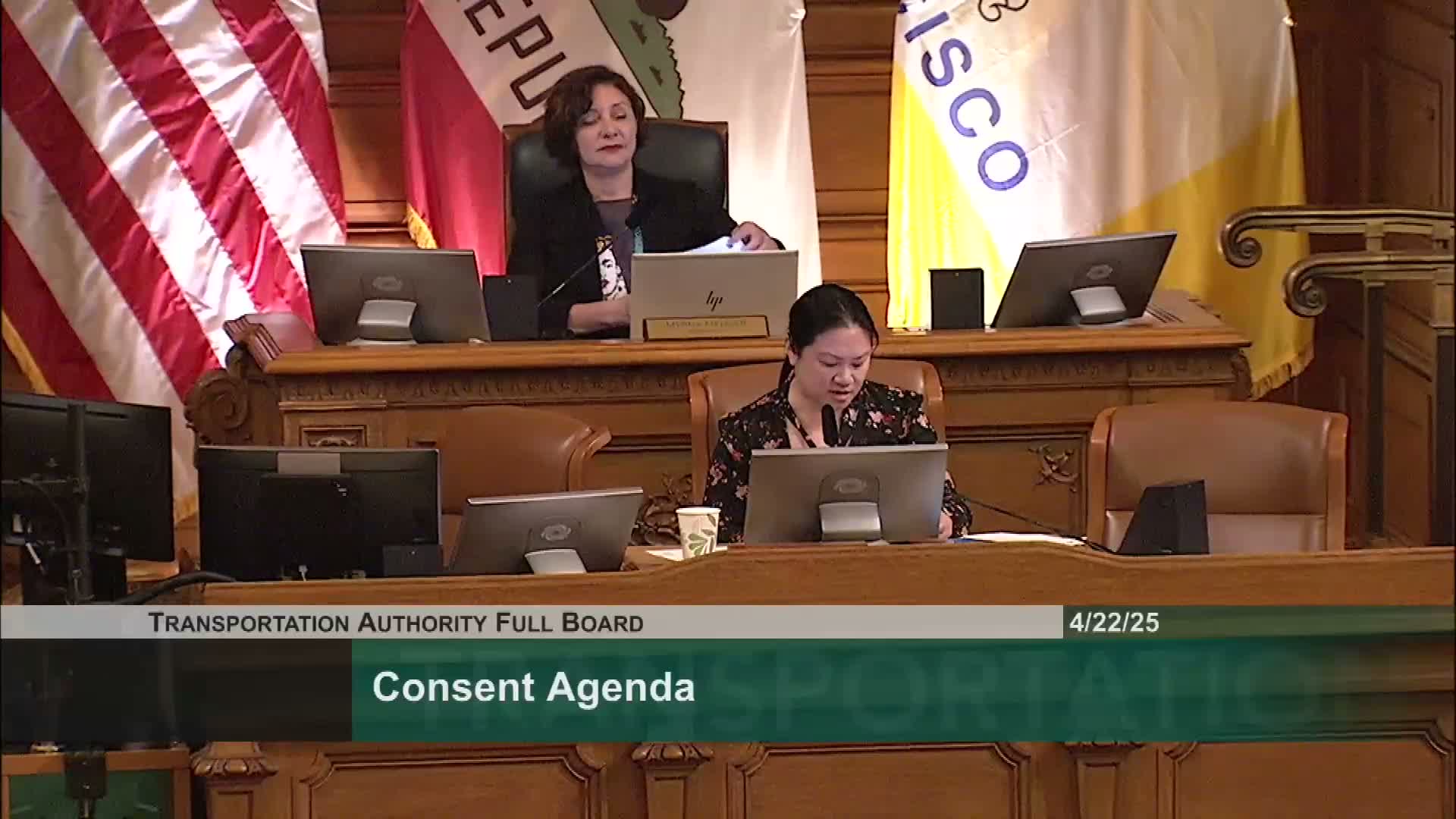
Rachel Hyatt, deputy director for planning, presented an update on the Vision Zero freeway ramp study at the April 22 meeting, describing a phase-three effort to improve safety where freeway ramps meet San Francisco surface streets.
Hyatt said the study will analyze 11 ramp locations across neighborhoods on the high-injury network and is funded by a USDOT Safe Streets for All grant matched by Prop L. The study’s goals include improving safety and connectivity for walking and biking while maintaining circulation for all modes. Hyatt said the project will prioritize quick-build interventions — such as lane restriping, daylighting, flashing crosswalk lights, improved signal timing, bike-lane protection and reallocation of excess curb space — and will use community outreach to refine metrics and the toolbox of strategies.
Outreach for the study includes a citywide survey and three town halls focused on neighborhood clusters (Glen Park/Outer Mission, Mission/Potrero, Bayshore); Hyatt said staff will convert outreach input into draft designs, return for a second round of engagement later this year and bring the study to the board for adoption early next year. The project team has posted the survey and information at sfcta.org/vzramps and will offer materials in multiple languages.
Public commenters thanked staff for continuing Vision Zero work and urged regular updates and clear funding commitments to sustain the city’s street-safety agenda. Hyatt said the study is at an early phase and emphasized that quick-build changes could be implemented to address high-risk locations promptly.