Get Full Government Meeting Transcripts, Videos, & Alerts Forever!
Get email alerts on the Congestion Pricing topic
No spam. Unsubscribe anytime.
SFCTA members describe New York congestion pricing as a model to study, stress equity and outreach
Summary
San Francisco County Transportation Authority commissioners returned from a study tour of New York’s congestion relief program and described operational lessons — including pricing structure, exemptions and outreach — while cautioning federal uncertainty and local differences mean the model would require careful adaptation.
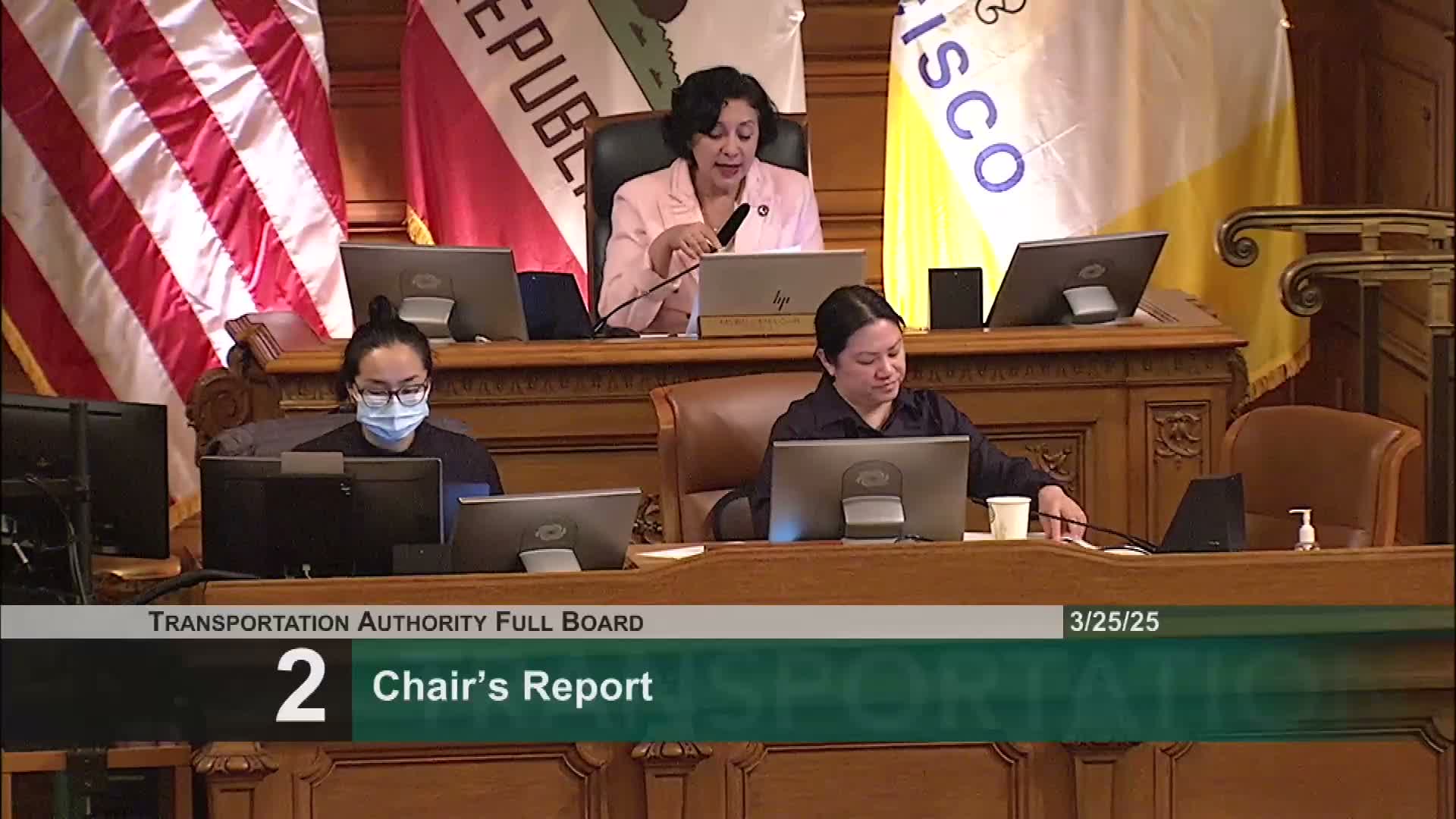
Commissioner Mirna Melgar, chair of the San Francisco County Transportation Authority, opened the meeting March 25 by summarizing a recent study tour to New York City and urging colleagues to consider lessons from that city's congestion relief program as a policy option for the Bay Area.
"This bill will authorize a regional transit measure for the Bay Area's operators facing significant operating funding shortfalls in 2027," Melgar said while describing regional work on amendments to SB 63 and the delegation's tour. She said MTC recommended elevating the portal rail-extension project to tier 1 in the commission's major project advancement program.
Swanee Cho, Assistant Deputy Director for Planning at the Transportation Authority, presented specifics from New York's Traffic Mobility Act, which the staff said was approved by the New York State legislature in 2019 and began operating in January. Cho summarized key program elements: a $9 charge for private automobiles entering the zone, separate rates for different truck classes, exemptions for transit and emergency vehicles, and discounts and tax credits for low-income residents who live inside the zone. "The program has generated $48,000,000 in the first month," Cho said, and staff cited early impacts including fewer vehicles and increased transit ridership.
Commissioner Dorsey described the New York experience as a "proof of concept" and said public opinion shifted after implementation, while Commissioner Chen emphasized equity framing and multilingual outreach — noting materials in nine languages and discount programs aimed at low-income travelers.
No formal action was taken on congestion pricing; commissioners framed the visit as background research. Chair Melgar and staff said local studies (Treasure Island and freeway corridors) continue and cautioned that New York's conditions differ from San Francisco's, so any local proposal would require tailored outreach and equity protections.
Public commenters in the in-person chamber criticized the trip and questioned the premise of city-led pricing programs; those remarks were part of public comment and did not change the board's informational discussion. The meeting adjourned after consideration of other agenda items.
The Transportation Authority said it will continue outreach and bring relevant materials back to the board as regional proposals (including SB 63 amendments) are refined.