Get Full Government Meeting Transcripts, Videos, & Alerts Forever!
Get email alerts on the School Budget topic
No spam. Unsubscribe anytime.
Merrimack residents press budget committee over rising school taxes; administrators defend spending
Summary
At a Merrimack School District budget committee meeting residents voiced sharp concerns about rising property taxes and a perceived lack of improvements in student outcomes; district administrators outlined recent curriculum, safety and infrastructure investments and noted returned surplus and federal COVID-era funds.
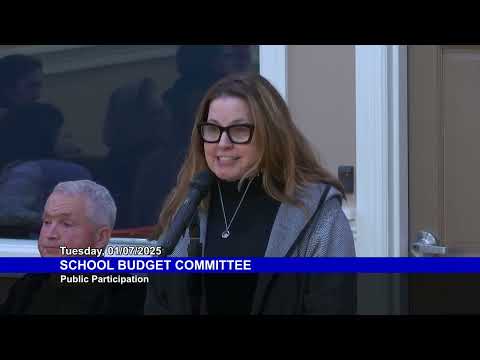
Residents crowded the microphone at the Merrimack School District budget committee meeting to demand answers about rising property taxes and what many called disappointing student outcomes.
“Who is it helping if not the children and not the taxpayers?” asked Heather Callahan, a Merrimack resident, as several neighbors described feeling priced out of the town by escalating school levies.
Why it matters: the district is proposing a $96.8 million operating request against a likely $95.8 million default budget. For many homeowners the difference in those totals, and multi-year growth trends, have fueled anxiety about affordability and whether higher spending is producing better results for students.
Administrators pushed back that recent spending addressed long‑standing gaps. Bill Olson, who introduced the administration’s presentation, said the district has returned surplus funds to taxpayers and pursued federal and grant funding to offset operating costs. “We gave back $3,600,000 in surplus funds,” Olson said, and the district “used around probably $4,000,000” in federal ESSER funds during the pandemic to build a technology baseline, a district staff member added.
Parents and seniors told a different story. Hollis McGuire, who identified herself as a 71‑year‑old resident on a fixed income, said the senior exemption’s asset limits exclude many long‑time residents from relief and warned she may have to leave town. Other speakers described poor test scores for their children and said they have pulled students from the district in search of better outcomes.
Administrators described a multi‑year effort to replace aging curricula, centralize preschool services, expand extended learning opportunities (ELO) and invest in safety equipment and building repairs. Amy Doyle, speaking about early literacy, said district screening shows improvement in lower grades: “62 percent of our third graders are reading proficient or above, and that is about 12 points above the state.”
Committee members responded that the public needs clearer, line‑by‑line comparisons of actual spending and year‑over‑year requests. One member said the two choices presented to voters—this year’s proposed budget and the default—offer little meaningful contrast and urged the committee to develop a lower alternative that gives voters a clearer option.
What’s next: the committee agreed to pull requested follow‑up data and scheduled continued review at future meetings. The next budget committee meeting was set for Jan. 14 at 7 p.m.