Get Full Government Meeting Transcripts, Videos, & Alerts Forever!
Get email alerts on the Tax Increment Financing topic
No spam. Unsubscribe anytime.
Developer asks Wasatch school board to share tax increment to fund parking garage for Station 7 project
Summary
A developer presented a Station 7 plan that would add a 613-stall parking garage, hotel and expanded retail and asked the school board to participate in tax-increment financing, proposing the district retain roughly 45% of incremental property tax revenue during a 30-year term.
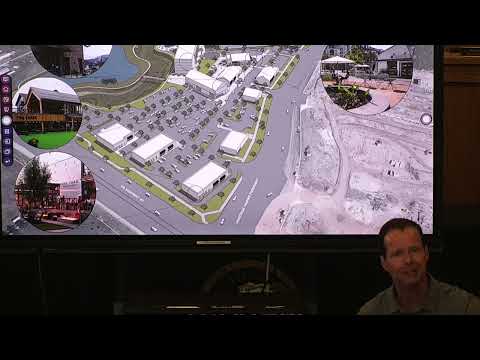
A developer seeking to build a mixed-use project called Station 7 told the Wasatch County School Board on Tuesday that the district’s participation in a tax-increment arrangement would be necessary to finance a 613-stall parking garage that would enable a denser mix of retail, apartments and a branded hotel.
The developer representative said the project has been under discussion since 2006 and that the southern portion of the site is already anchored by a Smith’s grocery. The north side would be reconfigured with structured parking to free land for about 57,000 square feet of retail and a 110-key hotel the presenter said was already secured under a Marriott flag. “If we can collapse that parking out of this giant huge parking field, we can put it into a tight box and build a bunch of parking stalls,” the developer representative said.
Why it matters: the developer argued that with a parking structure the site can be denser and more “experiential,” generating more sales and property tax activity. Without public participation the presenter said the project would be limited to roughly 20,000 square feet of retail, 15,000 square feet of office and surface parking — a scenario the presenter estimated would generate about $279,000 a year for the school district and roughly $7.5 million over 30 years.
Under the participation proposal, the developer asked affected taxing entities to share a portion of the incremental property tax (the transcript records the developer asking that the district participate at a 55% revenue-share level, leaving the district about 45%). The presenter said that, in the modeled scenario, the district would still receive the majority of the cash flow over three decades and that the denser development would increase long-term revenues when the increment period ends.
Financial details and uncertainties: the developer offered to share financial models and said their 30-year gross projection could be in the "$13–$14 million" range with a net present value of roughly $5.7–$5.9 million after applying a 6% discount rate. They estimated a parking-garage cost in the neighborhood of $15 million and said their target was to recover roughly 40% of that garage cost from public participation so the rest of the project (hotel, expanded retail) could proceed. The presenter repeatedly described the figures as model-based projections rather than guarantees.
Board concerns: trustees asked how the projections were calculated and noted that sales taxes do not flow directly to the school district, a point the developer acknowledged. One board member cautioned that asking the district to give up a share of property-tax revenue will be politically contested because education property taxes are “tagged for education” in public discussions and would need to be defended publicly.
Next steps: the presentation concluded as informational. The developer said they would share the underlying financial models with staff; board members had no formal motion or vote on the request at the study session.