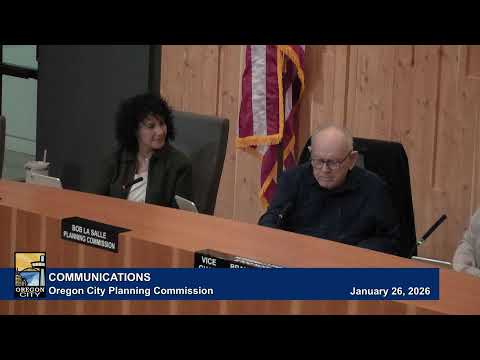
Oregon City planning commission approves Clackamas Community College Phase 2 athletic complex with adjustments
Loading...
Summary
The commission voted 5-0 to approve Clackamas Community College’s Phase 2 detailed development plan, granting adjustments to allow a taller retaining wall under a proposed 3,000-seat grandstand and to permit split-face concrete block as the primary restroom facade, subject to conditions including fall protection and landscaping.
The Oregon City Planning Commission unanimously approved a detailed development plan for Clackamas Community College’s Athletic Fields Complex Phase 2 on a 5-0 vote, granting two adjustments the college requested to code standards.
Planner Jude Tadeus told the commission the adjustments would allow a retaining wall up to 12 feet under a proposed 3,000-seat grandstand (the municipal code’s maximum without adjustment is 8 feet) and would permit split-face concrete block as the primary exterior material for a new public restroom. Tadeus said staff found the adjustments meet the approval criteria when paired with conditions that mitigate potential impacts, including fall protection measures and landscaping around the restroom to soften the facade.
Colin McArthur, representing the applicant, said the retaining wall is about 11 feet 3 3/4 inches above track grade and will be largely obscured by the grandstand. "The wall will be obscured by the grandstands, and the design allows pedestrian circulation above and below the structure," McArthur said, adding the restroom and retaining wall would use split-face block and that the project team expects to begin construction this summer and complete work by year-end.
Commissioners sought detail on finishes and mitigation. Tadeus said staff recommends a condition requiring decorative or split-face block (rather than plain block) where visible and landscaping planters with native species within 4 feet of the restroom facade; condition language also requires a final planning inspection and verification that fall-protection measures meet the building official’s requirements before building final.
With no public commenters recorded in the notice period and no speakers in opposition at the hearing, Commissioner LaSalle moved to approve the application "with the recommended conditions"; Commissioner Laws seconded. The clerk recorded aye votes by Commissioners Laws, LaSalle, Meining, Dole and Guimont, and the motion passed.
Next steps include submittal for building permits, the applicant's finalization of landscaping details consistent with the approved conditions, and the required final planning inspection before issuance of building final. Appeal rights and deadlines were reviewed in the hearing; staff noted that written materials received while the record is open will be included in the record.