Get Full Government Meeting Transcripts, Videos, & Alerts Forever!
Get email alerts on the Child Health Cost Sharing topic
No spam. Unsubscribe anytime.
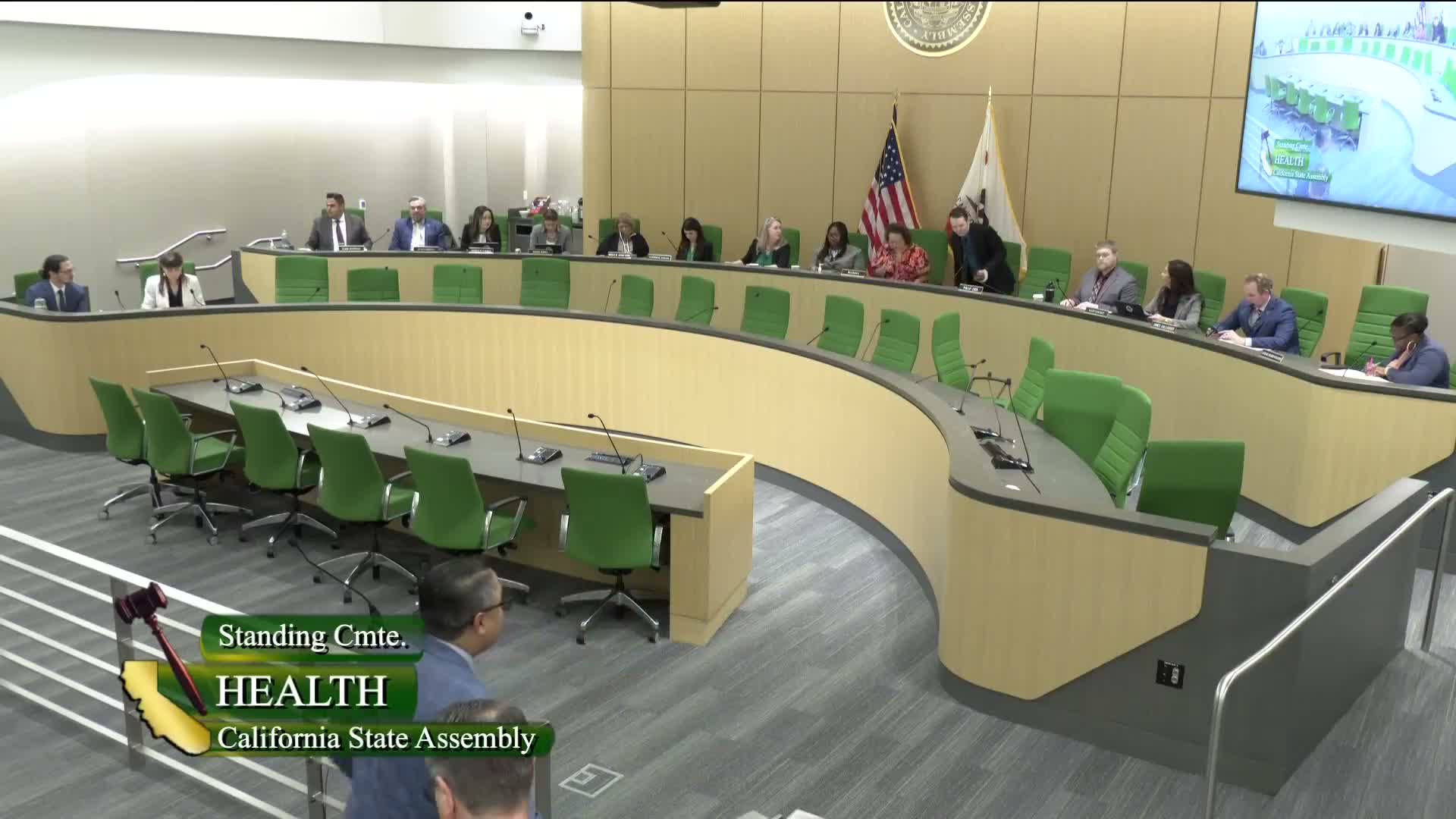
Health Committee advances AB 298 to eliminate out-of-pocket costs for children's health services
Summary
AB 298, authored by Assemblymember Bonta, would prohibit cost sharing (co-pays, coinsurance, deductibles) for children under 21 in large-group commercial plans; the committee voted to send the bill to Appropriations amid support from health advocates and opposition from insurers and business groups citing premium impacts.
The California State Assembly Health Committee voted Jan. 13 to send AB 298 to the Appropriations Committee after hearings in which health advocates urged removal of cost-sharing barriers for children and insurers and business groups warned of market and premium impacts.
Assemblymember Rob Bonta (author) said the elimination of federal ACA subsidies earlier in the year contributed to sharp premium increases and presented AB 298 as a response to protect families. He said the bill would prohibit co-payments, coinsurance and deductibles for covered pediatric services in large-group commercial plans and emphasized that Medi-Cal already imposes no cost sharing.
Supporters, including Health Access California and Family Voices of California, detailed families' struggles with cost sharing. Nancy Netherland of Family Voices described cases in which co-pays, deductibles and therapy expenses resulted in months of bills reaching thousands of dollars and forced families to consider changing employment to qualify for Medi-Cal.
Opponents, including Alexis Rodriguez of the California Chamber of Commerce and representatives of insurer associations, cautioned about macroeconomic effects. Rodriguez cited an estimate (transcribed in testimony as "Chipperb") that the bill could increase total premiums by more than $710,000,000 across the large-group market and CalPERS. Insurer representatives warned employers might respond by reducing benefits, shifting costs to adults, or moving to self-insurance where state statutory protections may not apply.
Author response and cost context: Bonta said he would pursue amendments in Appropriations, including measures aimed at CalPERS and other cost-savings. During debate the chair referenced a CHBRP-like analysis estimating an impact of "less than 1 percent" on the large-group commercial market and "0.8 percent" for CalPERS HMOs; the chair also cited an employer-level estimate of about $11.36 per member per month as an example of the potential cost.
Committee action: Following member questions and a pledge to refine technical language to ensure full provider reimbursement, the committee recorded a motion and roll-call and ordered AB 298 to Appropriations.
Quote: "This is a common sense bill that will improve affordability for California's families," the author said in closing, while opponents urged further analysis of market impacts.
Next steps: Appropriations will consider potential fiscal amendments, including those addressing state costs and CalPERS; members indicated they would follow the measure closely.