Get Full Government Meeting Transcripts, Videos, & Alerts Forever!
Get email alerts on the Workforce Modular topic
No spam. Unsubscribe anytime.
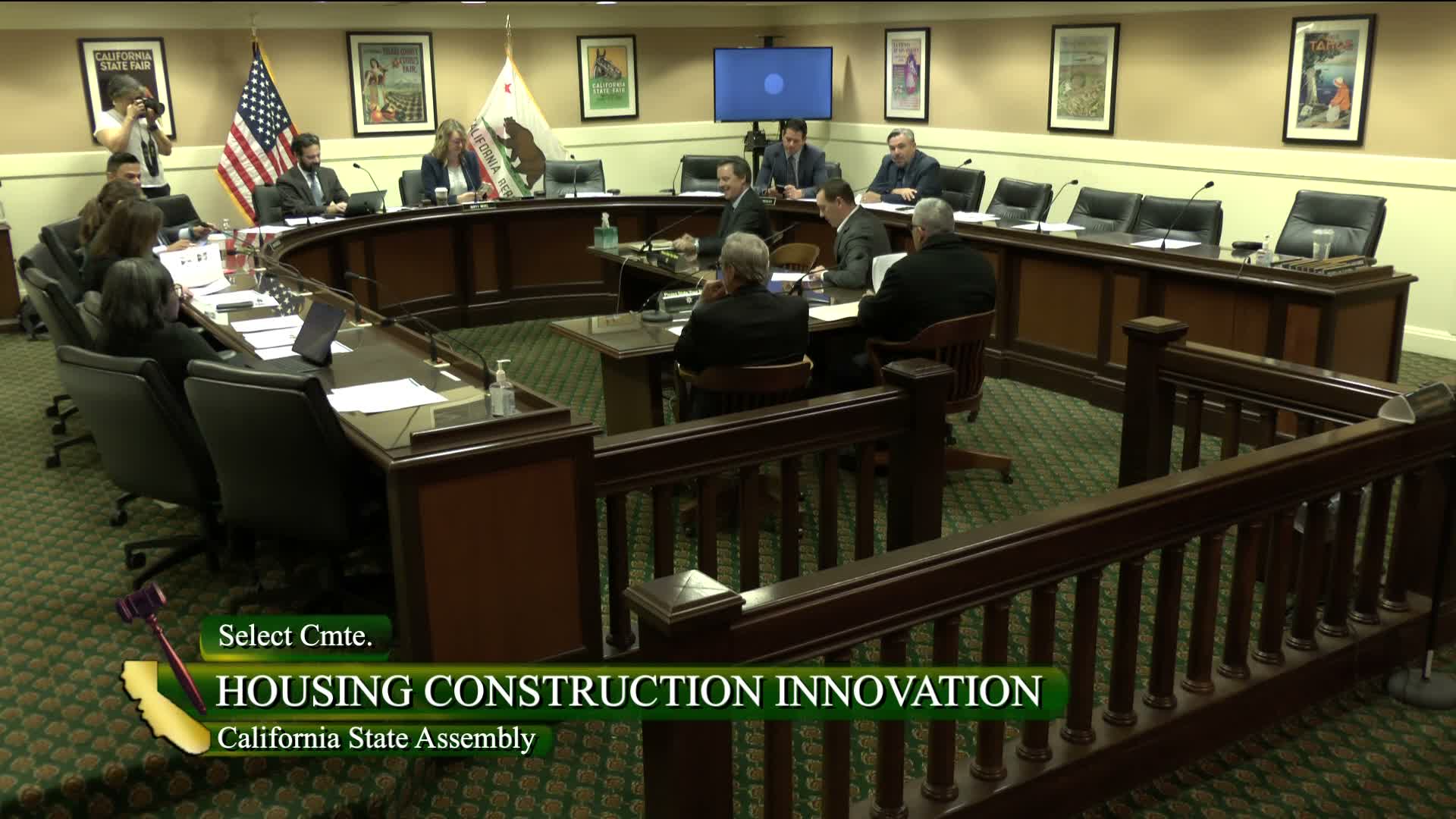
Unions and factory workers tell committee modular construction can expand training, improve schedules and create local factory jobs
Summary
Union leaders, factory supervisors and contractors told an Assembly committee that factory production can create predictable jobs, support apprenticeship pipelines, and attract more women to construction if paired with wage and benefit standards and in‑state factory siting.
Union leaders, factory supervisors and general contractors told the select committee that factory‑based housing could provide quality jobs, training opportunities and improved working conditions — but only if policy supports wages, benefits and local factory investment.
Randall Thompson, preconstruction executive for Nibi Prefab (Nibi Brothers General Contractors), described converting a planned conventional project into a 102‑unit modular affordable housing project in Milpitas and said modular choices often produce 10–15% hard‑cost savings plus reduced schedule risk. Thompson urged program‑level thinking, procurement changes and training to scale adoption.
Oswaldo Lira, a supervisor at Harbinger Production (formerly Factory OS), described worker benefits in factory settings: predictable schedules, shorter commutes, less weather‑related downtime and safer, repeatable tasks that help retention and work‑life balance. Lira said factory speed helps get people back into housing faster following disasters.
Jeremy Smith of the State Building and Construction Trades Council emphasized that unions want to participate in modular projects and pointed to a unionized factory model (Fullstack Modular) as an example where factory speed can coexist with apprenticeship training and union standards.
A Carpenters Union representative urged incentives to locate factories in California rather than import modules, highlighted wage and benefit standards, and framed factory growth as an opportunity to rebuild local manufacturing and reduce long commutes that worsen climate impacts.
Committee members discussed apprenticeship pathways, gender diversity on factory lines (witnesses reported meaningful participation by women at some factories), and the need to align funding, training and site availability so that factories can provide both scale and career pipelines.