
Students urge annual Civic Engagement Day to build lifelong participation
Get AI-powered insights, summaries, and transcripts
Subscribe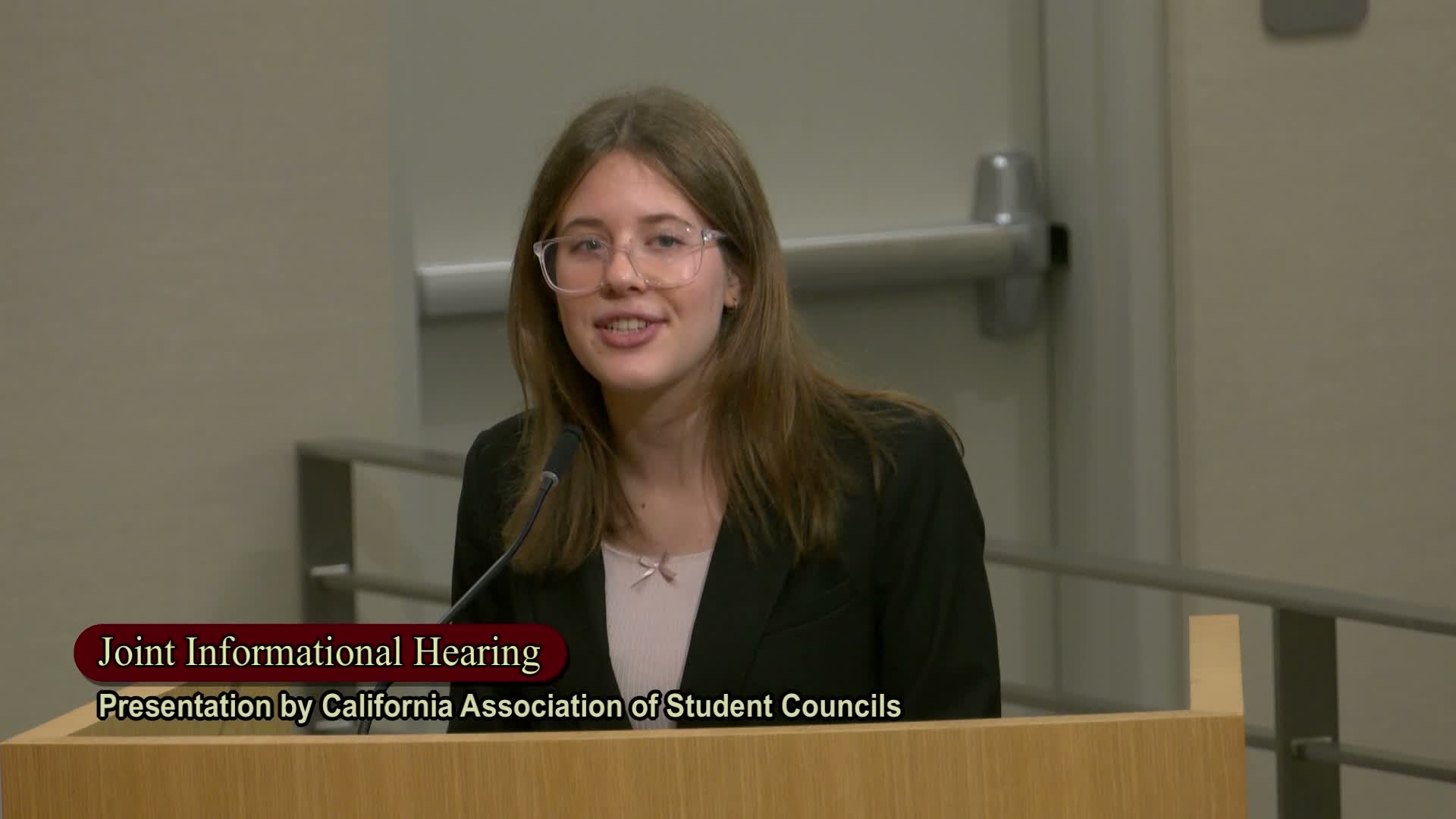
Summary
Student leaders proposed a flexible, annual Civic Engagement Day for California schools to boost civic knowledge and participation from middle through high school, recommending tiered activities, low‑cost options, and alignment with existing curricula.
Acting Chair Senator Christopher Cabaldon convened a joint hearing of the Senate and Assembly Education Committees to hear student proposals, where a Civic Education Council panel urged the Legislature to establish an annual Civic Engagement Day to increase student participation in democratic processes.
The students, including Sophie, a sophomore from Newport Mesa Unified School District, and Addie, a senior from Vista Del Lago High School, told the committees the day would be a low‑barrier, flexible observance in early November that combines classroom discussion, mock elections and civic fairs. “Students fundamentally deserve access to opportunities that bring civic values to life,” Sophie said, arguing the observance would supplement classroom civics and show students how to apply civic skills in real settings.
The proposal would allow each district to choose activities and costs; presenters said minimal‑cost options like online forms or guided classroom seminars would keep fiscal impact small. The students cited SB 745 as an existing statewide civics curriculum effort and pointed to Brookings research linking strong civic education to democratic participation.
Committee members pressed on implementation: Senator Elouis Gomez Reyes and other members asked how schools would pay for the day and whether it would displace academic minutes. The student presenters said districts could integrate activities into existing classes (for example, replacing a math unit) or run short events so instruction is not lost, and suggested evaluation measures to test whether the day increases engagement.
The committee did not take formal action but encouraged students to refine their proposal, consider cost and curricular trade‑offs, and meet with offices about pilot programs. The hearing record shows support for the concept but also concern about measuring impact and ensuring the observance does not simply shift instruction without educational benefit.