Members press administration on housing, HAP and homelessness accountability as budget removes some multiyear GGRF commitments
Loading...
Summary
Members asked why the governor's budget drops the previously adopted GGRF multiyear expenditure plan, queried timing and accountability for round 7 homeless assistance, and pressed for restoration of low-income housing tax credits and multifamily funding; DoF pointed to the CalFire shift and said trailer bill language (SB131) will set accountability metrics.
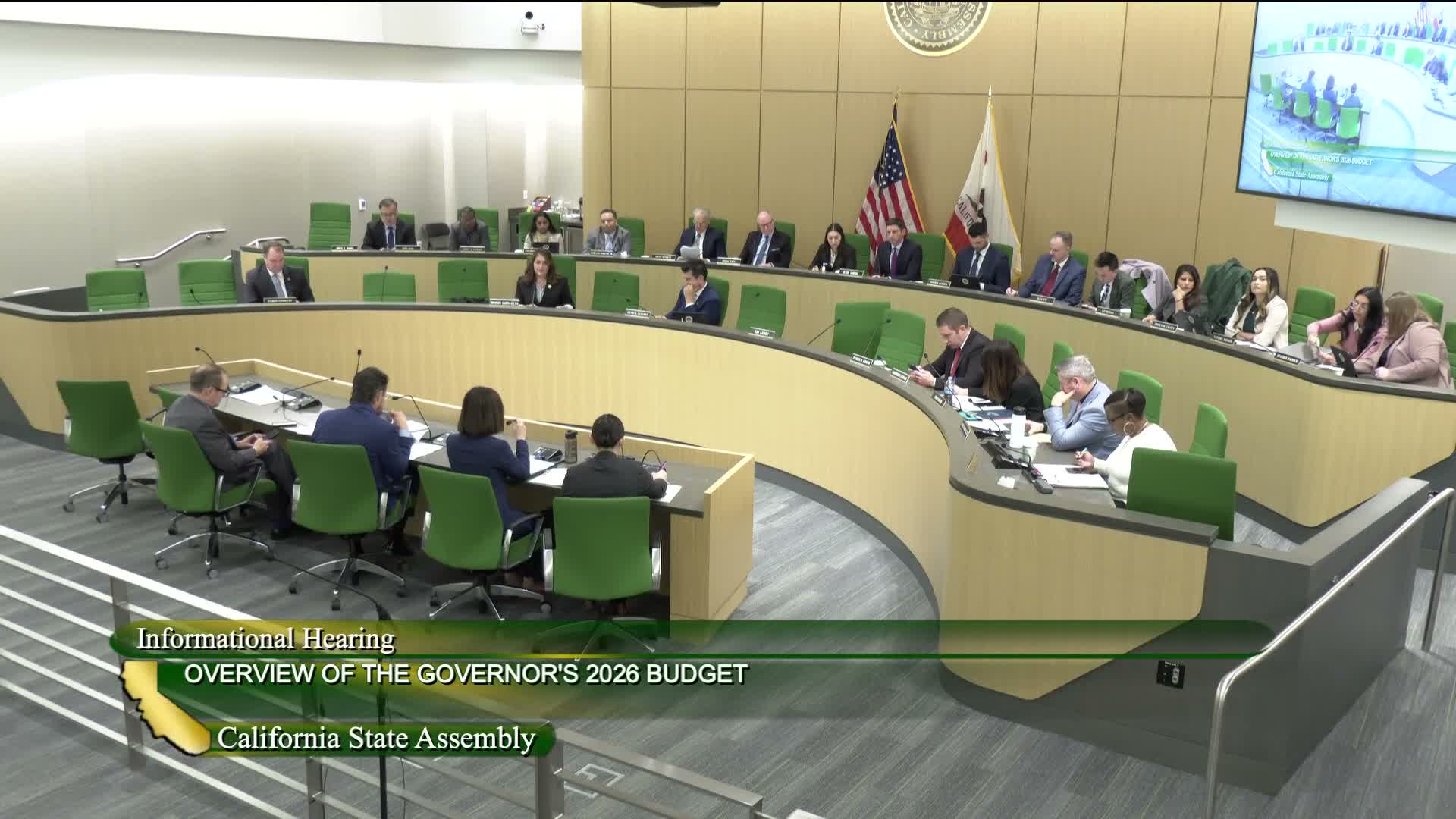
SACRAMENTO — Lawmakers at the Assembly Budget Committee pressed the administration on the governor's housing and homelessness proposals, questioning the scope of spending cuts and the timing of accountability language for funds intended to address unsheltered homelessness.
Assemblymember Quirk Silva and others said the budget appears to remove a previously approved multiyear Greenhouse Gas Reduction Fund (GGRF) plan that included transit and discretionary GGRF spending established in 2024-25. "These cuts will have significant impacts on our transit agencies who are promised these funds," a member said during questioning.
Department of Finance officials said the GGRF multiyear plan was altered in the enacted 2025 budget act when CalFire resources were shifted into GGRF, which required zeroing out the prior multiyear discretionary plan to make room for the shift. DoF staff said the CalFire shift is currently proposed through 2028-29 and will be revisited annually dependent on GGRF revenues.
On homelessness funding, DoF said trailer bill language consistent with SB131 (enacted last year) will identify six categories of accountability measures — including housing element compliance and local encampment policies — and that round 7 disbursements will be available beginning Sept. 1, 2026. "These accountability measures are expected to be determined in the current budget cycle, to be effective 07/01/2026," Megan Tokonaga of DoF said.
Advocates and several committee members urged restoring or expanding state investments including the Low Income Housing Tax Credit and the Homeless Housing, Assistance, and Prevention (HAP) program. Public commenters representing housing coalitions asked the Legislature to prioritize roughly $3 billion to preserve existing progress and avoid undermining gains that HAP grantees helped achieve.
DoF and LAO staff noted that the governor's proposal is a workload budget without significant new programmatic expansions; members said they expect to pursue additions in the subcommittee process and through negotiations with the administration.