Get Full Government Meeting Transcripts, Videos, & Alerts Forever!
Get email alerts on the Animal Control Ordinance Rewrite topic
No spam. Unsubscribe anytime.
Mobile committee begins rewrite of animal-control ordinances, proposes higher fines and a subsidized spay-neuter program
Summary
At a Public Safety Committee meeting, staff outlined a full rewrite of Mobile City's animal-control ordinances to clarify owner responsibilities, increase fines up to the $500 municipal maximum, strengthen repeat-offender rules and launch a subsidized spay/neuter program aimed at reducing unwanted dogs over several years.
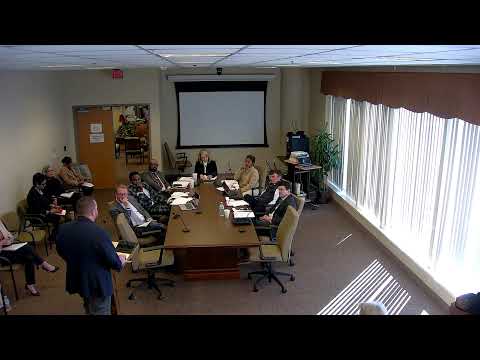
At a meeting of the Mobile City Public Safety Committee, staff outlined a citywide rewrite of animal-control ordinances focused on dogs and described a plan to increase penalties and expand spay-and-neuter services.
Robert Bryant, an animal-control staff member, told the committee the rewrite began in November and aims to consolidate duplicated or unclear provisions into distinct sections for animal-owner responsibilities, animal-control authority and general rules. "This is an entire rewrite of what we currently have," Bryant said, adding the administration had sent drafts to defense attorneys and judges across Alabama for legal feedback.
Bryant said the city's current penalty scheme is limited, with most violations carrying a $100 fine plus possible court costs. "We are upping that to anywhere between $300 and $500," he said, noting $500 is the maximum the city may levy at the municipal level. He also said repeat violations can lead to mandatory court appearances and possible jail time at the judge's discretion; a committee member corrected an earlier reference to a one-year jail maximum, noting state limits are shorter.
The staff presentation emphasized the limits of enforcement in practice. Bryant said animal-control receives 20 to 30 calls a day with roughly four officers on duty, so typical response times can range from 30 minutes to more than an hour. "When we get there, the number 1 problem we run into is the dog is not there when we arrive," he said. He described capture tools used in the field: about seven humane box traps (roughly $500 each) and, in rare cases, tranquilizer darts; the latter is constrained by state veterinary-board rules that limit agencies' ability to carry sedatives.
The committee also discussed evidence and prosecution thresholds. Bryant said municipal citations often require witnessing the offense or photographic/video evidence to support testimony in court, and delayed reports typically lead staff to open an investigation rather than immediate impoundment. He referenced "Emily's Law" as the state-level statute that governs investigations for bites and said victims sometimes must swear complaints at a magistrate's office to initiate formal action.
As part of a prevention strategy, Bryant announced a subsidized spay-and-neuter program the city hopes to launch within about four weeks. The program, funded in part by recently allocated city funds, aims to lower the typical $300'$400 veterinary cost to roughly $25'$50 for city residents through partnerships with Save A Stray and participating veterinarians. Staff said they plan weekend clinics to reach neighborhoods and that the new shelter design (plans due in March) would include a surgical suite that could host low-cost clinics pending state vet-board approval.
Bryant provided data to illustrate the need: the shelter handles roughly 2,400 animals a year while its facility was built to hold about 70 dogs; about 130 animals are reclaimed annually, suggesting most intakes are not reclaimed by owners. He called spay-and-neuter availability a "long game" that could take two to five years to show measurable reductions in unwanted animals.
The committee asked for follow-up materials: a draft of the proposed ordinance when legal reviews are complete (staff estimated two to three weeks), a list of local rescue and spay/neuter organizations, and statistics on repeat offenders and calls. Bryant said the shelter database can track interactions when there is an address but that many calls report intersections rather than addresses, complicating repeat-offender analysis.
On legal constraints, Bryant cited Alabama statutory provisions (transcribed in the meeting as "13 8-11-241 a and b") and explained that state law generally governs authority to impound animals, particularly in animal-welfare or bite cases; absent owner surrender, permanent removal options at the municipal level are limited. That statutory framework constrains how far local ordinances can go without state changes.
The committee closed by thanking staff; Bryant reiterated the draft timeline and staff agreed to coordinate on mobile clinics and outreach. The meeting adjourned.