Students propose annual Civic Engagement Day to boost K–12 participation
Loading...
Summary
Student delegates urged the Legislature to adopt a nonmandatory annual Civic Engagement Day (proposed early November) to give structured, tiered civic activities for grades 7–12, arguing local flexibility will keep costs low while increasing participation and civic literacy.
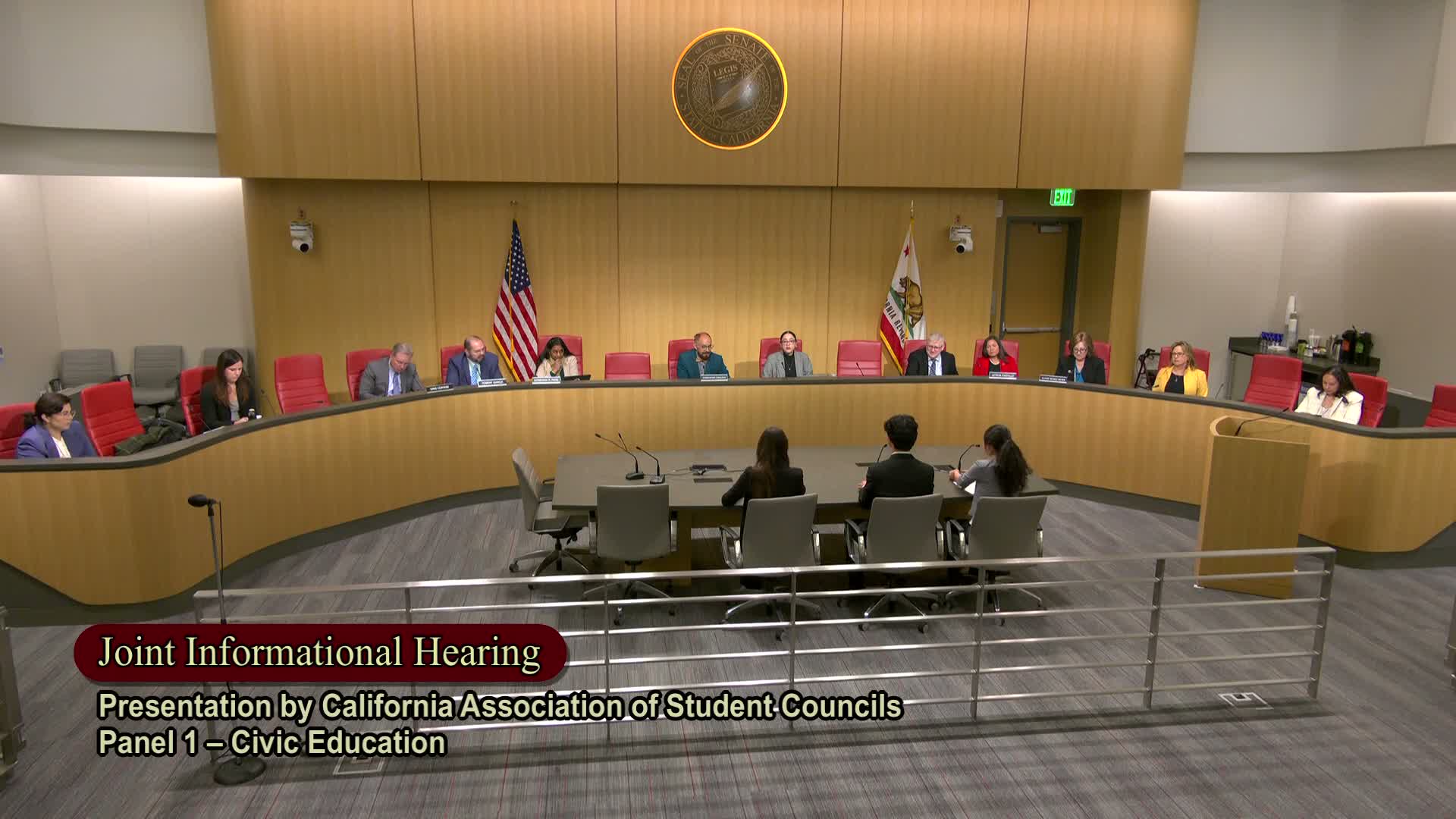
Acting Chair Christopher Cabaldon convened a joint hearing of the Senate and Assembly education committees to hear student proposals, and the Civic Education Council presented the first recommendation: an annual Civic Engagement Day to supplement classroom civics with age‑appropriate, hands‑on activities.
Sophie, a sophomore from Newport Mesa, told lawmakers the observance would be “non mandatory discourse” that lets schools choose low‑cost options such as online mock elections or small lunchtime civic fairs while allowing wealthier campuses to scale up activities. “Therefore, our Civic Education Council group recommends that the Senate Committee on Education establish an annual Civic Engagement Day,” she said during the presentation.
Panelists linked the proposal to existing curriculum work — noting SB 745’s effort to align classroom civics — and said the measure could be implemented flexibly at the school or district level to avoid large fiscal impacts. During questioning, senators pressed whether a day of activities would displace instruction and asked which curricula or evaluation metrics would measure effectiveness. Panelists proposed coordinating the day with existing standards, using Socratic seminars and a tiered approach that ramped up across grades 7–12.
Legislators also suggested partnerships with civic organizations and flagged voter preregistration outreach for 16‑year‑olds as a potential addendum. No formal motion or vote was taken; committee members said they would review the proposal and expected staff to score potential time‑and‑cost tradeoffs if the idea is advanced into bill form.